The graphics card market used to be relatively balanced, where midrange GPUs provided excellent performance at fair prices. That is no longer the case as it has spiraled into a landscape where GPUs priced $1,000 and above are positioned as must-haves.
Not long ago, $500 could buy a graphics card that felt aspirational but not unattainable. Cards like Nvidia’s GTX 1080 or AMD’s Radeon RX 5700 XT brought flagship-level performance at reasonable prices. They offered enough power to drive high settings at 1440p, sometimes even 4K, without requiring gamers to empty their wallets.
It’s high time for the industry, and gamers themselves, to reset expectations. In my opinion the sweet spot for graphics cards should return to $500, where performance, accessibility, and value all align in harmony.
Most gamers don’t need $1,000 GPUs
The problem is that most gamers don’t need, or won’t even notice, what a $1,000 GPU like the RTX 5080 can deliver. Ultra settings at 4K with maxed out ray tracing may be impressive, but they are not a necessity for enjoying games.
Steam’s hardware survey continues to show that the most common GPUs are modest models like the RTX 4060, with the average gamer still playing at 1080p. Chasing bleeding-edge performance makes sense for a small niche, but manufacturers are building the entire market narrative around that niche, leaving everyone else to pay inflated prices for hardware they don’t truly need.
Nvidia has steadily driven GPU prices upward, normalizing costs that once felt extreme. The shift began with the RTX 20-series in 2018, when the RTX 2080 Ti broke the $1,000 barrier. The company justified the leap with flashy new features like ray tracing and AI upscaling, but those technologies weren’t widely useful at launch, leaving gamers paying top dollar for future potential rather than present value.

Since then, Nvidia has continued to move the goalposts. Cards like the RTX 5070 sell for over $549 and are labeled mainstream, while 60-class models creep toward $400–$500 instead of the sub-$300 range they once owned. By positioning $800–$1,500 GPUs as the ultimate standard, Nvidia has shifted the entire market upward, redefining premium as midrange and midrange as entry-level, which is profitable for Nvidia, but costly for gamers.
AMD hasn’t resisted this upward trend either. Instead of undercutting Nvidia and reclaiming its value-driven reputation, AMD has often followed its rival’s lead. The $999 Radeon RX 7900 XTX illustrates this perfectly. It was marketed as a cheaper alternative to Nvidia’s RTX 4080, but still dragged AMD firmly into four-figure territory. Rather than resetting expectations, AMD largely accepted Nvidia’s pricing framework.
The hidden cost of pricing
This misalignment has real consequences. For one, it discourages people from upgrading. A gamer with a five-year-old GPU might hesitate at the idea of spending over $1,000 just to get something meaningfully faster. It also risks alienating new entrants to PC gaming, an ecosystem that thrives only when it welcomes beginners with affordable, compelling choices. By making high performance feel exclusive, the industry risks shrinking the very audience that sustains it.
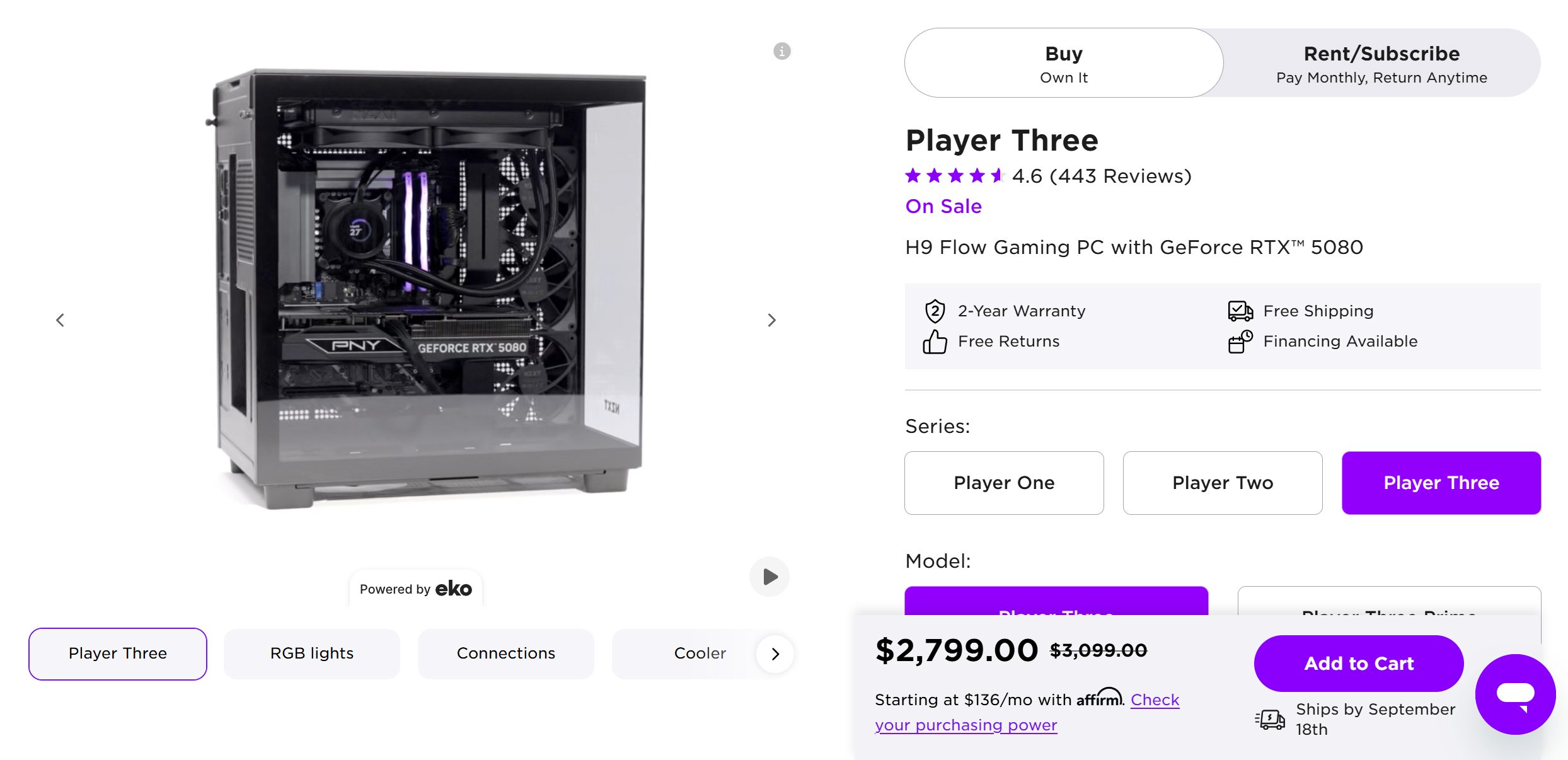
It’s also worth noting that the GPU market doesn’t operate in isolation. Rising GPU costs put pressure on the entire PC-building ecosystem. If a card costs $1,200, then a build that once fit comfortably under $1,500 now costs closer to $2,500 or more. That kind of budget creep fundamentally changes the makeup of the gaming audience. Instead of being a hobby that welcomes many, it becomes a hobby for the few.
GPUs priced at $500 can and should offer excellent 1440p performance with enough headroom for 4K at reasonable settings. This is a tier that should allow for high-quality gaming without the excess, without overpaying for features that most players won’t fully use. It’s a target that balances performance and accessibility, ensuring that PC gaming remains aspirational without being exclusionary.
Resetting expectations
The path forward isn’t complicated. Nvidia, AMD, and even Intel should refocus their design and marketing efforts on hitting that $500 tier as the heart of their product lines. Enthusiast-class GPUs will always have their place, but they should exist as niche options, not as the standard that drives perception across the entire market.
Reviewers and gamers themselves can also help by recalibrating expectations—not demanding ultra settings at 4K as the baseline, but recognizing that excellent gaming can happen at a much more accessible level.
PC gaming thrives when it balances aspiration with accessibility. By re-establishing the $500 GPU as the true sweet spot, the industry can bring performance, value, and fairness back into alignment. For most gamers, that’s all that’s needed, and it’s the best way to ensure that PC gaming continues to grow for years to come.