1. Home
  2. Cars
  3. Photo Galleries
  4. Legacy Archives

New airless tires can take a .50 caliber bullet and keep on rolling … for 350 miles

Add as a preferred source on Google

You know what I have always hated about tires? The air.

Fortunately Polaris, a manufacturer of ATVs, finally has an answer to my prayers: airless tires. This exciting new piece of tech was originally designed for the military, and it shows tires that look like straight out of a dystopic Sci-Fi future.

Polaris is calling its version of the technology TerrainArmor, and it comes with some impressive performance. The tire will keep rolling for 350 miles after getting hit with a .50 caliber bullet weighing 1.5 ounces traveling faster than the speed of sound.

If that’s not impressive enough for you, Polaris claims that the tires will keep working for a full 1,000 miles after a railway spike has been hammered into them. So what makes this kind of toughness possible?

The tires are supported by a rubber mesh, which can absorb bumps while still being rigid enough to support the weight of the vehicle. There are even added benefits to cornering and stability because the tires lower the vehicle’s center of gravity.

The tires carry a normal tread wrapped around the mesh, and this can be replaced when it has been worn out, without having to replace the structure. This offers both reduced waste and the potential of swapping out tread patterns depending on conditions.

As it stands, you can only get the tires on one of Polaris’ ATVs, the Sportsman WV850 H.0. It will run you $14,999, but for that you are getting a hell of a lot.

The WV850 can carry 600 pounds of cargo on its racks and tow another 1500 pounds behind it. That’s is awfully close to pickup territory for a vehicle that is only 94 inches long.

Airless tires may be in the future for road-going vehicles too. Major tire makers like Michelin and Bridgestone have experimented with the idea, even going so far as to develop working prototypes. However, this work is not out of the development phase and there is no word on if or when it will come to fruition.

Still this technology clearly has real potential benefits for cars, and I am excited to see it in the showroom.

Peter Braun
Former Digital Trends Contributor
Peter is a freelance contributor to Digital Trends and almost a lawyer. He has loved thinking, writing and talking about cars…
BYD’s new Racco is Japan’s first electric kei car with over 300 km range
The Racco also undercuts Nissan's Sakura on price before taxes and incentives, which packing in features rarely seen in the kei car segment.
BYD Racco

BYD has entered the Japanese kei car market with the Racco, an electric car built specifically for the country's compact car segment. Its top trim delivers 320 km of range, making it the first compact electric car in the market to pass 300 km, according to ITHome.

Kei cars are a Japanese vehicle class with strict size and power limits, and the segment has long been dominated by domestic automakers such as Honda, Nissan, Suzuki, and Daihatsu. The Racco is BYD's first attempt to compete in that space.

Read more
BMW could finally be building the electric convertible fans have always wanted
Good things come to those who wait, and apparently that means until 2028.
BMW convertible

There have been whispers about a two-door BMW i4 for years, and according to a new report from BMWBlog, at least one version is actually in the works. The outlet's sources close to BMW claim the automaker is readying an i4 Convertible under the internal codename NA3.

Why is BMW waiting until 2028 to launch it?

Read more
Waymo’s driverless cars keep getting parking tickets in Austin, and humans aren’t the only ones complaining
Waymo vehicles have collected $9,325 in Austin fines as repeated parking mistakes turn into a fleet-wide operational problem
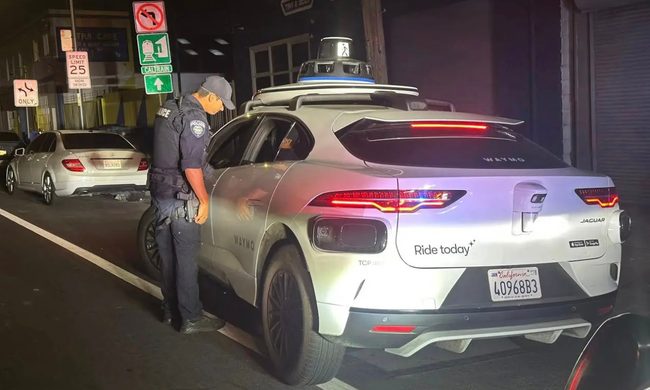
A police officer investigating an empty Waymo car.

Waymo’s 83 parking citations in Austin don’t amount to a financial crisis. They do reveal what happens when the same driving decisions are repeated across an autonomous fleet.

City records obtained by The Wall Street Journal show that Waymo vehicles have accumulated $9,325 in fines since arriving in 2024. The company has paid most of them, but the more revealing detail is how often its cars have made the same mistake.

Read more