1. Home
  2. Mobile
  3. Social Media
  4. Legacy Archives

‘Selfie’ selected as Word of the Year by Oxford Dictionaries

Add as a preferred source on Google

Oxford Dictionaries’ has chosen as its international Word of the Year 2013…..(drum roll, please)…..selfie!

We can’t say we’re surprised. The word has been all over the media just lately, as have selfies. Which is why it’s been all over the media….

Recommended Videos

Defined by the dictionary peeps as “a photograph that one has taken of oneself, typically one taken with a smartphone or webcam and uploaded to a social media website,” selfie won out over some tough competition, with twerk, showrooming, bitcoin, and binge-watch also in the running.

Oxford Dictionaries says that to become Word of the Year a word or expression must have “attracted a great deal of interest during the year to date.”

With research conducted by Oxford Dictionaries editors showing the frequency of the word selfie in the English language having increased by 17,000 percent in the last 12 months, I think we can safely say that, yes, it’s attracted a great deal of interest.

Earliest known use was by an inebriated party-goer

The earliest known use of the word ocurred in 2002, appearing on an Australia-based online forum having been written by an apparently inebriated party-goer with a smashed up face:

Um, drunk at a mates 21st, I tripped ofer [sic] and landed lip first (with front teeth coming a very close second) on a set of steps. I had a hole about 1cm long right through my bottom lip. And sorry about the focus, it was a selfie.

While use of the word has increased gradually since then, it’s positively exploded more recently with the increasing ownership of camera-equipped smartphones and popularity of apps like Instagram.

“Social media sites helped to popularize the term, with the hashtag #selfie appearing on the photo-sharing website Flickr as early as 2004, but usage wasn’t widespread until around 2012, when selfie was being used commonly in mainstream media sources,” Oxford Dictionaries’ Judy Pearsall explained.

She added, “In early examples, the word was often spelled with a -y, but the -ie form is more common today and has become the accepted spelling. The use of the diminutive -ie suffix is notable, as it helps to turn an essentially narcissistic enterprise into something rather more endearing. Australian English has something of a penchant for -ie words – barbie for barbecue, firie for firefighter, tinnie for a can of beer – so this helps to support the evidence for selfie having originated in Australia.”

On its Word of the Year page, Oxford Dictionaries also describes some of the selfie spin-off words that have emerged in the wake of selfie’s increasing use, including helfie (a picture of one’s hair) and belfie (a picture of one’s posterior); a particular activity – welfie (workout selfie) and drelfie (drunken selfie), and, more ridiculously, words like shelfie and bookshelfie, presumably referring to photos taken by those who hold particular elements of their household furnishings in high esteem.

[Source: OED]

Trevor Mogg
Contributing Editor
Not so many moons ago, Trevor moved from one tea-loving island nation that drives on the left (Britain) to another (Japan)…
The best note-taking apps for iOS and Android
I tested these apps for months so your notes never have to switch homes again.
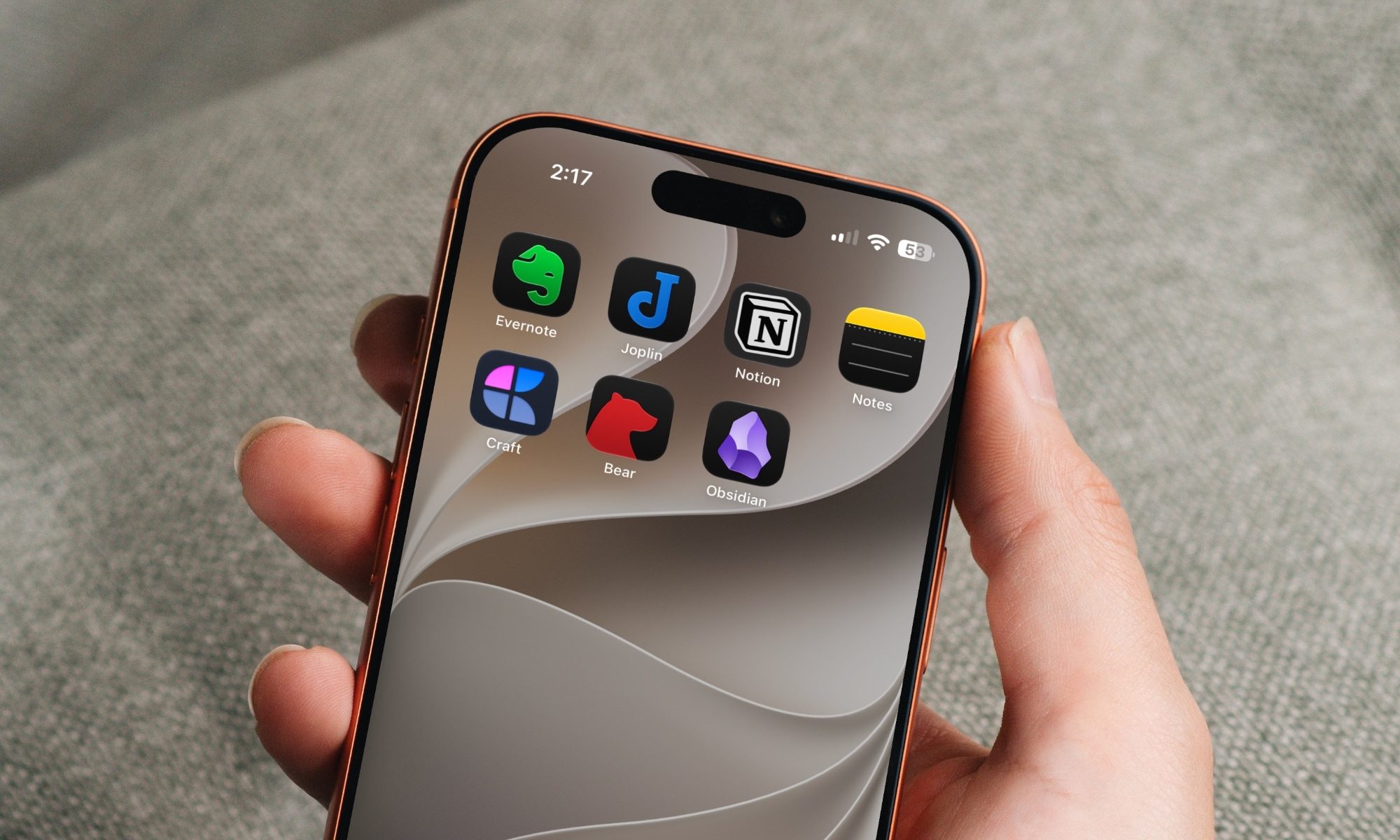
iPhone showing note-taking apps

Choosing a note-taking app is not easy. What note-taking app you choose depends on your needs, the platform you use, and of course, the cost. The process becomes even more complicated as it seems that there’s a new shiny app released every other week. 

That’s why I always suggest choosing a note-taking app that has all the features you need and can last you for a long time. Also, don’t chase new apps. The real power of a note-taking app comes when all your notes live in one place, making it easy to spot connections between them.

Read more
The best phones in 2026: our 14 favorite smartphones right now
We tested phones across all price brackets so that you can make the best pick based on your needs and budget.
Google Pixel 10 Pro Fold vs Galaxy Z Fold 7 cameras

Choosing the right smartphone in 2026 is no easy task. Apple and Android manufacturers now have strong options at almost every price, while better cameras, longer battery life, improved software support, new AI features, and more refined foldable designs have made the market more competitive than ever. But picking one is not easy, especially if your budget is tight, or you are just legitimately concerned about getting the best value for your money and need a reliable daily driver for long-term usage.

We have tested and compared the leading smartphones available today, looking beyond the spec sheet to see how they actually perform in daily use. Camera quality, battery life, performance, display quality, software, design, and long-term value all play a part in our recommendations. Whether you are looking for a powerful flagship, a dependable budget phone, a compact device, or a foldable, this guide should help narrow down your choices.

Read more
Snapchat Planets Meaning: Order, Rankings, and How Friend Solar System Works
Snapchat Planets turns your best friends list into a solar system, and yes, your orbit says a lot
Snapchat Planets being shown on the Snapchat app on iPhone.

Snapchat+ includes several exclusive features, but few have generated as much curiosity as Snapchat Planets. Part of the app's Friend Solar System, it transforms your Best Friends list into a planetary ranking, assigning each of your top eight friends a planet based on how often you interact.

From Mercury, which represents your closest friend, to Neptune, which represents your eighth closest, the system offers a quick visual snapshot of your interactions. But what do the different planets actually mean, and how does Snapchat decide who gets which one?

Read more