Seeking a significant amount of funding on WeFunder, Knightscope is developing a new type of crime-detection robot that could help police departments by using predictive algorithms to determine where crime will occur. Called the K5 Autonomous Data Machine, the robot is being built on the Segway robotics platform, sits tall at 5-feet high and weighs in at approximately 300 pounds.
It comes equipped with an array of high-tech gear such as night vision cameras with built-in thermal imaging technology, panoramic cameras for 360-degree high definition video recording, high-fidelity microphones to capture audio as well as infrared, radar, ultrasonic and air quality sensors. Of course, the robots won’t be armed with any form of weaponry in order to physically prevent crime. In addition, anyone that attempts to tamper with the robots will be caught on video immediately and prosecuted once caught.
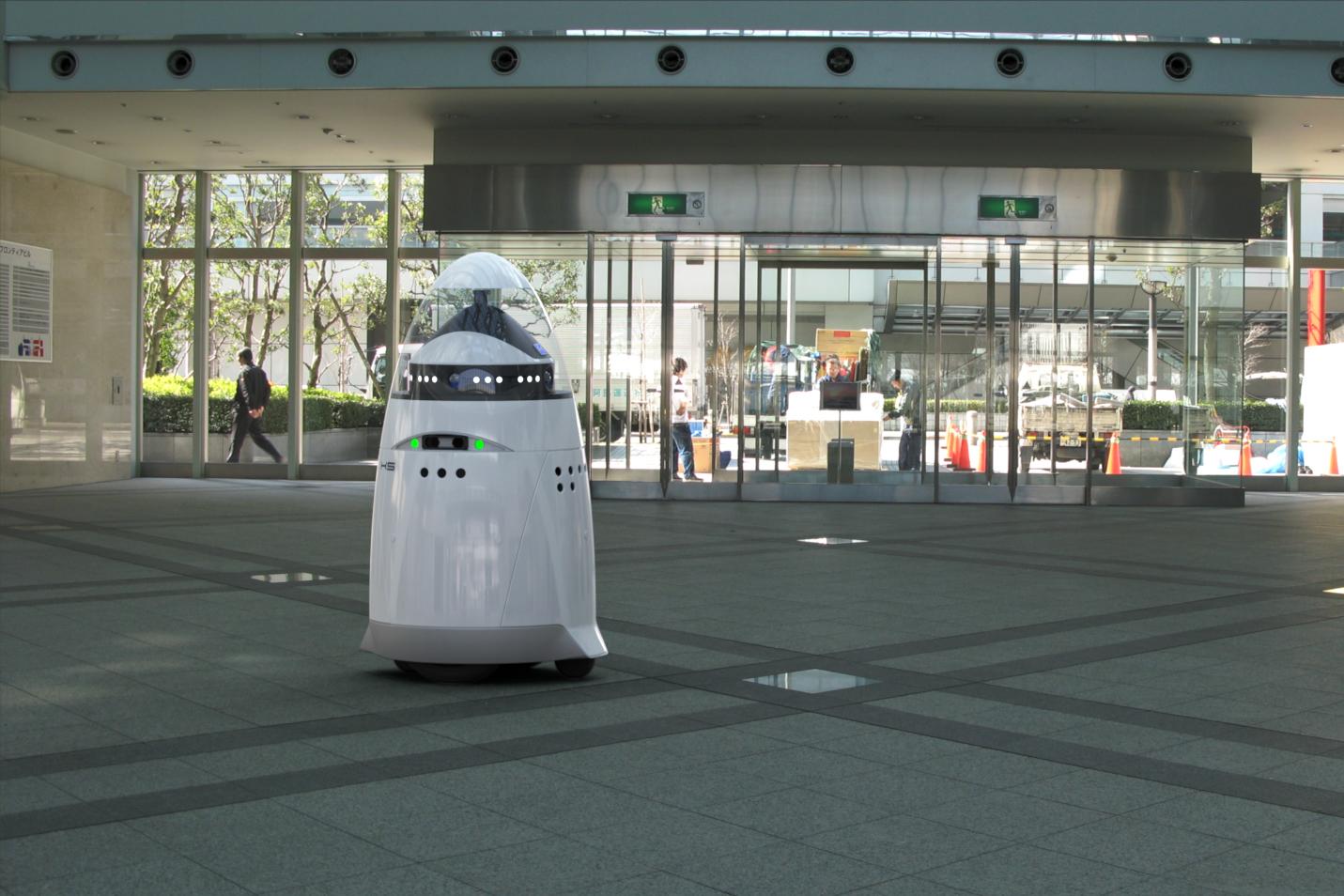
Interestingly, the K5 will include advanced facial and license plate recognition software. This could allows the K5 robots to actively scan for stolen automobiles or other license plate infractions, assuming that motor vehicle data has been made available to the robot by the police department. The software is also capable of gesture recognition, thus may be able to detect threatening gestures from humans in the area. Pointing a gun, for instance, could trigger an alert.
When it comes to mobility, the current models can travel up to 18 miles per hour. Knightscope expects future models to include more advanced systems to handle rough terrain or obstacles in the street. The system also uses a 3D mapping model in combination with proximity sensors and GPS data to autonomously determine which areas to patrol.
 Regarding the cost of the systems, Knightscope expects to have these K5 robots available to organizations by 2015 for an hourly rate that would equal about $6.25 an hour. At this price, deploying a robot over a security guard could potentially be cheaper for large companies.
At the present time, the K5 can operate on a single charge for up to 24 hours. Hypothetically, an organization could deploy just a few of these robots in order to provide 24/7 coverage of a particular area, as long as someone kept the robots all charged up.
Capable of processing 90 terabytes of data, all the of information recorded by the K5 robot is compared to a real-time, crowdsourced social feed. In turn, this allows Knightscope to create a heat map of potential problems in the area using a predictive analytics model.
Conceptually, that data will be transmitted to authorities when there’s a series problem as well as made available to the public in real-time in order to offer total transparency. As a citizen, checking on any potential problems in the area could be as simple as pulling out a smartphone, firing up an app and checking out the local heat map.
Knightscope CEO William Santana Li estimates that crime, in an area patrolled by the K5 robots, could drop as much as 50 percent. There are plans in place to test the K5 unit at sporting events, security companies and large public areas like malls. However, it’s clear that the actual effectiveness of the K5 robots will need to be tested extensively and proven with several studies before city governments attempt to deploy these machines on the streets.