
  1. Home
  2. Emerging Tech
  3. Features

PicoBrew’s Zymatic brews beer with a mouse click (and purists are pissed)

Add as a preferred source on Google

Brewing your own beer lies somewhere between science and alchemy. There’s precision involved, of course: scales, measuring cups, temperature gauges. But also spilling, estimating, and just plain making it up as you go.

Which means, after controlling the process as much as humanly possible, you leave it to sit, waiting, wondering how it will turn out. Sometimes it’s barely drinkable. Other times, that beer might as well be your firstborn, you’re so proud.

Recommended Videos

PicoBrew could spark a revolution in home brewing.

When it is, it’s also impossible to recreate, because the margin for error in home brewing is wider than a split lip from a broken growler. Sure, you set your mash water to a certain temperature – but how cold was your garage? Did you account for the two minutes the sparge arm got stuck? Or the precious ounces spilled when that tube popped off?

Probably not. Which are all the X factors that brothers Bill and Jim Mitchell are hoping to strip from the equation with the PicoBrew Zymatic, a set-and-forget beer machine that lets you brew with a mouse click – and revolutionize the home brewing scene in the process.

PicoBrew Zymatic


Brewery in a box

“We’re leaving the art, and we’re taking out the drudgery,” Bill explains inside a former chemistry lab north of Lake Union in Seattle, which now headquarters PicoBrew. “That’s the key goal here.”

“We’re leaving the art, and we’re taking out the drudgery.”

There’s very little drudgery involved. With only two switches and a display on the front, the Zymatic looks even less complicated than a microwave, but inside, it’s a miniature factory. After you load the right ingredients into designated compartments, you take a Cornelius keg filled with water, attach it to the machine, and watch the Zymatic flood the chamber with hot water – that’s the mash, in brewing terms. No need to stay and tend to the brew, the machine does all the heavy lifting.

Around three to four hours later, the wort – raw liquid that will eventually become beer – is ready to be chilled and fermented. The rest of the steps are identical to what you go through in home brewing, and your concoction will be ready to drink in one or two weeks.

The whole process is controlled from Web-based software on your laptop, which connects over your home network. The PicoBrew includes pre-made recipes across all the major categories of beer, as well as a generator to create your own.

The last straw

After home brewing for six years, Bill dreamt up the Zymatic after a bad batch of beer tested his patience for the last time. “I made a great batch, and tried to make another of the same beer. And it came out wildly different. Wildly worse,” he recalls. “It’s so hard to hit your temperatures accurately, your volumes accurately. And it’s so hard to repeat a batch.” He compares the situation to golf: One great game hooks you for the next 30 games as you desperately try to repeat it.

The brothers figured, if they could automate the unreliable parts of brewing homemade beer, precisely controlling the process, they could not only make repeatable batches, they could dramatically lower the barriers to entry for home brewing. Zymatic takes human error out of the equation. You can’t overheat it, you can’t boil it too long, and you can’t create something you can’t make again.
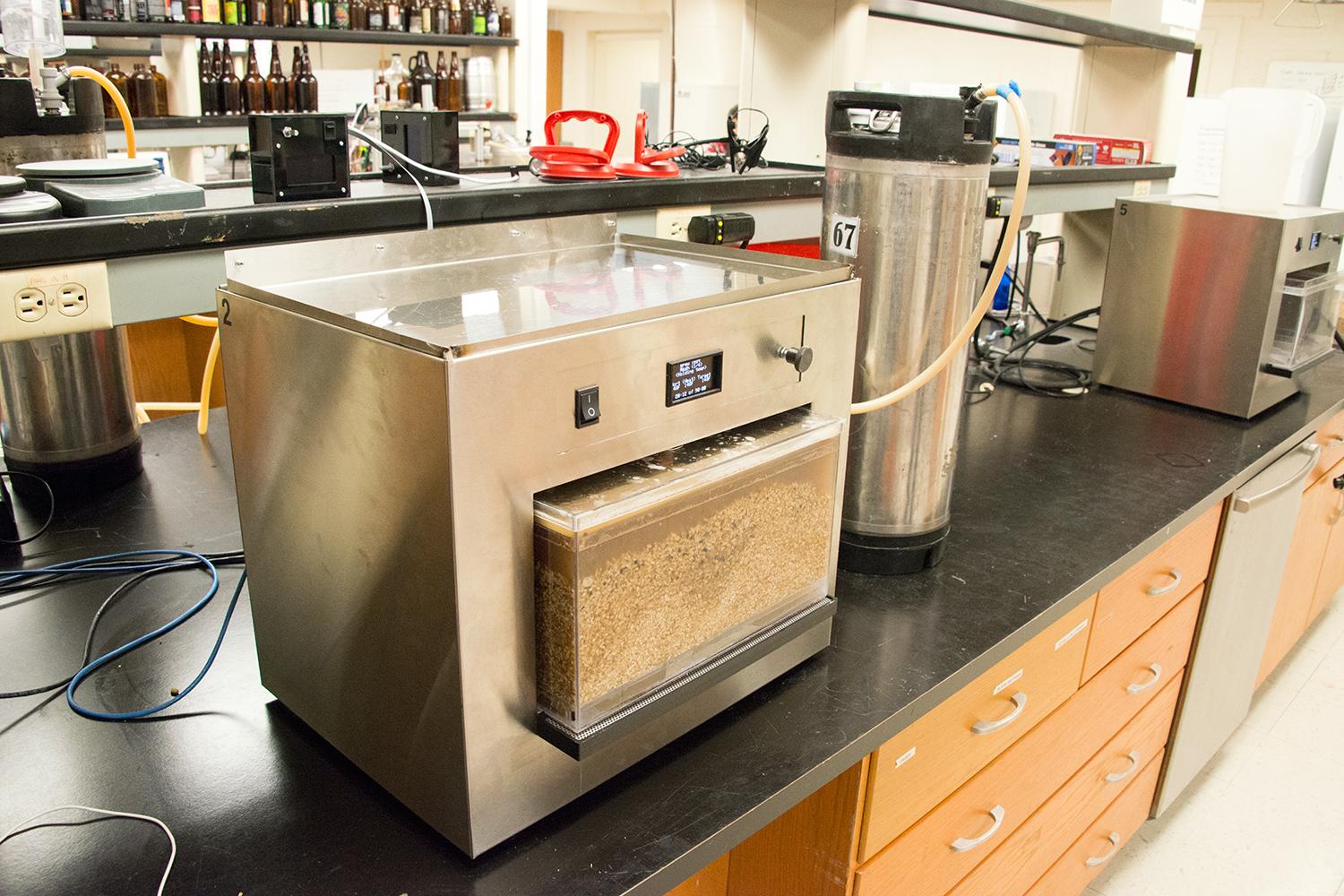
PicoBrew Zymatic
The PicoBrew looks deceptively simple from the outside, despite its complex inner workings. Image used with permission by copyright holder

In PicoBrew’s onsite tasting room, there are six PicoBrewed beers on tap, including a citrusy light American lager, a sweet brown, a complex-but-easily-drinkable stout, and a rich, hoppy IPA modeled after the famous Pliny the Elder IPA. And it tastes like … good beer. Really good beer.

How did they model a home brew after one of the most sought-after microbrews on the west coast? Easy. The recipe can be found on a number of homebrew forums, and with the PicoBrew’s recipe generator, all it takes is a few simple keystrokes and a stop for ingredients at an online homebrew supplier.

Ruffling feathers

With this new level of convenience and precision, the PicoBrew could spark a revolution in home brewing, a craft that has remain virtually unchanged since it was federally legalized in 1978, for the first time since Prohibition. And as it usually goes with revolutions, there are opponents.

It tastes like … good beer. Really good beer.

“[This is a] $1,700 bucket … brewing doesn’t need a gadget to be easy,” one Facebook commenter seethed at PicoBrew when the Zymatic was announced. His sums up the voice of the opposition: You don’t need fancy, expensive things to home brew. Mechanizing brewing takes the humanity out of it. Each beer is a fingerprint, a snowflake. There are no two exactly alike, and that is to be celebrated – not corrected. The fact that some brews will be basically impossible to ever recreate is a beautiful intricacy of the operation.

One of the most noteworthy opponents was Annie Johnson, the American Homebrewers Association’s 2013 Homebrewer of the Year. “During the Kickstarter phase, she told us, ‘In my homebrewing group, a lot of people are pissing on your product,’” Bill says.

The team reached out and asked her to take a look behind-the-scenes. “She walked through, she tasted the beers … and she told us we should enter them in contests, because you know, she’s a judge.

PicoBrew beers
PicoBrew’s recipe generator allows home brewers to download a variety of recipes, and make everything from pilsners to porters. Image used with permission by copyright holder

“She came back the next day, and we made a couple test batches. Then she came back a week later, and we tasted the beer, and she was blown away.” Now, Johnson has joined PicoBrew, working for them on the Zymatic.

Extinction of the bucket?

After three years of development and a dozen prototypes, the PicoBrew Zymatic is in production and ready to ship to customers. Many of them might be brewing for the first time. When the brothers’ hugely successful Kickstarter campaign sought $150,000 and raised more than four times that amount, they realized the Zymatic resonates with consumers, not just enthusiasts.

Can both “old-fashioned” homebrewing and PicoBrewing coexist? “Very few people, once they’ve PicoBrewed, go back,” Bill says.

It’s like asking whether anyone with an automatic drip coffee maker would continue to make it on the stovetop. They could … but why would they?

Something to ponder over your next beer.

Molly McHugh
Former Social Media/Web Editor
Before coming to Digital Trends, Molly worked as a freelance writer, occasional photographer, and general technical lackey…
Anthropic’s sensitive internal data was exposed, and AI helped make it happen
Even the company behind Claude isn't immune to AI-powered security threats, as researchers discovered some worrying vulnerabilities.
Claude Anthropic Featured

AI companies spend enormous amounts of time convincing us their technology is safe and secure. But what happens when those same companies become targets of increasingly sophisticated AI-powered attacks? Anthropic, the company behind Claude, is now facing that question. According to a Washington Post report, cybersecurity startup Cathedral discovered vulnerabilities that let its researchers access sensitive information in Anthropic's internal systems.

The researchers used AI agents to identify potential entry points in less than 12 hours. Interestingly, they didn't need to crack Claude itself. Instead, they exploited weaknesses in third-party business applications that Anthropic uses for everyday operations. Anthropic's security testing program disclosed the findings, which allows outside researchers to identify and report vulnerabilities.

Read more
A new startup wants to fix the military’s working-dog shortage with cloning and gene editing
Promising pitch, plenty of unanswered questions about the dogs.
a new startup wants to fix the militarys working dog shortage with cloning and gene editing warhound featured image

Military working dogs charge into places the rest of us would flee. So, I understand why anyone would want to breed tougher, healthier dogs for the job.

Warhound, a new startup from Colossal Biosciences co-founder Ben Lamm and Anduril co-founder Palmer Luckey, has stepped out of stealth with $200 million to clone and gene-edit working dogs for American troops, police departments, and emergency services (via TechCrunch).

Read more
AI can describe a picture, but it still struggles to understand blind users
A University of Maryland study finds that Be My AI often buries useful answers in lengthy descriptions, leaving blind users to work harder to get the information they need.
Blind Man using walking stick

AI can describe a picture, identify objects, and answer questions about what a camera sees. But when a blind user needs a quick answer, getting an entire spoken essay about the scene isn't exactly helpful. Researchers at the University of Maryland (UMD) have found that AI-powered visual assistance can leave blind users doing too much work to get the information they actually need.

The study, titled Say It My Way: Exploring Control in Conversational Visual Question Answering with Blind Users, examined how people interact with Be My AI, an AI-powered feature of the Be My Eyes app. The researchers found that users often received lengthy descriptions that didn't adequately address their immediate goals, forcing them to ask follow-up questions or find ways to steer the AI towards a more useful answer.

Read more