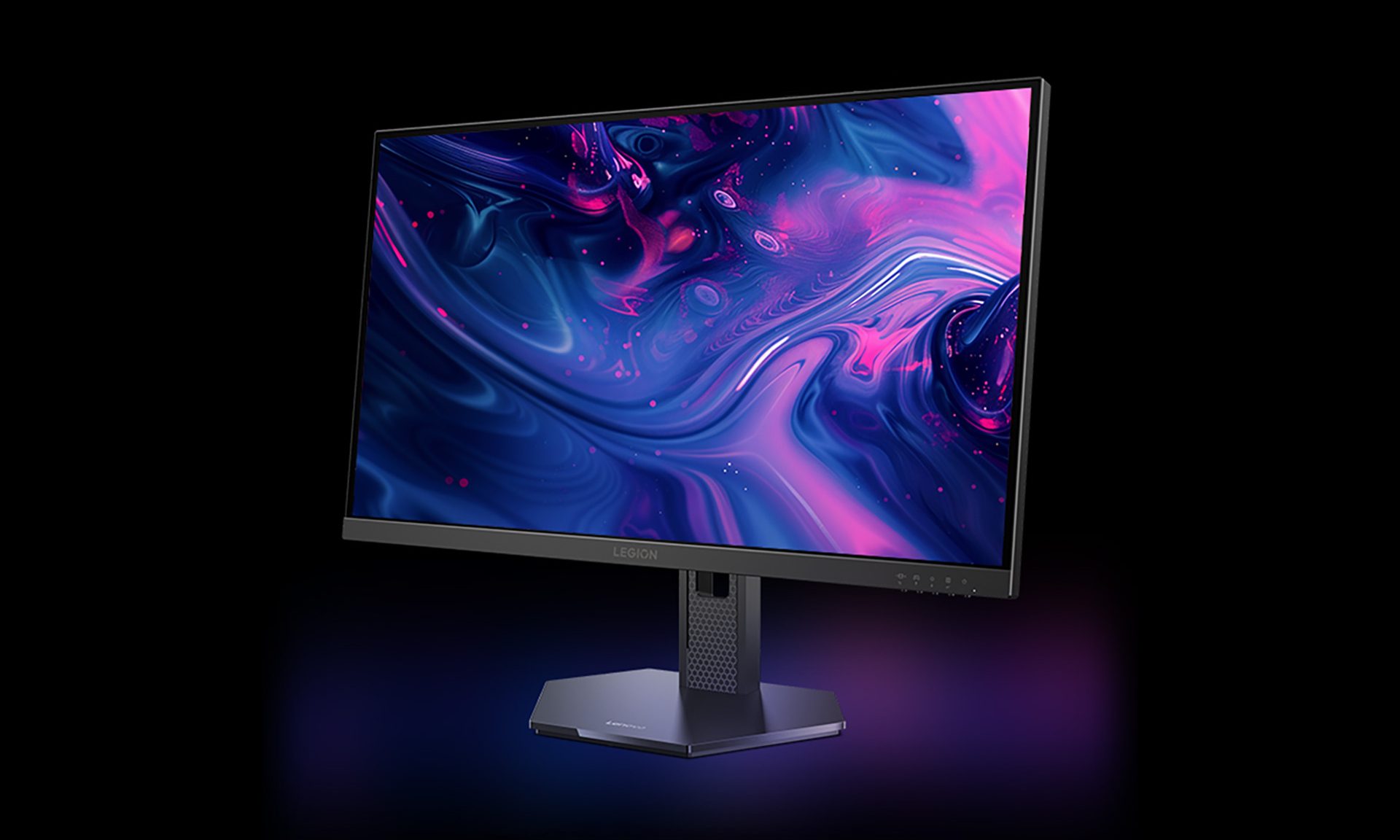
Valve is entering the console wars in a pleasantly bizarre and flashback-y fashion. The original vision for Steam Machines never took off, but years later, the company scored a hit with Steam Deck, a handheld gaming console for the modern era. Now, a new Steam Machine is here.
It looks like a console. It has an LED light strip. It’s lovingly customizable. And it’s also a PC, according to Valve. “Yes, Steam Machine is optimized for gaming, but it’s still your PC. Install your own apps, or even another operating system. Who are we to tell you how to use your computer?” says the company.
The message is pretty clear. Valve is not going solely after the Xbox. It is not only chasing PC gamers. It is targeting both, and it will give all the flexibility, while at it, to move between work and play on the same machine.
A fix for the wallet woes?
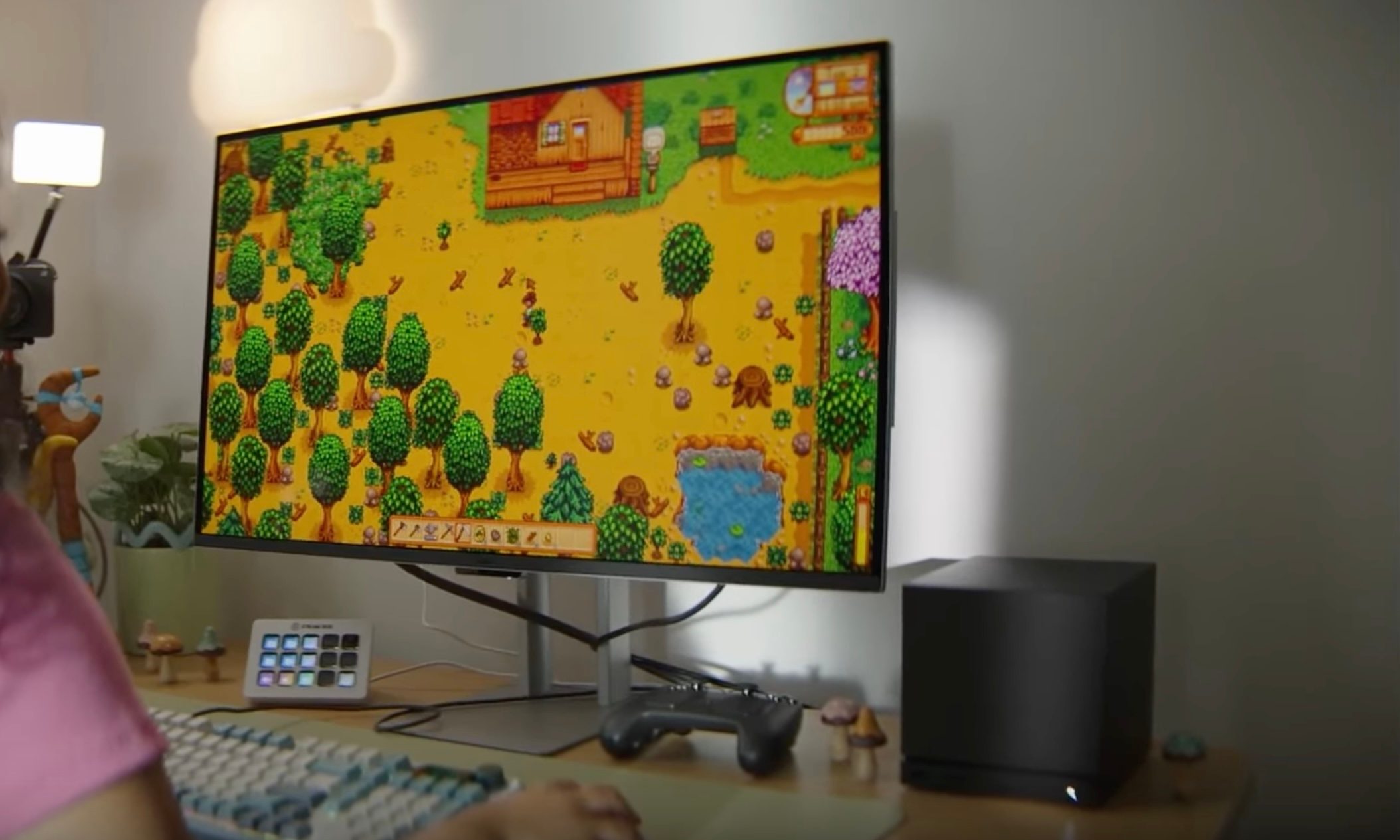
PC gaming is getting more expensive with each passing year. The ongoing tariff tussle is not helping the cause, either. With the Steam Machine, Valve claims to offer a middle ground between affordability, convenience, and performance.
The cost? We don’t have a number yet. “If you’re trying to make a PC that has similar features and similar performance, I think the Steam Machine is going to be a really competitive price to that and provide really good value to it,” Yazan Aldehayyat, hardware engineer at Valve, explained in an interaction with IGN.
“We intend for it to be positioned closer to the entry level of the PC space, but to be very competitive with a PC you could build yourself from parts,” Valve designer Pierre-Loup Griffais told The Verge.

Now, one can do a broad estimation based on what Valve thinks of as an entry-level PC. If you’re targeting a PC with modern parts, you’re broadly looking at a spending worth around $800. You can go lower than that with a generation older, but still perfectly serviceable, graphics card and processor.
That’s assuming your baseline is 1080p gaming at respectable graphics settings in modern titles. But if ray-tracing, high fidelity, and 60+ FPS experience is what you seek, you will need to spend over $1,200 at the very least. For comparison, the PlayStation 5 Pro currently goes for $750, while the Xbox Series X now costs $650.
But comparing the Steam Machine with a console, or even a PC, is not a straightforward equation. It looks like a console, yet it wants to play PC games, but without the underlying operating system for PC gaming. That’s the Steam Machine — and SteamOS — for you. And yeah, you can choose to install Windows on it.

If Valve is targeting the entry-level PC gaming experience, it will ideally keep the price hovering around $800-900. And possibly, even lower, if the company pulls off the same stunt as it did with the first-gen Steam Deck.
The whole idea behind the Steam Machine, based on what Valve engineers have said so far in media interviews, is to offer a machine that handles the Steam library with the same kind of fluidity as an entry-level gaming PC. It’s a PC that looks like a console, and by the definitions of an entry-level machine of its ilk, it should stay within the $1,000 baseline.
The convenience problem
Building a gaming PC isn’t a cakewalk. There’s a reason why pre-built gaming towers are popular. Beyond the usual debates about the processor and GPUs — because that’s what you see on those minimum/recommended game experience charts — most people don’t dive deeper on the hardware side.

But the choice is not as straightforward as it seems. There are still a lot of factors to consider. Should I stick with the latest-but-underpowered GPU, or go with an older-but-beefier GPU? Intel or AMD for the CPU? Nvidia or AMD for the GPU? Who do I trust more with the driver situation? The deeper you dig, the more confusing it gets.
Steam Machine wants to solve that problem. And if you look at the specs, you will notice that Valve wants to ditch that confusion altogether. You get a hexa-core AMD Zen 4-based processor and a semi-custom AMD RDNA 3-based graphics unit with eight gigs of graphics memory.
It’s hard to draw a direct equivalence here, but think of an AMD Ryzen 5 CPU and an RX 7600 fitted inside the Steam Machine. That kind of configuration, at least on a laptop, will let you run Cyberpunk 2077 with FSR and ray-tracing enabled at roughly 50-60fps with medium settings.

Clearly, this is not the machine for purists who balk at the idea of FSR or DLSS, and would rather spend an obscene amount of money to get pure, high-FPS gaming. The Steam Machine is more about keeping the technicalities at bay, and letting you simply fire up a game from the comfort of your couch.
Couch gaming is the big draw here. SteamOS also decouples you from the issues that Windows unleashes at PC gaming, especially on the handheld format. One of the biggest draws of the Steam Deck is the clean, uninterrupted gaming experience you get atop SteamOS. It’s good enough that Lenovo served it atop the Legion Go S handheld.
Windows-based handhelds such as the ROG Ally have repeatedly been bashed for the poor software experience. Independent tests have also showcased that on identical hardware, SteamOS offers better performance than Windows. Microsoft, on the other hand, continues to struggle with streamlining the Xbox gaming experience.

With the Steam Machine, Valve is offering a PC gaming experience that is quick and convenient — while looking like a console. And while at it, the device doesn’t look bad either. Far from it, actually.
The best is yet to come
The failure of the original Steam Machines idea was not too long ago. But back then, Valve was in an entirely uncharted territory with software as well as hardware. The situation is dramatically different in 2025.
AMD has proved that it can supply reliable silicon to power everything from gaming handhelds to top-tier consoles. But more importantly, Valve now has a proven track record with software that is well-suited for PC gaming, more so than even Windows.

The company is acutely aware of that. It’s good enough that other brands (read: Lenovo) picked it for their handheld console, while enthusiasts port it on their gaming rigs, as well. Valve is open to that idea, and the Steam Machine could very well prove to be the launchpad for SteamOS-powered PC gaming consoles.
“That’s the part that we’re excited about. I think folks will have all kinds of different machines, some hand-built, some OEMs will come. I mean there’s, there’s a lot of interesting machines out there,” Griffais said in an interview with PC Gamer.
The route is not straightforward, especially with the driver compatibility, but Valve has made steady progress. AMD is already home to SteamOS, and support for Intel Lunar Lake chips has finally materialized. But there’s still Nvidia and Intel GPUs left out of the equation.
Griffais says there’s “a little bit to catch up,” but didn’t rule it out entirely. Will Nvidia ever get on board, now that it’s reportedly making its own CPU? Should Valve even care about Intel GPUs, given their fractional market share? Those are complex hypothetical conundrums. But the vision is clear.

Valve is seeing the Steam Machine as its own launchpad that will bring in other brands to experiment with a new form factor. One that looks like consoles, but enables PC gaming atop SteamOS. The foundations are ready. And if the success of the Steam Deck is anything to go by, we can expect brands to onboard this vision.
It’s pretty tantalizing. “Something that’s more optimised in your living room, connected to your TV, but also on your desk, with mouse and keyboard too,” Valve’s Aldehayyat notes. The big question is, will you wait for labels like Razer, Asus, or Lenovo to lap up the idea?
I’d love a SteamOS console with a more powerful AMD Radeon RX 8000 or 9000 series graphics card. I just don’t know if — or when — it would happen.