1. Home
  2. Cars
  3. News

US Senator labels Chinese cars as cancer, promising a strict ban on imports

Americans want affordable Chinese EVs. A republican senator wants to make sure that never happens.

Add as a preferred source on Google
Xiaomi SU7 EV in blue
Xiaomi SU7 EV Xiaomi

A new survey found that US consumers support Chinese auto brands entering the market, thanks to their lower costs, better performance, battery tech, and modern features. With the average new US EV car now costing close to $50,000, it’s not hard to see why. However, a new bill, if passed, will ensure Americans never get that option.

The Biden administration imposed a sweeping regulation in January 2025, blocking all Chinese automakers from selling passenger vehicles in the US, citing national security concerns around data collection. Now, republican Senator Bernie Moreno has announced that he will introduce legislation next month to go well beyond the existing ban on Chinese automakers. 

His proposed legislation would seal off the US entirely, covering hardware, software, and even partnerships with Chinese automakers. “There will not be a Chinese automobile here,” he said at an Automotive Forum event ahead of the New York Auto Show.

Is this about safety or competition?

According to a Reuters report, Moreno compared Chinese automakers to Huawei, the Chinese telecom company that US rules bar from the country’s telecommunications infrastructure. “We’re going to prevent the cancer from coming into our market,” he said, adding that he hopes Latin America, Mexico, Canada, and Europe adopt the same standards.

The Chinese Embassy in Washington pushed back, calling the legislation “typical protectionism and economic coercion” that violates fair competition. While there might be some truth to the safety concerns, President Trump’s “America First” policy is also playing a big role here. 

What does this mean for buyers?

As always, it is the consumer who suffers the most. Healthy competition is essential for innovation and for prices to decline. Policies that curb competition in the name of security or reviving domestic manufacturing will likely impact consumers financially and technologically, at least in the short term.

Rachit Agarwal
Rachit is a seasoned tech journalist with over ten years of experience covering the consumer technology landscape.
BYD’s new Racco is Japan’s first electric kei car with over 300 km range
The Racco also undercuts Nissan's Sakura on price before taxes and incentives, which packing in features rarely seen in the kei car segment.
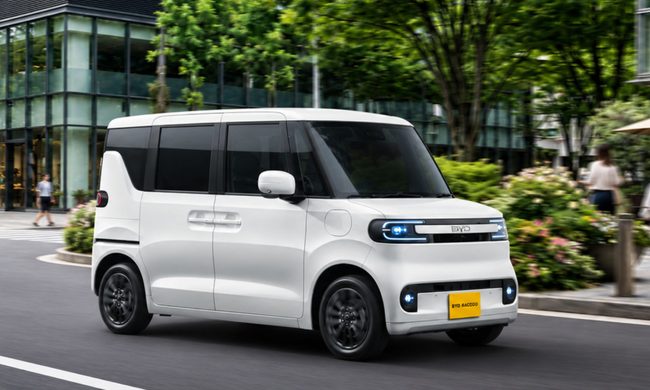
BYD Racco

BYD has entered the Japanese kei car market with the Racco, an electric car built specifically for the country's compact car segment. Its top trim delivers 320 km of range, making it the first compact electric car in the market to pass 300 km, according to ITHome.

Kei cars are a Japanese vehicle class with strict size and power limits, and the segment has long been dominated by domestic automakers such as Honda, Nissan, Suzuki, and Daihatsu. The Racco is BYD's first attempt to compete in that space.

Read more
BMW could finally be building the electric convertible fans have always wanted
Good things come to those who wait, and apparently that means until 2028.
BMW convertible

There have been whispers about a two-door BMW i4 for years, and according to a new report from BMWBlog, at least one version is actually in the works. The outlet's sources close to BMW claim the automaker is readying an i4 Convertible under the internal codename NA3.

Why is BMW waiting until 2028 to launch it?

Read more
Waymo’s driverless cars keep getting parking tickets in Austin, and humans aren’t the only ones complaining
Waymo vehicles have collected $9,325 in Austin fines as repeated parking mistakes turn into a fleet-wide operational problem
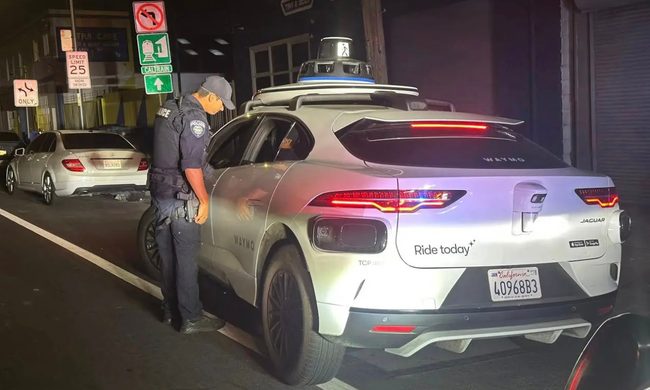
A police officer investigating an empty Waymo car.

Waymo’s 83 parking citations in Austin don’t amount to a financial crisis. They do reveal what happens when the same driving decisions are repeated across an autonomous fleet.

City records obtained by The Wall Street Journal show that Waymo vehicles have accumulated $9,325 in fines since arriving in 2024. The company has paid most of them, but the more revealing detail is how often its cars have made the same mistake.

Read more