  1. Home
  2. Wearables
  3. News

This AI tech can understand words that are not even spoken out loud

This new tech lets you speak without making a sound

Add as a preferred source on Google
Artificial Intelligence
Artificial Intelligence Unsplash

Researchers at Pohang University of Science and Technology (POSTECH) have developed a breakthrough wearable technology that can convert silent speech into audible voice by reading subtle neck muscle movements. The study, led by Professor Sung-Min Park and Dr. Sunguk Hong, was published in Cyborg and Bionic Systems, marking a significant step forward in human-machine communication.

From Muscle Movements To Spoken Words

The innovation is built on a simple but powerful idea: speech is not just about sound. When a person speaks – or even attempts to speak silently – tiny movements occur in the muscles and skin around the neck. These movements form a kind of “invisible map” of intended speech.

To capture this, the researchers created a wearable device called a multiaxial strain mapping sensor. The system combines a miniature camera with flexible silicone embedded with reference markers, allowing it to detect even the smallest skin deformations. Designed for daily use, the sensor can be comfortably worn on the neck and automatically recalibrates when repositioned.

Recommended Videos

The collected data is then processed using artificial intelligence, which interprets the strain patterns and reconstructs the intended words or sentences. By pairing this with voice synthesis trained on the user’s vocal profile, the system can generate speech that closely resembles the person’s natural voice – even when no sound is produced.

A Practical Leap Over Existing Systems

Traditional voice restoration methods rely on technologies like Electromyography (EMG) or Electroencephalography (EEG), which often require bulky equipment and can be uncomfortable for extended use.

The POSTECH team’s approach eliminates these barriers by offering a lightweight, wearable alternative. In testing, the system demonstrated high accuracy in reconstructing speech, even in noisy environments such as industrial settings where conventional microphones struggle.

Real-World Impact And Future Potential

The implications of this technology are far-reaching. It could provide a new communication pathway for patients who have lost their voices due to vocal cord damage or laryngeal surgery, enabling them to “speak” again using their own voice profile.

Beyond healthcare, the system could enable silent communication in environments where speaking aloud is impractical – such as libraries, meetings, or high-noise workplaces. It also opens the door to more natural human-AI interfaces, where intention can be translated into speech without physical vocalization.

Looking Ahead

The researchers aim to refine the technology for broader real-world deployment, improving accuracy and expanding language capabilities. Future iterations may integrate more seamlessly with consumer devices, potentially transforming how people communicate in both personal and professional settings.

As AI continues to merge with wearable technology, innovations like this signal a shift toward more intuitive, unobtrusive forms of interaction – where even unspoken words can finally be heard.

Moinak Pal
Moinak Pal is has been working in the technology sector covering both consumer centric tech and automotive technology for the…
These $89 AI glasses sold out overnight, and they’re already sparking privacy fears
Accessories, Glasses, Adapter

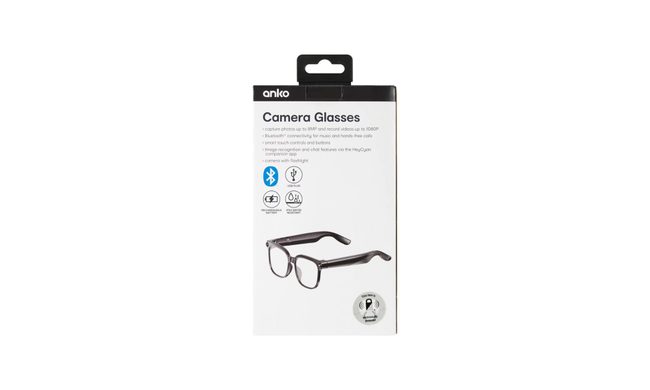
We've reached the point where AI-powered smart glasses are no longer just expensive gadgets for early adopters. Now, they're cheap enough to end up in a shopping cart alongside kitchenware and school supplies. That's exactly what's happening in Australia, where Kmart's new Anko AI Camera Glasses have completely sold out across the country. Priced at just AU$89, the wearable undercuts Meta's Ray-Ban smart glasses by a huge margin while offering many of the same features, including photo capture, HD video recording, AI assistance, music playback, and hands-free calling.

The rapid sellout suggests there's real interest in affordable smart glasses. But it has also reignited a conversation that refuses to go away: What happens when wearable cameras become so inexpensive that almost anyone can buy one?

Read more
Apple’s next big health bet could be turning glasses and headsets into fitness companions.
A focus on fitness could help Apple separate its glasses from Meta’s approach
Apple Vision Pro

Apple’s long-rumored smart glasses are already running late as the company tries to avoid the privacy concerns that come from putting cameras on someone’s face. At the same time, Apple may be planning to turn them into something far more useful than a typical pair of smart glasses.

According to Bloomberg, Apple is exploring ways to turn its future glasses and Vision headsets into health and fitness companions. Their cameras and sensors could eventually track movement, analyze workouts, and help users improve how they exercise.

Read more
The Moto Watch Ultra could revive Motorola’s premium smartwatch ambitions
A premium Motorola smartwatch with LTE and 50-metre water resistance may be in development
Wristwatch, Arm, Body Part

Motorola may be preparing to throw its hat into the premium smartwatch ring. Exclusive renders obtained by The Mac Observer reveal an unannounced wearable carrying the internal name Moto Watch Ultra, and the design looks far more ambitious than the Moto Watch launched earlier this year.

The images show a circular display surrounded by a numbered bezel, a large rotating crown, and an additional side button. Motorola also appears to be using a 46mm stainless steel case, which should give the watch a more premium finish than the aluminum frame used on the current Moto Watch. The leaked model is shown with a black leather-style strap featuring red stitching and a matching red inner lining. Its watch face displays steps, activity data, calories, time, and date.

Read more