1. Home
  2. Phones
  3. News

Android 17 is finally getting Apple’s Handoff feature, and it’s about time

One tap and your tablet picks up where your phone left off.

Add as a preferred source on Google
Google Continue On
Google

Recently, I wrote about how Apple’s Continuity features keep me locked into the Apple ecosystem because Android and Windows have no answer to Apple’s incredible cross-device seamless integration.

It seems that Android is finally getting started to compete with Apple in this domain. The upcoming Android 17 is bringing a feature that makes switching between your Android devices feel natural. It’s called Continue On, and it lets you start work on one device and seamlessly pick it up on another Android device. 

Recommended Videos

At launch, the feature focuses on mobile-to-tablet transitions. When you open your tablet, you will see a suggestion in the taskbar for the most recently opened app from your phone. One tap, and you are right back where you started. It’s similar to how Apple’s Handoff feature works. 

How does it work?

Google calls the device you start on the sender and the one you switch to the receiver. The handoff, which is the transition, happens in the background, so you don’t have to do anything complicated. The app just picks up where you left off.

There are a couple of ways this can go, depending on how the developer builds the app. If the app is installed on your tablet, it will deep-link you directly to the activity you were in. Think of opening a Google Docs tab on your phone and having the same document open on your tablet.

What if the app isn’t on your tablet?

If the app is not installed on the tablet, developers can set up a web fallback. So even if the app isn’t installed on the receiving device, it will open the equivalent web experience in your browser instead. Gmail, for example, can hand off from the Android app on your phone to the full Gmail web experience on your tablet, opening the same email thread.

Developers also have the option to skip the app entirely and send users straight to the web version if that is the better experience for a larger screen. Continue On is available in Android 17, and developers can start building support for it now.

It’s highly likely that Google will also add this feature to its upcoming Googlebook laptops, finally providing users with a competitive ecosystem to Apple’s offerings. It’s still early days, but it’s a step in the right direction.

Rachit Agarwal
Rachit is a seasoned tech journalist with over ten years of experience covering the consumer technology landscape.
The Minimal Phone 2 looks dramatically better than the original, and I’m genuinely here for it
Plastic is out, metal is in, and Minimal Phone 2's renders suggest the digital detox phone concept finally has the hardware to match its ambition.
Electronics, Mobile Phone, Phone

I've been following the Minimal Phone since its initial crowdfunding days. The first iteration had the right idea trapped inside the wrong body, I’d say. Plastic build, no 5G, an underwhelming camera, and e-paper ghosting that frustrated early adopters; all these issues kept the phone from reaching a wider audience. 

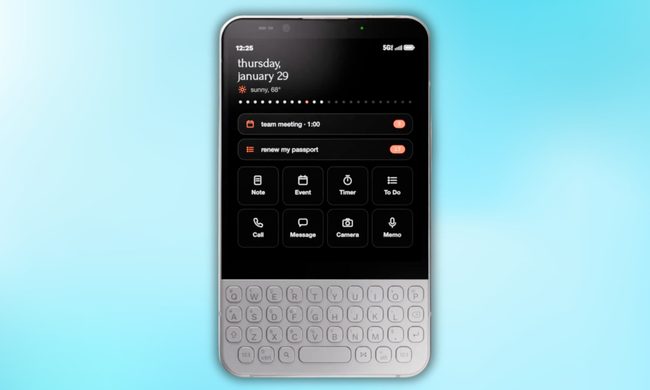
Now, founder Armen Youssefian has posted what appears to be a 360-degree render of the Minimal Phone 2 on X, and from what I can see, the team has done its homework.

Read more
The EU says TikTok still isn’t doing enough to protect kids
Regulators say the platform's privacy settings don't go far enough under the Digital Services Act.
TikTok Creative Featured

The European Commission has accused TikTok of falling short on protecting minors, saying the platform's current account settings don't meet the child safety standards required under the Digital Services Act (DSA). The findings are preliminary, but if upheld, TikTok could face a fine of up to 6% of its global annual revenue.

Why the EU thinks TikTok isn't doing enough

Read more
Qualcomm is set to ratchet up chip prices in September, and your next gadget upgrade could bear the brunt
The price hike could touch every Snapdragon-powered device category.
The new Qualcomm Snadragon 8 Elite Gen 5

I want you to sit with this for a second. Qualcomm, the company whose Snapdragon chips sit inside your Android phone and tablet, your Windows laptop, your Meta smart glasses, your Galaxy Watch, and your wireless earbuds, reportedly sent a letter to every major customer telling them prices are going up by double digits. 

The price hike will be in effect from September 1, 2026, a recent Bloomberg report claims. Essentially, all the companies placing their chip orders after that will pay a higher price. 

Read more