1. Home
  2. Phones
  3. Mobile
  4. Legacy Archives

Congress passes amendment to defund NSA ‘backdoor’ surveillance

Add as a preferred source on Google

In a rare show of bipartisan cooperation, the House of Representatives voted for an amendment that seeks to cut funding for part of the National Security Agency’s surveillance program, particularly the use of “backdoors” that allow spy agencies to monitor private data and communications. The amendment, which was inserted into a defense appropriations bill, was passed with overwhelming support with a vote of 293-123. In its current form, the amendment may mean the end of the NSA’s warrantless spying on people’s Internet activity, which includes emails and search logs. Currently, data like emails (as long as it is older than 180 days) and mobile phone locations can be monitored without warrants.

“None of the funds made available by this Act may be used by the National Security Agency or the Central Intelligence Agency to mandate or request that a person … alter its product or service to permit the electronic surveillance … of any user of said product or service for said agencies,” the amendment read.

Recommended Videos

“There’s no question Americans have become increasingly alarmed with the breadth of unwarranted government surveillance programs used to store and search their private data,” said Rep. Jim Sensenbrenner (R-Wi), Rep. Zoe Lofgren (D-Ca), and Thomas Massie (R-Ky), the amendment’s sponsors, said in a press release. “This amendment will reinstate an important provision that was stripped from the original USA Freedom Act to further protect the constitutional rights of American citizens. Congress has an ongoing obligation to conduct oversight of the intelligence community and its surveillance authorities.”

The amendment has received backing from privacy advocates, who are calling it the “first step in reining in the NSA.”

“The House voted overwhelmingly to cut funding for two of the NSA’s invasive surveillance practices: the warrantless searching of Americans’ international communications, and the practice of requiring companies to install vulnerabilities in communications products or service. We applaud the House for taking this important first step, and we look forward to other elected officials standing for our right to privacy.,” Mark Rufold, a staff attorney for the Electronic Frontier Foundation, said in a press release.

The passage of the amendment softens the blow of a previous legislative defeat for privacy advocates. Last month, the USA Freedom Act was passed by Congress with a vote of 303-121. Critics say that the bill was gutted to the point that it actually expanded the data pool from which the NSA can collect data.

Christian Brazil Bautista
Christian Brazil Bautista is an experienced journalist who has been writing about technology and music for the past decade…
Topics
Google just made switching from iPhone to Android much easier with Android 17
Android 17 can now transfer your passwords, passkeys, eSIM, and even your home screen.
Android-17-switch-ios-to-android

Moving from an iPhone to an Android phone has never been an easy process, but Google is trying to change that. With Android 17, the company has introduced a rebuilt Android Switch that can move far more of your data than any past version ever could.

Google worked with Apple to create the new transfer system from the ground up, allowing far more information to move wirelessly than before. The upgraded experience is already rolling out to eligible Pixel devices and is also available on Samsung's new Galaxy Z Fold 8 and Galaxy Z Flip 8 through Smart Switch.

Read more
WhatsApp’s new in-car experience is built around hands-free control
CarPlay and Android Auto users can now hear and reply to messages, view call history, and reach favorite contacts without touching their phone.
WhatsApp new CarPlay experience featured

Meta is overhauling how WhatsApp works in the car, giving CarPlay and Android Auto users a lot more to do than just sending texts and making calls. The company announced the change in a newsroom post today, alongside several other updates rolling out to the messaging app.

WhatsApp finally works hands-free in the car

Read more
I tried the Samsung Galaxy Z Fold 8 and I am totally in love with this unique foldable
Samsung's Galaxy Z Fold 8 trades bulk for a genuinely pocketable design, and after holding one next to an iPhone 17 Pro, I'm convinced it's the foldable to beat this year.
Symbol, Electronics, Mobile Phone

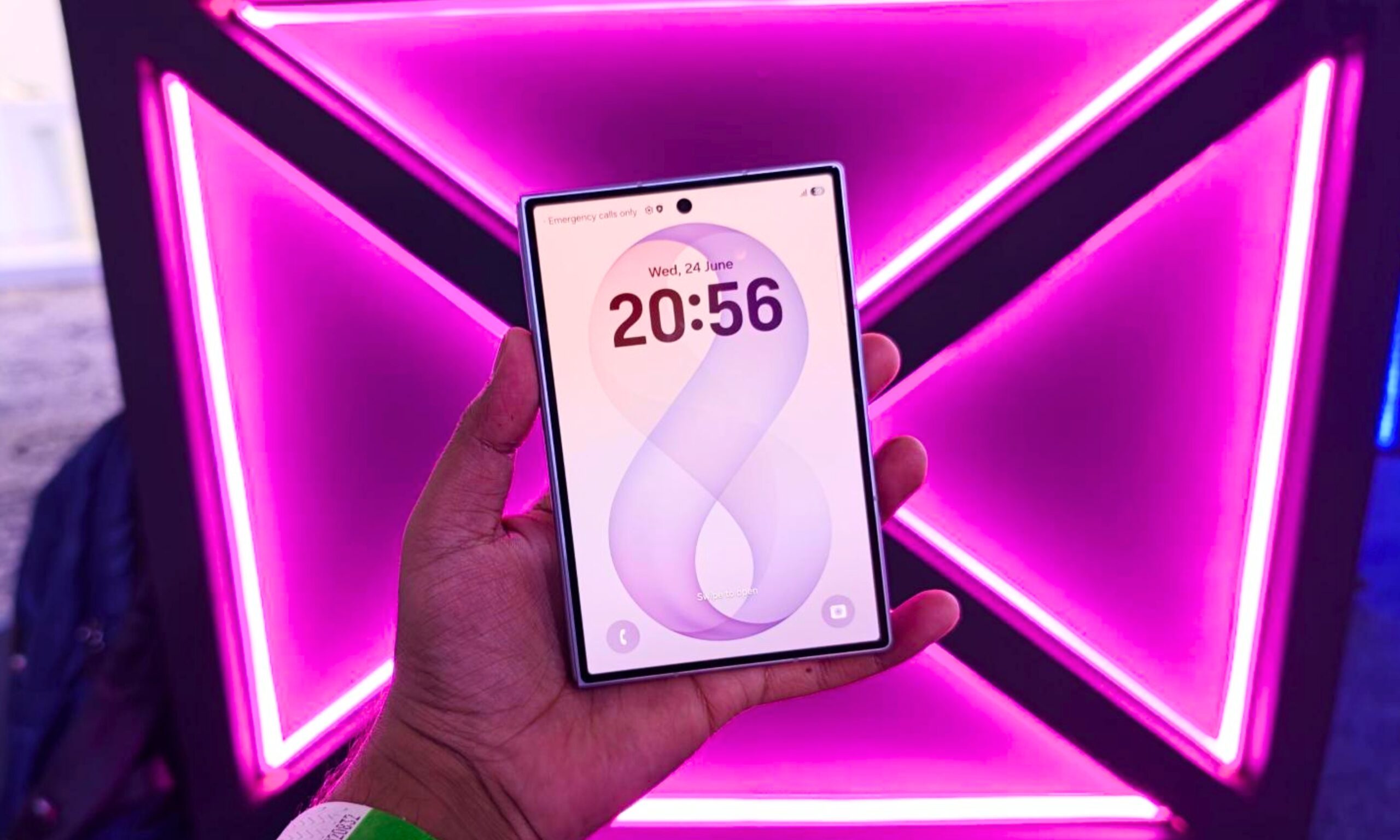
Samsung is trying to jazz things up once again in the foldable space, and the mantra this time around is going smaller and lighter. The result of those efforts is the Galaxy Z Fold 8, and it’s the first time in years that I vocally said “wow” the moment I picked it up. It’s pocketable, light, sleek, and most importantly, oozes functional charm. 

Just take a look at how petite it is when held alongside a modern-age iPhone. In an age when smartphones are getting thicker and bulkier, the Galaxy Z Fold 8 wants to stand out in a rather unique fashion. Even in the unfolded state, it’s less than a millimeter thicker than an iPhone 17 Pro (9.7 vs 8.75 mm). If you compare the weight, the comparison flips in its favor. The Galaxy Z Fold 8 is lighter than even the smaller iPhone 17 Pro (201 grams vs 204 grams).

Read more