1. Home
  2. Computing
  3. Emerging Tech
  4. Legacy Archives

The U.S. government is building the world’s fastest supercomputers

Add as a preferred source on Google

The U.K.’s and China’s amazing achievements in the supercomputing field are about to be overshadowed by two cutting-edge systems funded by the U.S. Department of Energy. Nvidia and IBM will help America reclaim its top position in tech breakthroughs, scientific research, as well as economic, and national security.

Estimated to cost around $325 million in total, state-of-the-art supercomputers dubbed Sierra and Summit will be installed in 2017, Nvidia anticipates. Built using IBM Power servers, they’ll use Nvidia Tesla GPU accelerators, and NVLink GPU interconnect technology to reach peak processing speeds that previously appeared too far-fetched to even dream of.

Recommended Videos

China’s Tianhe-2, the world’s current fastest supercomputer, can deliver up to 55 petaflops of processing power. Meanwhile, America’s upcoming Sierra should have no problem running at over 100 petaflops. And Summit will up the processing capability ante to as much as 300 petaflops.

And you thought your overclocked Intel Core i7 Haswell chip was fast.

Sierra’s purpose at the Lawrence Livermore National Laboratory will be to ensure the safety and effectiveness of the nation’s nuclear program.

Sequoia, mind you, is no pushover. However, at 20 petaflops, it looks like a featherweight next to Sierra, which is expected to generate five to 10 times superior performance.

As for Summit, it will replace the Oak Ridge National Laboratory’s Titan supercomputer, which is aging. Though it’s the current national processing power title holder, Titan can barely reach a tenth of Summit’s mind-blowing speed achievements. Titan tops out at 27 petaflops.

Meant for scientific applications, Summit will be shared by American researchers with their colleagues all over the world. The goal is to use Summit to drive discoveries and inventions that everyone can benefit from, not just us Yankees.

Incredibly enough, when Summit enters the picture, and Titan departs, the U.S. Department of Energy forecasts a measly 10 percent increase in power consumption.

The potential of Summit and Sierra is detailed in the below clip, which is courtesy of Nvidia.

Adrian Diaconescu
Former Digital Trends Contributor
Adrian is a mobile aficionado since the days of the Nokia 3310, and a PC enthusiast since Windows 98. Later, he discovered…
Microsoft wants Windows 11 and your phone to become best friends
Microsoft's latest plans reportedly focus on making the PC and smartphone experience feel seamless.
Windows 11 PC with Android Phone

For years, Phone Link has felt like that one app everyone knows exists but rarely remembers to open. Microsoft apparently wants to change that. According to a report from Windows Central, the company is working on a major overhaul of how smartphones integrate with Windows 11, making phones feel like a native part of the operating system instead of something users access through a separate app.

Phone Link is coming out of hiding

Read more
What are Copilot+ PCs? Everything you need to know
Copilot

Walk through a laptop aisle in 2026 and the Copilot+ PC branding is highlight for most Windows laptops. From Microsoft's own surface to other PC makers like Samsung, HP, and Dell, you can find notebooks that carry this badge to convey that they are AI-ready. At a glance, the name sounds like it refers to a computer with a better version of the Copilot chatbot, which only explains a small part of it.

A Copilot+ PC is a Windows 11 computer that meets Microsoft’s hardware standard for advanced on-device AI features like a compatible processor with a dedicated NPU. You also need a certain amount of RAM and storage, all of which brings access to Windows features such as Recall, Click to Do, and much more. Many of these experiences use the NPU to process information locally, reducing their reliance on cloud servers and helping them run more efficiently in the background.

Read more
ASUS expands its ProArt lineup with a compact keyboard and a smart creator mouse
The new ProArt KD300 and MD301 are designed to make life easier for designers, editors, and creators.
ASUS ProArt Keyboard KD300 and ProArt Mouse MD301

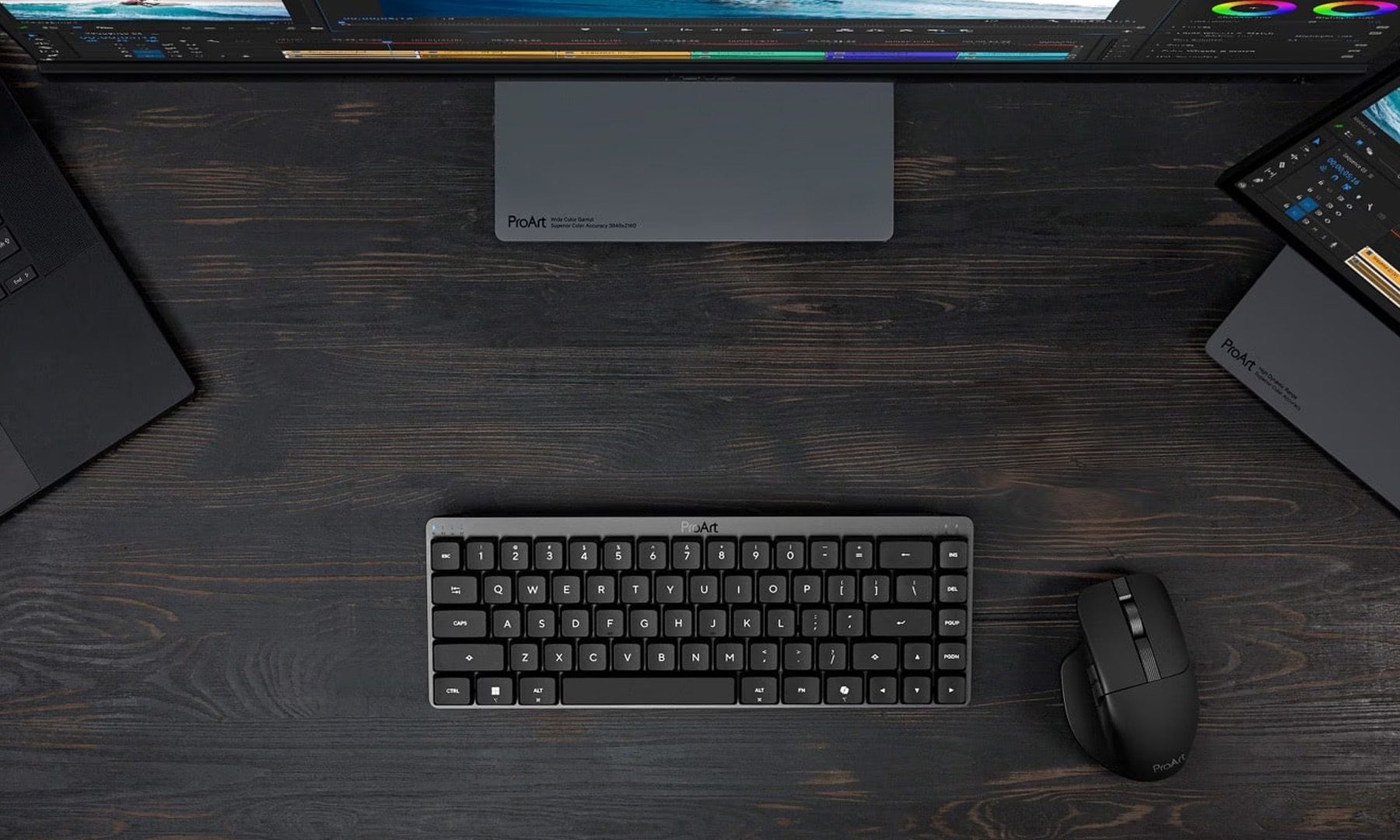
Creators have long had plenty of powerful laptops and monitors to choose from. Keyboards and mice? Not so much. ASUS is looking to change that with the expansion of its ProArt accessory lineup. Leading the announcement is the new ProArt Keyboard KD300, a compact low-profile keyboard that's designed to work alongside the ProArt Mouse MD301, giving creators a matching desktop setup built specifically for productivity instead of gaming.

A compact keyboard that doesn't sacrifice functionality

Read more