  1. Home
  2. Cars
  3. Legacy Archives

Keep it down over there! Noise regulations keep Corvette Stingray from South Korean shores

Add as a preferred source on Google

Chevrolet is in the midst of rolling out the seventh-generation Corvette Stingray in overseas market all around the globe, but displacement addicts in South Korea might never get the chance to sit behind the wheel.

Speaking at a recent media presentation, executives explained that the South Korean government has indefinitely banned the Corvette Stingray because its 6.2-liter LT1 V8 engine doesn’t comply with the strict noise regulations that apply to all new passenger cars.

Recommended Videos

It is technically possible to make the seventh-gen ‘Vette quieter by fitting it with a more restrictive exhaust, but Chevrolet explains that it is having a hard time justifying the investment because the South Korean market represents little more than a rounding error in annual Corvette sales. According to Sergio Rocha, the CEO of Chevrolet’s South Korean arm, only about 12 Corvettes are sold annually in Korea.

Related: Mid-engined Corvette coming soon?

The government is unlikely to exempt the Stingray from the noise regulations but all hope is not lost. Sales of imported cars in South Korea reached an unprecedented high last year, and a relatively recent free-trade agreement with the United States could boost sales in the long run by lowering the ‘Vette’s base price.

If the market picks up, Chevrolet might invest in ways to make the Corvette quieter. If sales stay low, America’s muscle car will remain a forbidden fruit in South Korea.

Ronan Glon
Ronan Glon is an American automotive and tech journalist based in southern France. As a long-time contributor to Digital…
This sleek Chinese EV pairs supercar styling with three AI brains
The Xpeng L03 is an AI supercomputer disguised as a stylish family SUV
Xpeng L03

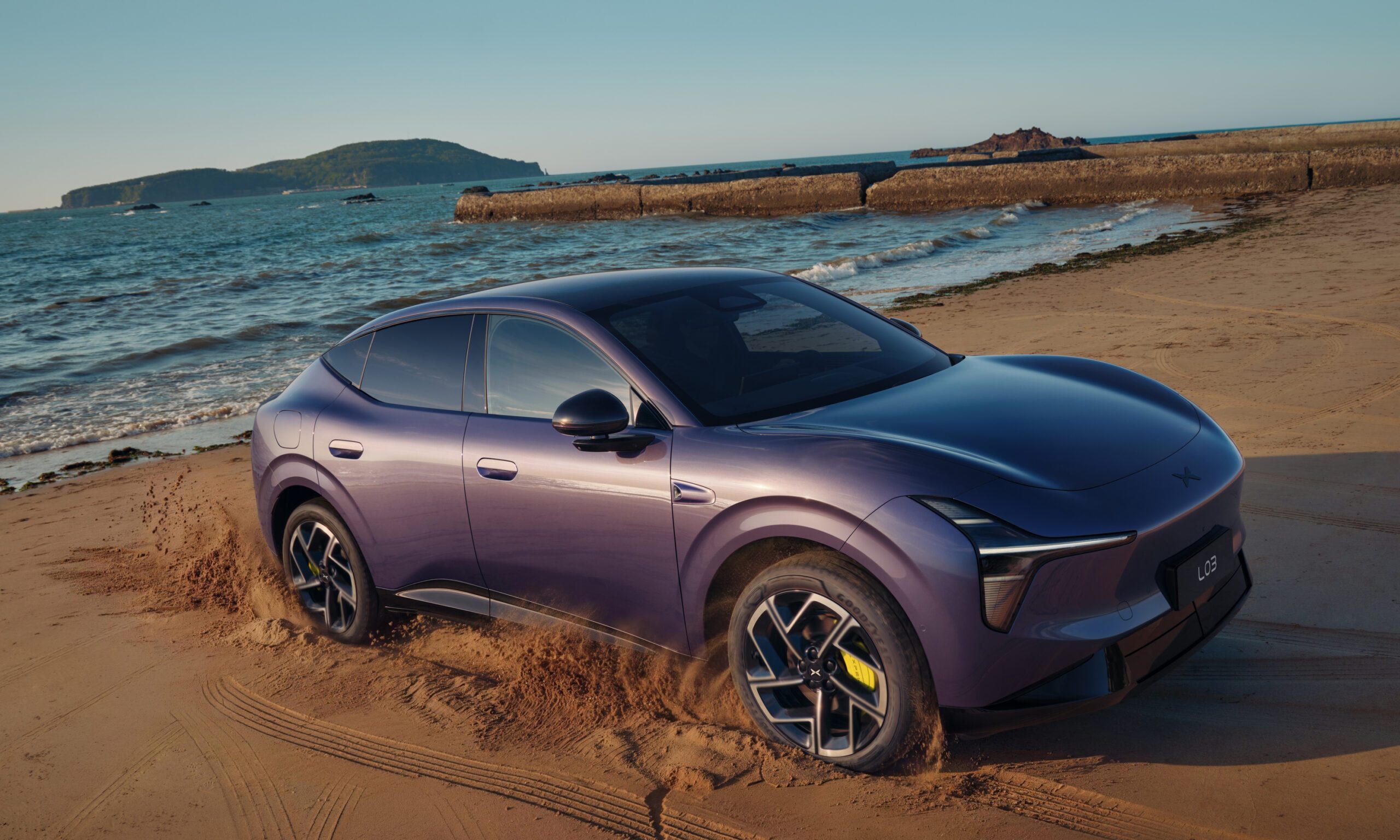
Xpeng’s latest electric vehicle carries enough processing power to make the term "smart car" actually sound more realistic than it actually is. The new Xpeng L03 debuted simultaneously in Europe and China on July 16, with the company presenting it across 65 markets. Available as a fully electric vehicle and an L03 Power X range-extender, the coupe-SUV is Xpeng’s most internationally focused model so far. Market-specific prices and sales dates remain unannounced.

Three AI chips and Google Maps built right in

Read more
A new sodium battery posts wild four-minute charging numbers, but don’t expect it in an EV yet
The breakthrough could improve fast charging and battery life, but the study hasn’t demonstrated those results in a production-sized pack
EV Charger

A new sodium-metal battery has posted a charging number that makes today’s EVs look painfully slow. In laboratory testing, the cell operated at a 15C rate, equivalent to completing a charge or discharge in roughly four minutes.

That doesn’t mean researchers plugged in an electric car and watched it fill up before the driver finished buying coffee. The result came from a small experimental cell using a new quasi-solid electrolyte, while the larger pouch-cell prototype delivered far less dramatic performance.

Read more
The Apple Car may be dead, but it became the foundation of Apple Intelligence
A decade of work on a canceled car project reportedly laid the groundwork for Apple Intelligence.
Apple Intelligence in Apple Car

The Apple Car may have never left the garage, but it apparently gave birth to Apple's AI ambitions. According to Bloomberg's Mark Gurman, Apple's canceled autonomous vehicle project, one that consumed more than a decade of work and over $10 billion before being scrapped in 2024, ended up laying the technological foundation for Apple Intelligence. In a rather ironic twist, one of Apple's most expensive failures may also become one of its most important long-term investments.

The Apple Car forced Apple to think like an AI company

Read more