  1. Home
  2. Cars
  3. Legacy Archives

Meet the Atom’s ‘mucky brother.’ Ariel announces 200-horsepower Nomad off-roader

Add as a preferred source on Google

Few vehicles grant a purer connection to the road than the track-focused Ariel Atom. Soon, it looks like the British automaker is bringing that relationship to the dirt.

According to Autocar, the company will release the Nomad next month, a high-performance, all-terrain vehicle that will sit between the Atom and pure off-roaders. It will accomplish this with a lightweight, compact body, a high power-to-weight ratio, and fine-tuned suspension.

Recommended Videos

But where the Atom excels on smooth tarmac, the Nomad is at home in the mud. It’s based on the racecar’s hand-welded, ladder frame chassis, but wide gumball tires, a high ground clearance (comparatively), and a high-strength rollover compartment bolster the Nomad’s adventurous capabilities.

“We’ve done quite a bit of testing on forest tracks and rally stages, and results have been extremely encouraging,” said Henry Saunders, Nomad tester and son of Ariel founder Simon Saunders. “We know the car is quick and stable.”
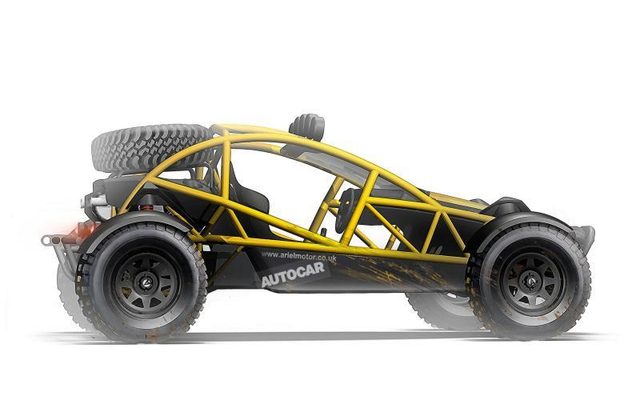
Ariel Nomad
Image used with permission by copyright holder

Powering the two-seater is a 2.4-liter Honda engine that develops around 200 horsepower, likely the same unit from the Acura ILX and Civic Si. But as Jeremy Clarkson might say, there’s a problem.

“It’s still a two-wheel-drive vehicle,” said Saunders. “We’re looking forward to discovering how it performs in genuine off-road conditions – in mud or crawling over rocks – compared with a traditional 4×4.”

The powerplant is connected to a Honda’s enjoyable six-speed manual transmission, with a mechanical limited-slip coming standard. More advanced setups are reportedly available as an option.

“The car should still be very quick on road,” continued Saunders. “Not quite as quick as an Atom, maybe, but it will be able to do many things an Atom never could.”

Final specs and pricing are to be released, but the entry-level model should be priced similarly to the Atom 3’s $49,980. The car will debut on January 9th.

Andrew Hard
Andrew first started writing in middle school and hasn't put the pen down since. Whether it's technology, music, sports, or…
Volvo is rolling out Apple Music to over 2 million cars with a simple OTA update
Your Volvo may soon get Apple Music without needing CarPlay
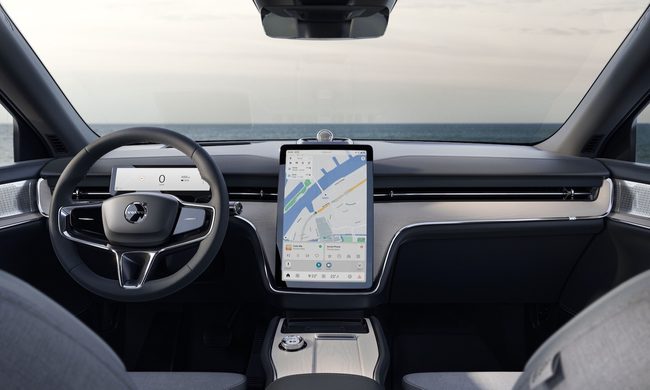
Interior view of the 2024 Volvo EX90.

The line between your smartphone and your car continues to blur. Volvo has announced that it is rolling out an over-the-air software update that brings Apple Music directly to the infotainment systems of more than 2 million vehicles worldwide. Instead of relying on Apple CarPlay or plugging in an iPhone, eligible drivers will be able to stream music natively from their car's built-in system, making Apple Music another integrated feature of Volvo's software experience.

The update is arriving for a wide range of Volvo models, including the EX90, ES90, XC90, S90, V90, XC60, S60, V60, XC40, EX40 and EC40, covering model year 2020 onwards. Availability, however, may vary depending on the vehicle.

Read more
Chery’s latest EV packs flagship tech for the price of a base Tesla, but you can’t buy it
Here's everything packed into Exeed's 2027 Exlantix ES, from its 27-sensor autonomous driving suite to its 860 km range, all starting under $31,000.
Car, Transportation, Vehicle

Chery's premium arm just dropped a sedan that makes you wonder why American EVs cost twice as much for half the tech.

Exeed's 2027 Exlantix ES ships with a driver-assist system called Falcon 700. It is built around an Nvidia Orin-Y chip and a genuinely stacked sensor suite.

Read more
A new AI model wants self-driving cars to think before they swerve
Forget guessing games, this self-driving AI actually shows its work.
Self driving car

Self-driving cars have gotten pretty good at driving. The harder problem is teaching them to drive safely in situations nobody planned for. We have heard horror stories of self-driving cars, behaving erratically in emergency situations, often times delaying first responders from reaching the scene.

A team at Seoul National University, led by professor Jun Won Choi from the Department of Electrical and Computer Engineering, thinks they have cracked part of that puzzle with a new AI model called SafeDrive. The research was recently selected as a highlight paper at CVPR 2026, a distinction that goes only to roughly 3% of all submissions.

Read more