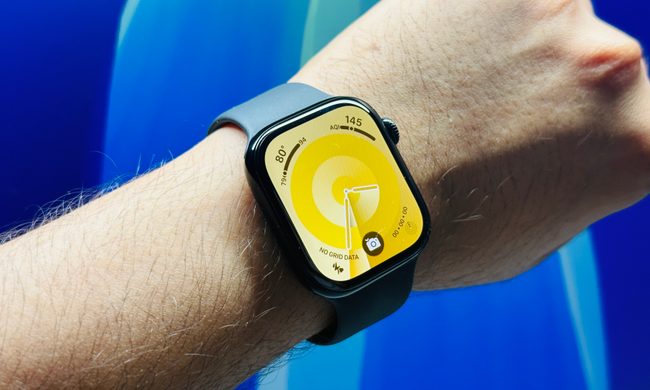
Apple’s smartwatch is set to arrive in a couple of months, and all eyes will be on whether the device has managed to catch the gadget-buying public’s imagination to such a degree that they’ll happily hand over a wedge of notes for the flashy wrist-based computer.
Apple’s first ever smartwatch isn’t, however, quite what executives and engineers had in mind when they agreed on a design in the early stages of its development, according to a piece in Monday’s Wall Street Journal,
Insiders told the news outlet that originally the tech company was intent on creating a device that focused heavily on health and fitness, much more so than competing products currently on the market. Indeed, reports published months before the watch was unveiled in September suggested its designers were looking to include as many as 10 sensors geared toward collecting an array of health data.
But as it tested features for measuring, for example, blood pressure, heart activity, and stress levels, they found the data collected by its on-board sensors to be too unreliable, while other desired features proved too complex to get right. Dry or hairy skin affected data accuracy, while the tightness of the watch’s strap was also an issue.
A ‘black hole’
The Journal claims the product’s development became so challenging that those working on it started calling it a “black hole” for all the resources that it sucked in.
The difficulties apparently forced Apple to ditch its original plan to create a gadget focused primarily on health. However, according to the Journal’s sources, the altered design left executives “struggling to define the purpose of the smartwatch and wrestling with why a consumer would need or want such a device.”
Taking its modified design into account, the watch is now likely to be marketed much more broadly. Apple CEO Tim Cook has already said as much, claiming just last week that consumers will be impressed by “the breadth of what it will do.”
It’s true, the Apple Watch will launch with several sensors – including a heart-rate monitor – and users can expect to see a slew of fitness apps landing on the platform over time, many of which will link to its Health app. However, the device’s design is thought to be far from the original plan and contains far fewer sensors than Apple envisioned when it launched the project.
Improvements
As the relevant technology advances, future iterations of the Apple Watch are bound to start incorporating more sensors to provide wearers with a wider variety of health and fitness data, although rivals will be planning on developing their own smartwatches along the same lines, possibly beating Apple to more advanced features in the process.
For the time being, Apple will be hoping the slick design of its smartwatch, as well as its broad functionality, will be enough to persuade consumers that its gadget is worth every cent of its $349+ price tag.