1. Home
  2. Audio / Video
  3. Mobile
  4. Music
  5. Photo Galleries
  6. News

B&O builds a better basket of sound with the Beolit 15 Bluetooth speaker

Add as a preferred source on Google

What’s more impressive than a $400 Bluetooth speaker’s coming-out party? How about a $600 followup? Say hello to Bang & Olufsen’s second-ever Bluetooth speaker, the Beolit 15. It’s a luxe little basket of omnidirectional sound that looks to raise the game — in both price and performance — for B&O’s Bluetooth department.

Having only recently acquiesced to enter the blooming Bluetooth speaker market with the Beoplay A2, B&O has doubled down with a new device that raises the stakes even higher than before. Those familiar with Bang & Olufsen’s rich history in wireless audio will recognize the boxy design of the Beolit 15, which borrows heavily from the company’s Beolit 12 AirPlay speaker.

With this latest iteration, B&O claims to have refined the design into “the best music system of its kind on the planet.” Interestingly, B&O claims the speaker presents a “forceful and clean” sound signature — an apt description of the A2, which offers laser-etched detail, but whose midrange can be a little aggressive on sharper tracks. The big draw for both speakers is the voluminous sound performance, thanks to the addition of B&O’s True360 technology which helps to deliver a wide burst of room-filling sound.

Bang-&-Olufsen-Beolit-15-017
Image used with permission by copyright holder

The Beolit 15 is powered by dual amplifiers that push a claimed 240 watts of total system power. The amplifiers are split between a single 5 ½-inch long stroke full-range driver, and three 1 ½-inch tweeters, two of which are placed at angles along the front borders, with the remaining slung around back. The active drivers are supplemented with dual 4-inch passive radiators for better bass response, all of which is packed into a robust polymer chassis adorned with an anodized aluminum grill, and affixed with a full grain leather strap.

Bluetooth 4.0 ensures efficient wireless playback with no need for a Wi-Fi signal, and like the A2, B&O also claims a monstrous battery runtime of “up to 24 hours,” though we found that number shrank significantly when playing the A2 at or above medium volume levels. B&O gives the same warning on its website, saying “if a product can play extremely loud, and you turn the volume all the way up, it uses a lot more energy.”

Obviously there’s a wealth of engineering packed into this premium tote-able speaker, but the real question remains: Is any Bluetooth speaker worth $600? Even the less expensive Beoplay A2 tests the price-to-performance ratio, especially for the budget conscious, so the Beolit 15 will have to provide a striking performance improvement to make it worth consideration. While we can’t determine if this speaker is worthy of its hefty price tag, we’re eager to find out.

The new Beolit 15 will be available in Natural Champagne, Polar Blue, and Shade Rosa accents sometime in March. If you’re interested, you can sign up for notification of availability at Bang & Olufsen’s website.

Ryan Waniata
Former Home Theater & Entertainment Editor
Ryan Waniata is a multi-year veteran of the digital media industry, a lover of all things tech, audio, and TV, and a…
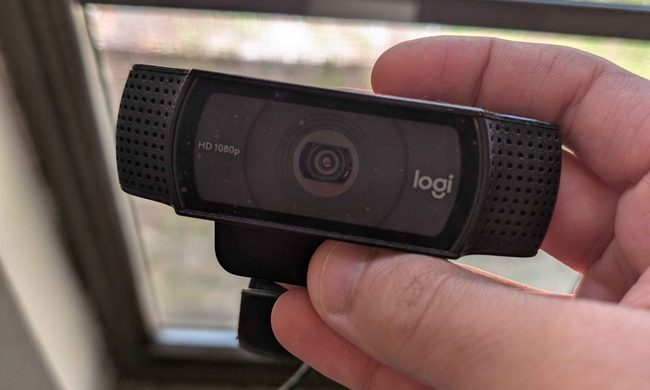
Stop joining group projects with a blurry laptop webcam and buy one of these instead
Your laptop webcam is sabotaging your first impression. These five can fix it
I'm holding my Logitech C920 1080p webcam in my hands.

The webcam built into your laptop might be good enough for a quick call with friends and family. But its shortcomings become much harder to ignore when you are presenting a semester project, interviewing for an internship, or maybe if you're planning to stream for fun.

Laptop cameras also tend to sit far too low, especially when the computer is placed directly on a desk. Meanwhile, a dedicated webcam lets you position the camera closer to eye level. This improves the framing and brings larger sensors, better microphones, and more effective low-light processing.

Read more
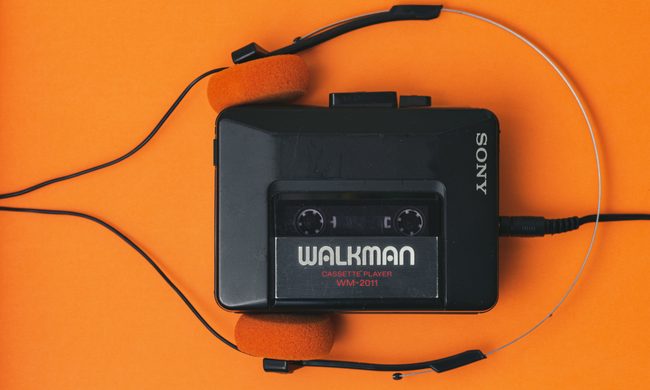
I desperately want a new classic Walkman, but Sony probably can’t give me one
Tech minimalism is begging for a new Walkman. Though rebuilding it may be close to impossible
Sony Walkman WM2011

Every few months, another piece of tech that seems obsolete crawls out of a drawer and becomes cool again. The age of minimalism has revived the popularity of iPods among younger buyers. Dumbphones have become an escape hatch from endless notifications. Similarly, digital cameras are dangling from bags again. Physical media keeps attracting people who want something they can actually hold instead of another frustrating subscription.

All of this makes it the perfect time for Sony to bring back the classic Walkman, which was a phenomenon during the 80s and 90s. I would love one. Give me a compact cassette player, physical buttons, and wired headphones. Keep the apps, notifications, and algorithms that shape your taste of music. No more AI assistants or personalzied feeds, just you and your Walkman. There is only one problem though. Recreating the Walkman that people love and remember, would be far harder than putting an old design back into production.

Read more
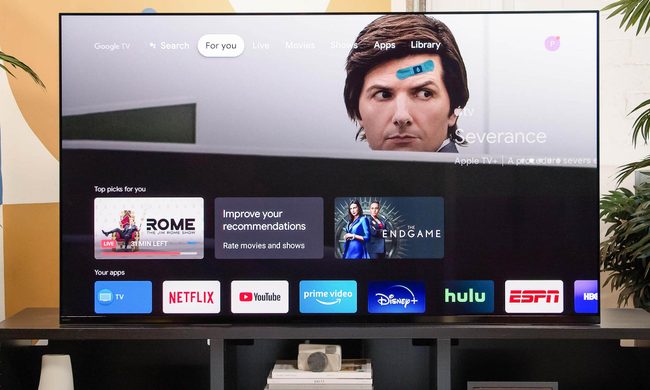
Proton reveals how smart TVs track you and the escape situation is pretty grim 
Modern smart TVs fingerprint your screen content at the chipset level.
Google TV applications on the Sony A95K TV.

Your smart TV may know far more about your viewing habits than you realize, even if you rarely use its smart features. In a new privacy explainer, Proton warns that many modern TVs quietly collect data about everything displayed on the screen and share it with manufacturers, advertisers, and analytics companies.

The worrying part is that escaping this tracking is becoming increasingly difficult because many privacy controls are buried deep in settings or enabled by default. Proton argues that buying a smart TV today often means accepting a level of surveillance that most people never knowingly signed up for.

Read more