  1. Home
  2. Cars
  3. Photo Galleries
  4. News

Dragonfly doors, laser headlights pop on Chevy’s insect-inspired FNR concept

Add as a preferred source on Google

Some concept cars are meant to preview future production models, others are simply meant to grab attention. This one belongs to the latter category.

Debuting at the 2015 Shanghai Auto Show, the Chevrolet FNR concept is more of a dream than a real car, but it will look pretty darn good on Chevy’s stand at the show.

While some cars are inspired by fighter planes or muscular athletes, the designers at General Motors’ Shanghai-based Pan Asia Technical Automotive Center seem to have taken a page from insects.

The FNR features a “capsule” design, with the wheels pushed out to the corners and well away from the four-passenger cabin. “Dragonfly” dual-swing doors allow most of the bodywork to peel away like discarded pieces of armor.

Lighting the way through the Phillip K. Dickian futurescapes that are likely this car’s natural habitat are “crystal laser” headlights and taillights, which seem like an attempt to one-up the production-ready laser light systems of certain German carmakers.

The powertrain is just as sci-fi as the styling. Chevy says the FNR sports magnetic hub less in-wheel electric motors, and an automated wireless charging system..

While the FNR looks pretty sporty, Chevy wouldn’t hypothesize on performance figures, or even offer further details on how the car’s futuristic propulsion system is supposed to work.

Another piece of future tech on the FNR’s resume is self-driving capability. It uses onboard sensors and a roof-mounted radar unit to map out the environment, and can even suggest alternate routes when a human being is at the controls.

The switchover from manual to autonomous operation is accomplished using gesture controls. In autonomous mode, the front seats swivel 180 degrees to face the rear seats, turning the FNR into something like a living room on wheels.

Other tech features include Chevrolet Intelligent Assistant – whatever that is – and iris recognition. The FNR can only be driven if it gets a positive iris ID.

The Chevrolet FNR is obviously too outlandish for production, but it’s part of a trend of concept cars that try to anticipate how autonomous driving will change car design.

Like the Mercedes-Benz F 015 or Rinspeed Budii, the FNR was designed from the perspective that the changes wrought by autonomy will be more than just mechanical.

If people really do give up driving en masse, they may very well start using their cars in different ways. That future is still a long way off, but designers are already anticipating it.

Stephen Edelstein
Stephen is a freelance automotive journalist covering all things cars. He likes anything with four wheels, from classic cars…
This sleek Chinese EV pairs supercar styling with three AI brains
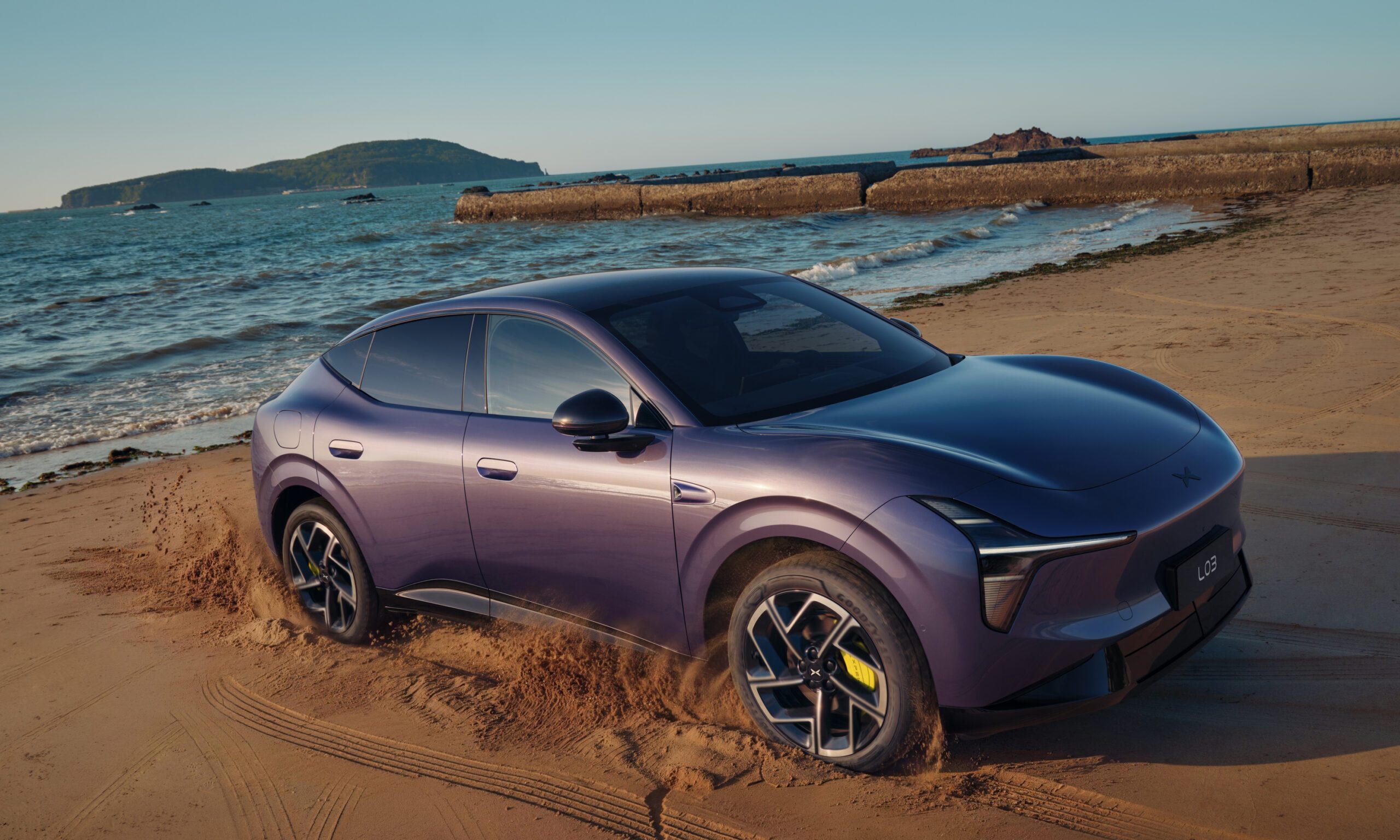
The Xpeng L03 is an AI supercomputer disguised as a stylish family SUV
Xpeng L03

Xpeng’s latest electric vehicle carries enough processing power to make the term "smart car" actually sound more realistic than it actually is. The new Xpeng L03 debuted simultaneously in Europe and China on July 16, with the company presenting it across 65 markets. Available as a fully electric vehicle and an L03 Power X range-extender, the coupe-SUV is Xpeng’s most internationally focused model so far. Market-specific prices and sales dates remain unannounced.

Three AI chips and Google Maps built right in

Read more
A new sodium battery posts wild four-minute charging numbers, but don’t expect it in an EV yet
The breakthrough could improve fast charging and battery life, but the study hasn’t demonstrated those results in a production-sized pack
EV Charger

A new sodium-metal battery has posted a charging number that makes today’s EVs look painfully slow. In laboratory testing, the cell operated at a 15C rate, equivalent to completing a charge or discharge in roughly four minutes.

That doesn’t mean researchers plugged in an electric car and watched it fill up before the driver finished buying coffee. The result came from a small experimental cell using a new quasi-solid electrolyte, while the larger pouch-cell prototype delivered far less dramatic performance.

Read more
The Apple Car may be dead, but it became the foundation of Apple Intelligence
A decade of work on a canceled car project reportedly laid the groundwork for Apple Intelligence.
Apple Intelligence in Apple Car

The Apple Car may have never left the garage, but it apparently gave birth to Apple's AI ambitions. According to Bloomberg's Mark Gurman, Apple's canceled autonomous vehicle project, one that consumed more than a decade of work and over $10 billion before being scrapped in 2024, ended up laying the technological foundation for Apple Intelligence. In a rather ironic twist, one of Apple's most expensive failures may also become one of its most important long-term investments.

The Apple Car forced Apple to think like an AI company

Read more