1. Home
  2. Phones
  3. Mobile
  4. News

Judge rules government can search your phone location history without a warrant

Add as a preferred source on Google

Making the hairs on the back of every privacy advocate’s neck stand up, the U.S. Court of Appeals for the Eleventh Circuit ruled that the government does not need a warrant in order to search cellphone location records held by wireless carriers, reported Motherboard.

The ruling, which reversed a federal district court decision issued last year, arose in the context of a case involving Quartavious Davis, who was a suspect in a series of armed robberies. Prosecutors obtained 11,606 location records from Davis’ wireless carrier, MetroPCS, which is how they tracked him. Davis’ lawyers argued that the records were inadmissible, since they were acquired without a warrant or probable cause. His lawyers argued that this tracking activity constituted an unreasonable search and seizure in violation of Fourth Amendment.

Recommended Videos

Unfortunately for Davis and his lawyers, the Eleventh Circuit saw things a little differently, holding that the obtaining of Davis’ MetroPCS location records did not involve “physical intrusion on private property or a search at all,” according to the decision. Because of this, the Court ruled that it did not violate the Fourth Amendment.

The Court ruled that there was no expectation of privacy toward the records, a ruling that fully reversed last year’s ruling in the case at the district court level.

“We hold that cell site location information is within the subscriber’s reasonable expectation of privacy,” read last year’s decision. “The obtaining of that data without a warrant is a Fourth Amendment violation.”

Privacy and digital rights advocates aren’t too thrilled with the ruling, arguing that this will set a precedent for the government to easily acquire other kinds of records in the future, such as your web-browsing history.

“It’s a shame the Court felt confined by a case decided from the 1970s to decide the constitutionality of a very modern form of surveillance,” Electronic Frontier Foundation (EFF) surveillance law expert and attorney told Motherboard.

Keep in mind, however, that this ruling is legally binding only in the Eleventh Circuit, which covers Florida, Georgia, and Alabama.  Davis’ lawyers may appeal the decision to the Supreme Court, so we’ll keep you posted with any updates.

Williams Pelegrin
Williams is an avid New York Yankees fan, speaks Spanish, resides in Colorado, and has an affinity for Frosted Flakes. Send…
Google may finally ditch Samsung’s modem in the Pixel 11, and Tensor G6 could be better for it
FCC paperwork for Google’s next foldable points to MediaTek, raising hopes for lower power use and a cleaner break from Tensor’s Exynos roots
AI recreation of Pixel 11's Pixel Glow feature.

Google may be preparing its biggest Tensor hardware split yet. As spotted by Android Authority, FCC testing for an unreleased foldable Google phone includes a reference to MediaTek radio-frequency software, adding weight to reports that the Pixel 11’s Tensor G6 could leave Samsung’s Exynos modem behind.

Every previous Tensor chip has used Samsung modem hardware. Changing suppliers won’t guarantee better battery life or reception, but it gives Google a fresh path after years of leaning on the same underlying technology.

Read more
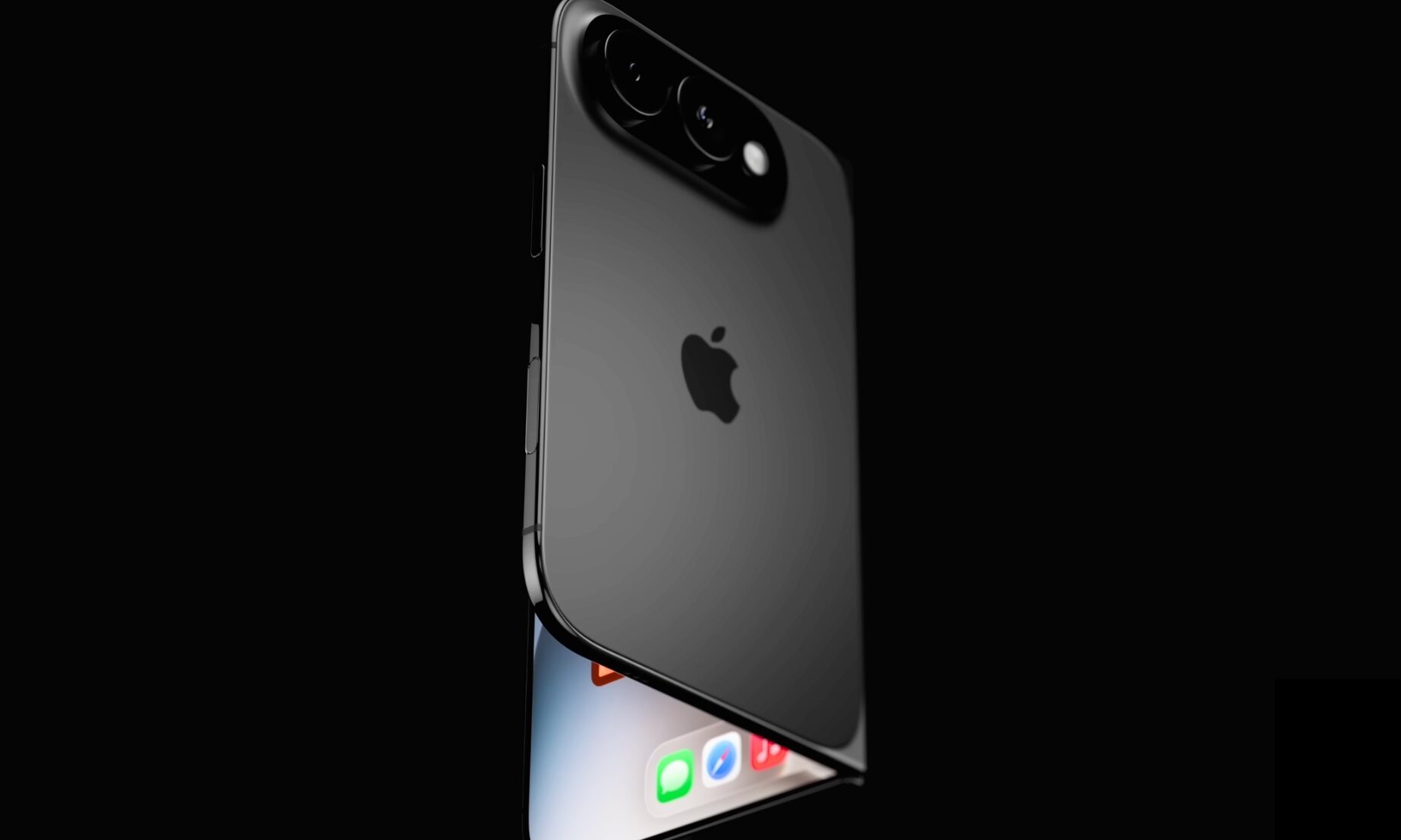
Apple’s iPhone Ultra could one-up the Galaxy Z Fold 7 with a bigger battery
4,883mAh total capacity, two cells, and two screens drawing power. Somewhere between "fine" and "I hope Apple's software does the heavy lifting."
Electronics, Phone, Mobile Phone

Apple's foldable iPhone is getting closer to its September announcement. Despite rumors of a delay, a recent report claimed that Foxconn is hiring temporary workers to ramp up production of the Ultra. Now we have a number for one of its most important specs: the battery.

I'll be honest: when I saw the battery figure, my reaction was somewhere between "that works" and "I was hoping for more."

Read more
The next “flagship killer” is coming from Motorola, but it may not reach the US anytime soon.
The Motorola Edge 70 Max looks great on paper, but only India is getting it on July 15.
Electronics, Mobile Phone, Phone

Motorola is building the most ambitious phone in its Edge 70 lineup, but it might not be available in the United States. 

Specs like a 7,000-nit display and MagSafe-style magnetic wireless charging belong in a conversation that often includes flagships, but it looks like Motorola wants to break that norm. 

Read more