1. Home
  2. Cars
  3. Photo Galleries
  4. News

If the 911 Turbo is too prosaic, you can buy a 1990 Williams-Renault F1 car for the same price

Add as a preferred source on Google

Are you in the market for a super-quick sports car that you won’t see anywhere else in town? We suggest you head over to the Goodwood Festival of Speed that will kick off in England late next month where auction house Bonhams will sell a 1990 Williams-Renault FW13 Formula 1 car.

The FW13 was introduced in 1989 as a replacement for the FW12. Highly modern for its era, it boasted a lightweight body crafted out of molded carbon and Kevlar and a double-wishbone suspension. The styling was typical of Formula 1 cars of the late 1980s.

Wearing chassis number 7, the car scheduled to cross the auction block next month was raced just four times during the 1990 season. It finished third behind Ayrton Senna’s McLaren-Honda and Jean Alesi’s Tyrrell-Ford in the United States Grand Prix in Phoenix, Arizona, and it took fifth place in Brazilian Grand Prix after being involved in a minor accident during the 30th lap. The car was fully repaired, and Bonhams states it’s in excellent aesthetic condition inside and out.

Power for the FW13 comes from a Renault-designed 3.5-liter V10 engine that spins the rear wheels via a six-speed manual transmission. Chassis number 7 is complete save for the Magneti-Marelli electrical boxes, but the V10 mill is not running and Bonhams makes no mention of when it was last started. At any rate, the buyer will need to bring a trailer because driving this open-seater on a public road is highly illegal in just about every country on the planet.

Bonhams estimates the Williams-Renault will sell for anywhere between £90,000 and £120,000 before taxes are factored in, sums that convert to $140,000 and $180,000, respectively. To put those figures into perspective, a brand new Porsche 911 Turbo costs $151,100 while the more powerful Turbo S model retails for $182,700. Granted, the Porsche comes with a factory warranty, but it’s not anywhere near as unique as this open-seater.

Ronan Glon
Ronan Glon is an American automotive and tech journalist based in southern France. As a long-time contributor to Digital…
Your next car’s software update could become its biggest security risk
Your next car could receive updates like your smartphone. That's also becoming a cybersecurity nightmare.
OTA technology allows manufacturers to remotely deliver software updates.

Modern cars are no longer machines that stay the same after they leave the showroom. Increasingly, they're becoming software-defined vehicles that receive new features, bug fixes, and security patches wirelessly, much like smartphones. But while over-the-air (OTA) updates have made vehicle maintenance easier and cheaper, cybersecurity experts are warning that the same technology could also become one of the automotive industry's biggest security challenges.

Researchers and policymakers are now calling for stronger oversight as connected vehicles become increasingly dependent on remote software updates. Their concern isn't just about hackers stealing personal data. It's about someone potentially interfering with the operation of a moving vehicle.

Read more
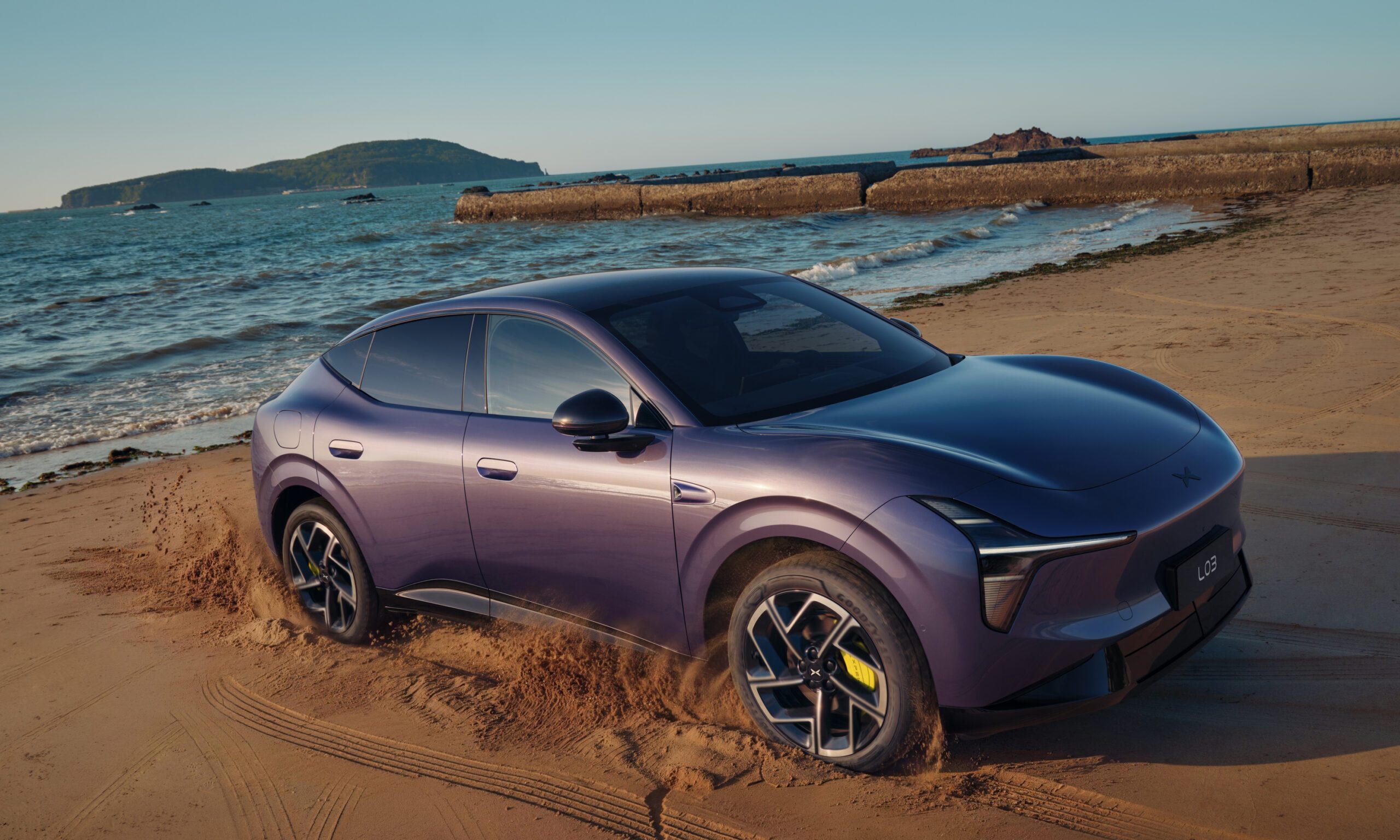
This sleek Chinese EV pairs supercar styling with three AI brains
The Xpeng L03 is an AI supercomputer disguised as a stylish family SUV
Xpeng L03

Xpeng’s latest electric vehicle carries enough processing power to make the term "smart car" actually sound more realistic than it actually is. The new Xpeng L03 debuted simultaneously in Europe and China on July 16, with the company presenting it across 65 markets. Available as a fully electric vehicle and an L03 Power X range-extender, the coupe-SUV is Xpeng’s most internationally focused model so far. Market-specific prices and sales dates remain unannounced.

Three AI chips and Google Maps built right in

Read more
A new sodium battery posts wild four-minute charging numbers, but don’t expect it in an EV yet
The breakthrough could improve fast charging and battery life, but the study hasn’t demonstrated those results in a production-sized pack
EV Charger

A new sodium-metal battery has posted a charging number that makes today’s EVs look painfully slow. In laboratory testing, the cell operated at a 15C rate, equivalent to completing a charge or discharge in roughly four minutes.

That doesn’t mean researchers plugged in an electric car and watched it fill up before the driver finished buying coffee. The result came from a small experimental cell using a new quasi-solid electrolyte, while the larger pouch-cell prototype delivered far less dramatic performance.

Read more