1. Home
  2. Emerging Tech
  3. News

Watch the first, legal delivery-by-drone mission take place in the U.S.

Add as a preferred source on Google

One day, packages delivered to your door may not come from the mailman, but by a drone swooping down from the sky. At least, that’s what Amazon and a select few other companies are hoping, and the dream has taken another step to becoming reality in the U.S. after the first FAA-approved delivery-by-drone mission took place on July 17.

Announced back in June, the mission was a joint project between NASA, The Mid-Atlantic Aviation Partnership at Virginia Tech, The Health Wagon, Remote Area Medical, several other firms, and Flirtey — a startup specializing in drone deliveries. The mission actually involved two drones, one a large remote-controlled aircraft, and a second smaller hexacopter, and was designed to show how unmanned aircraft can be used to make routine deliveries — in this case, containing medical supplies.

Recommended Videos

The packages were loaded into the large drone — a NASA-modified version of the Cirrus SR22, as Flirtey’s drone can’t make long distance flights — at a small airport in Tazewell County, Virginia and flown to the Lonesome Pine Airport in Wise, a distance of 35 miles. The Cirrus SR22 was controlled by remote, but a pilot was onboard the plane for safety, and to help control takeoff and landing.

On arrival, the first of three medical kits were loaded into Flirtey’s hexacopter drone, which made a three-minute flight from the airport to an outdoor clinic at the Wise County Fairground. The package was lowered to the ground using a tether. Initially expected to be split into six stages, the first two went so smoothly, all the remaining packages were put inside the drone for a third and final run instead.

Frank Jones, deputy director at NASA Langley, on completion of the mission is quoted as saying, “After it’s all done, you sit back and go ‘Wow, we did something really neat today. You demonstrated an operation that really does improve the quality of folk’s lives — and in some cases can save lives.” Matt Sweeney, CEO of Flirtey, is hopeful the successful mission could change the FAA’s thinking on unmanned drone deliveries in the U.S..


Andy Boxall
Andy has written about mobile technology for almost a decade. From 2G to 5G and smartphone to smartwatch, Andy knows tech.
Google just canceled its AI Studio mobile app, and it’s not all bad news
Logo, Symbol, Disk

Google AI Studio was on track to make its way to Android and iPhone, giving developers and AI enthusiasts a dedicated place to build prompts and experiment with Google's latest models from their phones.

That's no longer happening. In a post shared by the official Google AI Studio account on X, Google confirmed that it's canceling the standalone AI Studio mobile app before launch. The announcement comes despite the company saying nearly 800,000 people had already pre-ordered the app across iOS and Android.

Read more
Google Earth’s AI misadventure lasted only a day. It was a tale of dangerous ignorance.
Nuclear reactors, tanks, and historical destruction on a life-like satellite map? Yeah, that's bad.
Nano Banana AI image generator representation.

Technology behemoths are clearly not reading the room, or they are just moving faster than they should when it comes to AI deployment. Google has already stuffed its Gemini AI in every corner of its software stack, from Android to daily productivity tools like Gmail that are used by hundreds of millions of users every day. AI is everywhere. Not all of it is bad, mind you. But in a few places, it just feels forced.

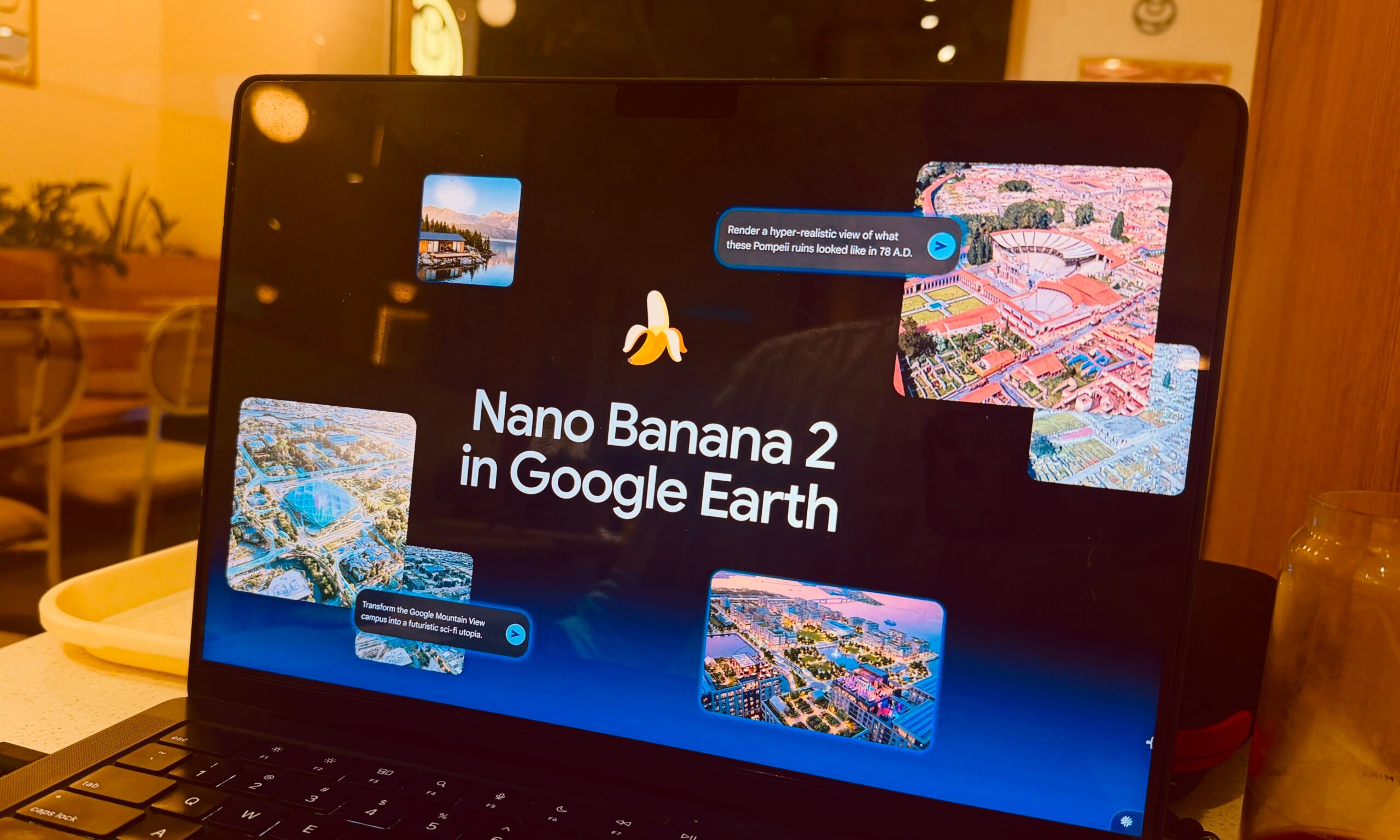
In its latest AI-fication experiment, the company targeted Google Earth. The idea was to let the audience use its Nano Banana 2 AI image generator and make images that can be placed on the map view. On paper, it's a cool idea. What would the Colosseum of Rome look like in your urban neighborhood? Yeah, fun stuff like that.

Read more
Google’s new AI gives robots better balance, smarter hands, and teamwork capabilities
Google just made robots a lot less clumsy and a lot more helpful.
Gemini robotics 2.0

Google DeepMind just brought sci-fi robots closer to reality, and it is very exciting. Building on its original Gemini Robotics model, the company has introduced Gemini Robotics 2, an AI system designed to help robots think, move, and even work together. Unlike most robots today, which rely on pre-programmed routines or someone controlling them remotely, this new system lets robots figure things out on their own when situations get unpredictable.

Can robots finally handle whole-body tasks?

Read more