1. Home
  2. Wearables
  3. Mobile
  4. News

This gadget adds closed-captioning for deaf people’s face-to-face conversations

Add as a preferred source on Google

Because of their inability to hear, it’s very difficult for the hearing impaired to properly follow day-to-day conversations. Sixteen-year-old Daniil Frants’ creation, however, looks to help deaf people with that particular conundrum, reports DNAinfo.

Created by Frants and two of his peers, the Live-Time Closed Captioning System (LTCCS) is comparable to Google Glass in that it acts as an auto-head display. Where LTCCS separates itself from Google Glass, however, is its ability to take spoken conversations and allow deaf people to see closed-captioning of those conversations.

Recommended Videos

Frants, who attends the Dwight School on the Upper West Side in New York City, came up with the idea roughly a year ago after discovering Google Glass doesn’t include such a function.

“A lot of people were wondering if Google Glass could be used for something like this,” said Frants. “And it turned out that Google Glass wasn’t really optimal for this, so I decided to make an alternative system which was dedicated to this function.”

Even though Frants was already familiar with technology, he picked up the coding necessary to bring his project to fruition, which led to Frants winning an award from New York City. This award was handed out to those whose inventions were innovative, concerned with the well-being of the community, easy to use, and able to be mass-produced.

Frants and his team won’t rest their laurels, however, as the team looks to launch an Indiegogo campaign in the following weeks in the hopes of getting its headset onto as many heads as possible. The team plans to “bring in a few more people to take care of the details,” as well as to finance production of the LTCCS. Through the Indiegogo campaign, Frants and his colleagues hope to make the headset more ergonomic while minimizing interference from other devices, among other further fine-tuning.

Williams Pelegrin
Williams is an avid New York Yankees fan, speaks Spanish, resides in Colorado, and has an affinity for Frosted Flakes. Send…
Nothing’s first proper smartwatch could be the wrist candy Android needs
Nothing wants to put some personality back on your wrist
Wristwatch, Arm, Body Part

Just like how smartphones have settled into a familiar routine, smartwatches have also become quite predictable. But Nothing might be planning on shaking things up for wearables. A tipster claims the company is preparing its first smartwatch under the main Nothing brand. The unnamed wearable will reportedly launch in September, cost less than $300 in the US, and initially reach a limited number of markets.

Its design is also said to carry the “typical Nothing DNA” that has helped the company’s phones and audio gear stand apart. Right after this, Nothing co-founder Akis Evangelidis joined the conversation with a separate, cryptic post. It adds some company-side smoke to the leak, although Nothing has yet to announce the watch or reveal any hardware details formally.

Read more
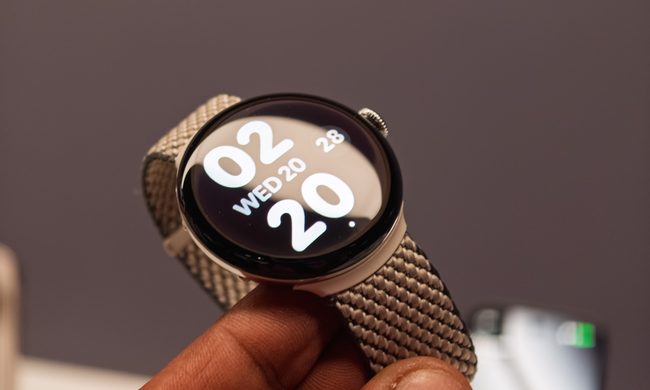
Google could soon let you unlock your Pixel Watch with your phone
An in-development feature could flip the current Watch Unlock feature, letting an authenticated phone unlock the watch automatically.
Google Pixel Watch 4 in black in the hand

If you've set up a PIN on your Pixel Watch, you already know the prompt that shows up every time you slip it back on your wrist. It's a useful security measure, but entering a PIN on that small screen multiple times a day gets old fast. A new report suggests Google may be working on a way to let you skip it.

Watch Unlock in reverse

Read more
A new iPhone app can sniff out Meta smart glasses lurking nearby
Your iPhone can now keep an eye on the glasses keeping an eye on you
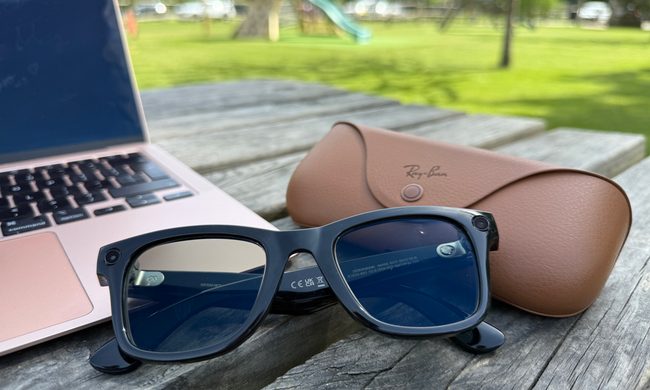
The Ray-Ban Meta smartglasses and case.

Android users got an unusual privacy tool earlier this year that could alert them when smart glasses were nearby. Five months later, iPhone owners finally have something similar, and its name makes its feelings about Meta pretty obvious.

AntiZuck is a $2.99 iPhone app that scans for Bluetooth signals associated with smart glasses and alerts you when it thinks one is close. It supports devices including Meta Ray-Bans, Snap Spectacles, Amazon Echo Frames, and RayNeo glasses, while the developer says additional hardware is being added.

Read more