  1. Home
  2. Cars
  3. Emerging Tech
  4. News

Need to finish that text? BMW’s EnLighten App will tell you when the light turns green

Add as a preferred source on Google

We’ve all been there. You’re sitting at a light, waiting for it to turn green, when you suddenly get a text, email, or maybe you just need something from the glove box. The signal switches from crimson to jade without you knowing, and the driver behind lays on the horn. You nervously drop what you’re doing and accelerate forward, leaving a cloud of exhaust and embarrassment in your wake.

With BMW’s new EnLighten application, situations like this could be a thing of the past. EnLighten works by connecting with participating cities’ traffic light control systems, granting BMW drivers (and owners of iOS devices) the ability to time stoplights perfectly. The app not only offers a countdown for red to green signal changes, it uses vehicle position and speed to calculate whether or not you should slow down for upcoming intersections or proceed through.

Recommended Videos

At crossings where there are dedicated lights for turns, activating the vehicle’s indicator eliminates notifications for everything except the relevant signal. According to BMW, the ability to anticipate traffic light changes can increase safety and help save fuel by avoiding unnecessary acceleration and stopping.

Or you could, I don’t know, pay attention?

BMW EnLighten app
Image used with permission by copyright holder

EnLighten is currently available for free on the Apple AppStore, and it works with any BMW vehicle equipped with the BMW Apps option. The program was developed with Oregon-based startup Connected Signals and has functionality with more than 2,000 traffic lights in Eugene, OR, Portland, OR, and Salt Lake City, UT. More cities are expected to come on board soon.

For BMW, traffic signal anticipation is just the tip of the technological iceberg. The brand unveiled the 2016 7 Series in June, which boasts features like Remote Control Parking, a “Vitality Program” for passengers, and self-leveling air suspension. Digital Trends will be reviewing the car at the end of August, so keep an eye out for that.

Andrew Hard
Andrew first started writing in middle school and hasn't put the pen down since. Whether it's technology, music, sports, or…
Volvo is rolling out Apple Music to over 2 million cars with a simple OTA update
Your Volvo may soon get Apple Music without needing CarPlay
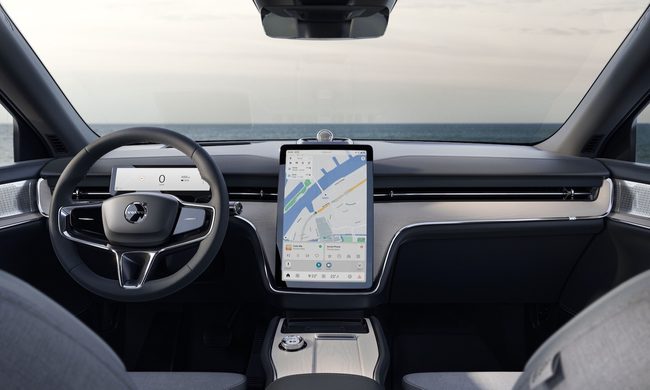
Interior view of the 2024 Volvo EX90.

The line between your smartphone and your car continues to blur. Volvo has announced that it is rolling out an over-the-air software update that brings Apple Music directly to the infotainment systems of more than 2 million vehicles worldwide. Instead of relying on Apple CarPlay or plugging in an iPhone, eligible drivers will be able to stream music natively from their car's built-in system, making Apple Music another integrated feature of Volvo's software experience.

The update is arriving for a wide range of Volvo models, including the EX90, ES90, XC90, S90, V90, XC60, S60, V60, XC40, EX40 and EC40, covering model year 2020 onwards. Availability, however, may vary depending on the vehicle.

Read more
Chery’s latest EV packs flagship tech for the price of a base Tesla, but you can’t buy it
Here's everything packed into Exeed's 2027 Exlantix ES, from its 27-sensor autonomous driving suite to its 860 km range, all starting under $31,000.
Car, Transportation, Vehicle

Chery's premium arm just dropped a sedan that makes you wonder why American EVs cost twice as much for half the tech.

Exeed's 2027 Exlantix ES ships with a driver-assist system called Falcon 700. It is built around an Nvidia Orin-Y chip and a genuinely stacked sensor suite.

Read more
A new AI model wants self-driving cars to think before they swerve
Forget guessing games, this self-driving AI actually shows its work.
Self driving car

Self-driving cars have gotten pretty good at driving. The harder problem is teaching them to drive safely in situations nobody planned for. We have heard horror stories of self-driving cars, behaving erratically in emergency situations, often times delaying first responders from reaching the scene.

A team at Seoul National University, led by professor Jun Won Choi from the Department of Electrical and Computer Engineering, thinks they have cracked part of that puzzle with a new AI model called SafeDrive. The research was recently selected as a highlight paper at CVPR 2026, a distinction that goes only to roughly 3% of all submissions.

Read more