  1. Home
  2. Emerging Tech
  3. News

Navy proves its love for whales and dolphins, curbing sonar use

Add as a preferred source on Google

Invoking animal rights or needs often seems to be the most effective method when it comes to environmental lobbying, and when it comes to marine mammals, we land dwellers seem to have a particular soft spot. After reports revealed that the United States Navy’s use of sonar in their training exercises were inadvertently harming whales, dolphins, seals, and sea lions, that military branch has agreed to curb its use of these techniques.

The decision comes as a resounding achievement for environmental groups, including Earthjustice and the Natural Resources Defense Council, which brought a lawsuit against the National Marine Fisheries Service for allowing the Navy’s training tactics to move forward. Thanks to a Honolulu-based federal judge, the use of mid-frequency active sonar and explosives have been banned near Hawaii and California, where much naval training takes place.

Recommended Videos

Lieutenant Commander Matt Knight, who serves as a U.S. Pacific Fleet spokesman, noted that these new restrictions would not create roadblocks in the Navy’s preparations. “Recognizing our environmental responsibilities,” Knight stated, “the Navy has been, and will continue to be, good environmental stewards as we prepare for and conduct missions in support of our national security.” So really, it looks like a win-win for everyone involved.

While the reduction of sonar in these waters may not seem to be a particularly impactful decision, experts note tragic historical examples in which animals like dolphins, whales, and other marine life have had their habits disrupted, or have been severely injured or even killed as a result of such activity. Not only can the sonar be confusing to animals attempting to feed or communicate with one another, the Navy notes that some 155 whales and dolphins have died as a result of training exercises in the waters around Hawaii and Southern California. In a recent 2011 incident, four dolphins died as a result of a training-related explosion.

Other naval estimates suggest that the use of sonar, and such explosives, could result in up to 11,000 serious injuries among marine animals on the east coast and some 2,000 along the west coast.

While the battle has been won in this particular region, wildlife advocates like the The Natural Resources Defense Council insist that they will press on in their efforts to greatly reduce the use of sonar in other areas as well, including the Pacific Northwest, the Gulf of Alaska, and northern Florida. And happily, the Navy seems to be on board.

Lulu Chang
Fascinated by the effects of technology on human interaction, Lulu believes that if her parents can use your new app…
AI security cameras may soon recognize your walk before they recognize your face
A new AI gait system tracks body motion through skeletal keypoints, aiming at long-range identity checks where face scans and fingerprints fall short.
Security cam

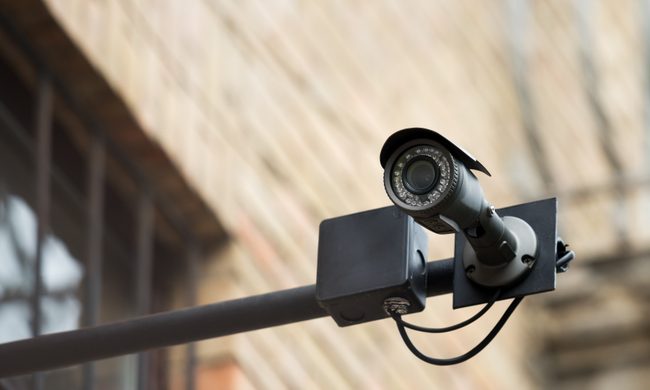
Security cameras are built to look for faces. New research suggests they may soon have another target, the small habits buried in the way someone walks.

A paper published in the International Journal of Reasoning-based Intelligent Systems describes SKDMap-Net as a gait recognition system designed to identify people from walking video, even when the camera doesn’t get a clean look at their face. Instead of relying on a close-up scan, it studies how a body moves from frame to frame.

Read more
A 20-second 3D printer breakthrough comes with exactly the kind of catch science loves
The process can create complex microstructures far faster than some laser-based methods, but full 3D control is still a work in progress.
Aluminium, Smoke Pipe

A 3D printer that can make a structure in about 20 seconds sounds like a lab claim wearing a cape. The clever bit is real. The catch arrives before anyone starts dreaming about instant replacement parts.

University of Utah researchers have demonstrated a holographic 3D printing technique that hardens tiny structures in one exposure instead of building them layer by layer. That one-shot approach could avoid the weak, leaky seams that stacked printing can leave behind. For now, though, this is a tool for microstructures, not a shortcut to printing whatever object pops into your head.

Read more
Amazon is full of copycats and shady brands. This Chrome extension lets you avoid them.
Advertisement, Poster, Text

Shopping on Amazon used to be simple. You searched for a product, compared a few familiar brands, and checked out. These days, it often feels like you're scrolling through an endless parade of names that look like someone leaned on a keyboard before hitting publish. That's exactly the problem Knockoff is trying to solve.

Created by developer Josh Pigford, the Chrome extension doesn't promise to expose counterfeit products or magically tell you what's good. Instead, it tackles something arguably more annoying: the flood of unfamiliar, mass-produced brands that dominate Amazon search results.

Read more