These days, it’s nearly impossible to run around your local track or trek through a park without seeing a drone hovering suspiciously overhead, filming the landscape — and possibly your face — in glorious 4K resolution.
Drones are fun. But if you’ve been holding off on getting into the hobby because you think they’re hard to fly, we’ve got some encouraging news: Some drones are so easy to pilot, you’ll feel like a pro on your first flight. To help you along, we’ve assembled this list of the best drones for beginners so you can earn your wings in short order and skip right to the fun.
At a glance
| Product | Category |
| Creazy JXD 509W Quadcopter | Best beginner drone overall |
| Parrot Mambo | Best drone for pulling off fun aerial acrobatics |
| Aerix Vidius HD | Best tiny drone for beginners |
| Hubsan X4 | Best cheap drone for beginners |
| UDI U818A Discovery | Best for all-around use |
Creazy JXD 509W Quadcopter
The best
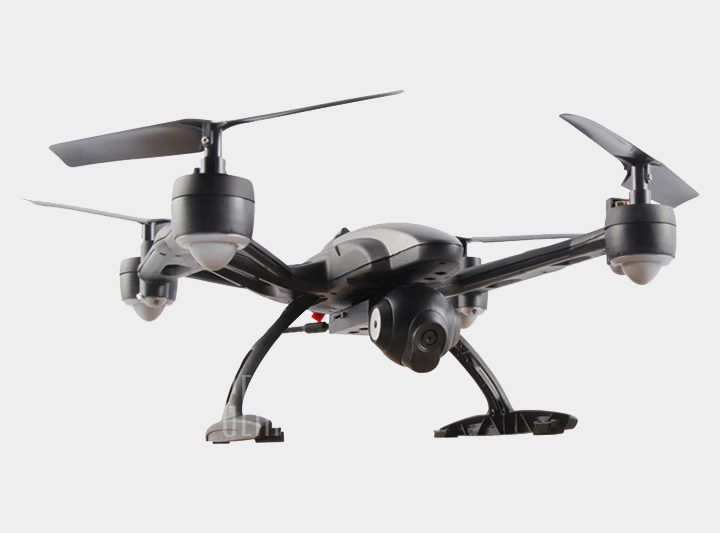
Why should you buy this: The JXD 509W’s combination of cheap price and advanced features make it a tremendous value.

Who’s it for: Those who want high-end drone features on the cheap
How much will it cost: $90
Why we picked the Creazy JXD 509W:
It’s natural to be skeptical of manufacturer claims when it’s a company you don’t know much about — especially when the product looks like a knockoff (ahem, Yuneec Q500) — but JXD sure surprises when it comes to the 509W. This is a drone with a feature set that could cost you two to three times as much from better-known brands.
Don’t let the low price fool you, the 509W, like JXD’s other drones, performs solidly. While you’re not going to win cinematography awards with a modest 0.3 megapixel camera, you’ll still get solid shots of aerial vistas. Add in flight monitoring directly from your smartphone in real time, and the ability to hold a designated altitude and automatically land, and you’ve got a winning combo under $100.
Parrot Mambo
The best drone for pulling off fun aerial acrobatics
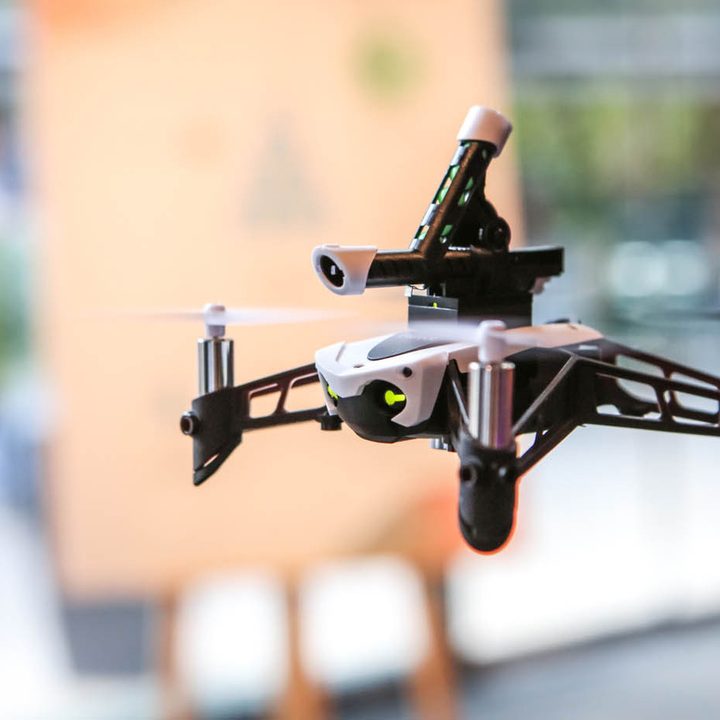
Why should you buy this: The Mambo is like the Bebop’s smaller, cheaper brother.

Who’s it for: Beginning drone pilots looking to do cool tricks out of the box
How much will it cost: $120
Why we picked the Parrot Mambo:
Parrot is one of the premier names in drones, but that vaunted name usually comes with a premium price. The Mambo is one stellar exception, however.
The Mambo foregoes a camera, which is a bit of a disappointment considering most other drones in the $100 or so price range now have them, but the Mambo outpaces our top pick in other areas.
This Mambo comes packed with a few cool accessories, including a cannon that shoots small balls and a small grabber capable of holding 4-gram objects. The Mambo doesn’t skimp on other skills, either. High-tech sensors help keep the drone stable, and it’s able to do quite a few acrobatic maneuvers, including barrel rolls and flips.
Aerix Vidius HD
The best tiny drone for beginners
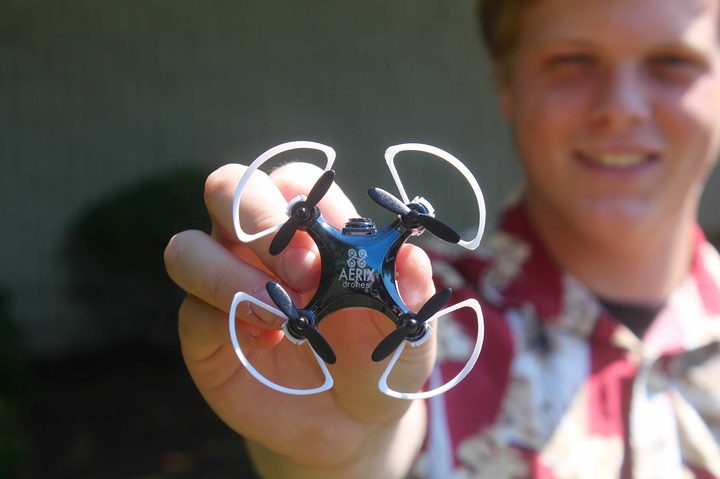
Why should you buy this: The Vidius HD packs an impressive feature set into an ultra-tiny drone.

Who’s it for: Those who want an ultra-compact drone with big-boy features.
How much will it cost: $95
Why we picked the Aerix Vidius HD:
We’re impressed with how much Aerix was able to squeeze into a drone measuring just 1.7 inches wide. Aerix describes the Vidius HD as the “world’s smallest live streaming HD video drone,” and we feel that’s apt.
Aerix includes a 0.3MP camera similar to that found in the JXD 509W, but in this case the video is streamed live to your smartphone. Because of its small size and limited battery, flight time averages about seven minutes within a 100-foot range.
The Vidius HD also comes with a VR headset and controller, so you can experience flight in virtual reality. Beginners will appreciate one-touch takeoff and landing features, too, and the drone can even navigate along a host of pre-programmed paths. Few drones offer as much for the price.
Hubsan X4
The best cheap drone for beginners
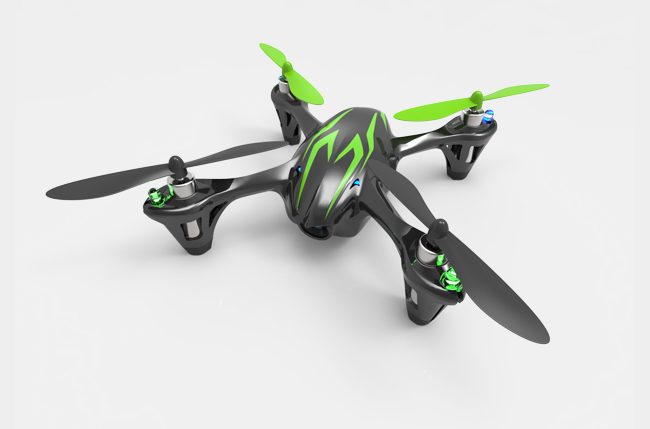
Why should you buy this: The X4 is super cheap, offers extended flight time, and still packs a camera.

Who’s it for: Those wanting a super-cheap drone with extended flight time and fun video features
How much will it cost: $30
Why we picked the Hubsan X4:
We’re still in disbelief that the Hubsan X4 offers so much for just $30.
This minuscule drone weighs just over a pound and measures a mere 3.8 inches across, yet it still manages to pack in a 6-axis flight control system and a flight time hovering around 10 minutes. The controls are linear and relatively proportional, though sensitive and prone to overcompensation.
Bundled rotor guards tack on a bit of optional durability, while a built-in camera and micro SDHC card give you a simple means for capturing 0.3-megapixel videos of the area directly in front of the drone. What’s more, the X4 can perform flips and barrel rolls on command, letting you channel your inner Peppy Hare whenever you’d like.
UDI U818A Discovery
The best for all-around use
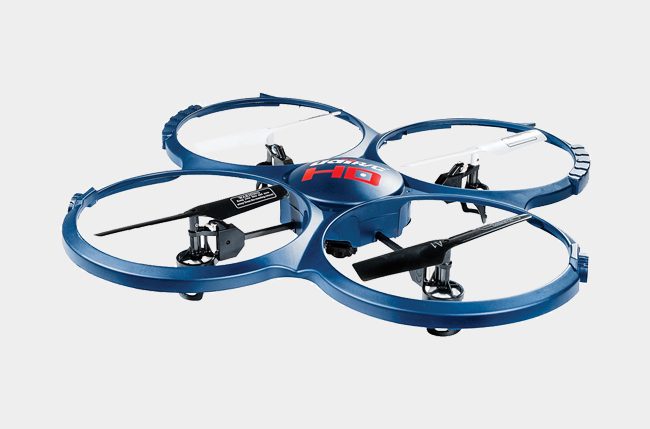
Why should you buy this: Not sure what you want in a drone? The Discovery is a solid bet.

Who’s it for: Those looking for a great all around drone
How much will it cost: $58
Why we picked the UDI U818A Discovery:
The U818A Discovery is the jack-of-all-trades drone of our roundup, and a solid bet for those who don’t yet know what they are looking for in a drone.
The Discovery boasts 7 minutes of flight time, a six axis gyro with posture control, and a 720p camera designed to capture aerial video or 1-megapixel still shots. The Discovery is ready to fly right out of the box, with both beginner and expert modes that let you initiate flips and rolls at the touch of a button.
In our review we note that the Discovery is a bit sensitive to wind gusts, and features some very sensitive controls, yet its no-frills design and bundled remote control still render it fairly accessible to people of all ages. Plus, those sensitive controls will be less of a liability and more of an asset as pilots gain more experience.
How we test drones
Build quality & Design
Drones crash, so build quality and durability are key considerations. Our tests always involve a few intentional knocks, twists, and shallow drops to gauge resilience. Does the drone feel flimsy, or does it feel like it could survive a crash landing in the park? We push drones to the limit so you don’t have to learn the hard way whether it can stand up to some unintentional abuse.
Flight performance, range, and autonomy
To gauge flight performance, we put the drone through a number of tests and compare our results to manufacturer claims. We begin by clocking how quickly a drone can clear 100 yards, then do some calculations to determine the drone’s max forward speed measure in miles per hour. Similar tests measure ascent and descent speeds. All the while, we gather notes on how responsive the controls are, how stable the craft is, how far it can go before it’s out of range, and what the overall piloting experience is like compared to other drones.
Battery life and charge time
After completely draining a drones battery, we put on its charger and measure recharge time. Once fully charged, we launch the drone for a hover test in the least demanding conditions to gauge maximum flight time, recharge again, then launch the drone in more taxing conditions to gauge average flight time.
Camera, accessories, and upgradability
If the drone we’re testing happens to have a camera capable of recording, we capture as much footage as we can. We’ll shoot in both dark and bright conditions, and gauge color and contrast quality. This footage is then compared to all the highlight reels we filmed with other drones, which helps us get a sense of the camera’s strengths and weaknesses. We also test any accessories that accompany the camera, like lenses, filters, gimbals, or FPV goggles. Finally, we’ll let you know if the camera setup is upgradable, so you wont be stuck with an outdated shooter in two years.