1. Home
  2. Emerging Tech
  3. News

Stuck with a dumb display? AirBar Brings Touch Functionality to Any PC Screen

Add as a preferred source on Google

Touch-screen capabilities are widely appealing, but they still don’t come included with most laptop computers available today. A company called Neonode has come up with AirBar, a gadget that will bring touch-screen functionality to any PC. Without any heavy duty hardware adjustments or a single software update, AirBar could theoretically turn any computer screen into a fully responsive touch screen.

AirBar covers your dumb display with a blanket of invisible light that allows you to interact with the screen through touch. The discreet bezel bar sits below your PC display, and is ready to use as soon as you plug it into the USB port. AirBar recognizes the gestures you’re used to on other devices, like pinch, swipe, zoom, and scroll functions. And because the “touch” interactions are triggered by anything that crosses AirBar’s light field, you don’t have to use your fingers. You’ll be able to use AirBar with the most slippery gloves or even heavy work gloves, paint brushes, pencils, or anything you have nearby — no stylus required. As long as you cross the light field, AirBar will register “touch” gestures.

Recommended Videos

At its initial launch, AirBar will be adaptable for a limited number of machines. It will work with any Windows 7, 8, or 10 computer that has a 15.6 inch display, which narrows down the playing field considerably. Neonode says they are working on a Mac-integrated option for the future. And as long as they can pack in the technology, AirBar should be able to adjust for a variety of screen sizes.

AirBar will officially debut at CES in Las Vegas next month, but you can pre-order one of your own online. The 15.6 inch launch version costs $49 and is expected to launch in early 2016. Once Neonode expands the AirBar line to other sizes and computer platforms, any computer will be able to benefit from touch-screen capabilities without draining battery or compromising screen quality.

Chloe Olewitz
Former Digital Trends Contributor
Chloe is a writer from New York with a passion for technology, travel, and playing devil's advocate. You can find out more…
Samsung’s humanoid robot ambitions are real, but factories come first
Samsung’s new robotics division has humanoids in its sights, although its immediate business is far more practical factory automation
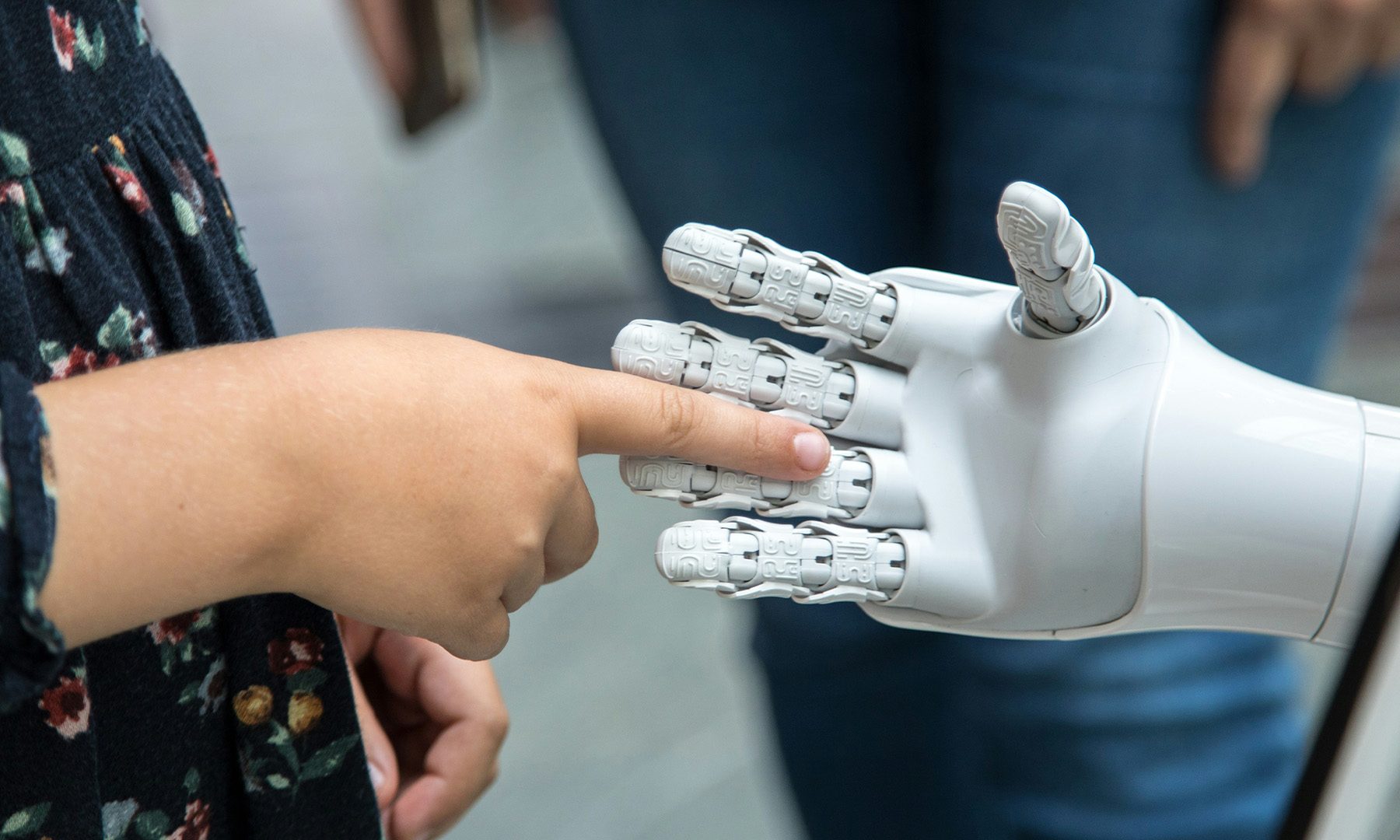
Robot Touch Human Finger

Samsung wants a place in the humanoid race, but its new robotics push begins with machines built for factories rather than homes.

The CEO-led RX robotics division will initially focus on manufacturing robots. Samsung has separately identified humanoids as a priority, although it hasn’t announced a commercial model or explained where one fits into the division’s immediate plans.

Read more
The future of AI may depend on this one behind-the-scenes change
Running Claude on Android.

Whenever a new AI model arrives, it's easy to get caught up in the bells and whistles. We talk about how much smarter it is, how quickly it answers questions, or how realistic its images have become. But here's the thing: none of that matters much if the AI can't reliably work with the apps and services people use every day.

That's why an upcoming update to the Model Context Protocol (MCP) caught my attention. It isn't a new chatbot or a fancy AI model. In fact, most people will never even know it's happening. But it could quietly make the AI ecosystem a lot healthier. If you've never heard of MCP before, don't worry. Think of it as a shared language that lets AI assistants safely talk to apps like Gmail, Slack, calendars, databases, and countless other services. Instead of every company inventing its own way to make those connections, MCP gives everyone a common rulebook.

Read more
The AI game-dev boom has a dark side: fewer jobs for the people starting out
Solo creators are thriving with tools like Claude Code and Copilot, but entry-level game roles are disappearing.
Man playing a video game on a desktop with glowing red and blue lights

AI is making it easier than ever for a single person to build a game. That sounds like a win for creativity, and in many ways, it absolutely is. But there is a catch. As generative AI tools help solo developers and small studios do more with fewer people, the same shift is making life tougher for writers, artists, concept creators, and junior programmers trying to break into the gaming industry.

AI is giving solo developers superpowers

Read more