1. Home
  2. Emerging Tech
  3. News

This fully autonomous drone taxi is your traffic-jam dream come true

Add as a preferred source on Google

Yup, you read that headline right. A Chinese UAV company named Ehang just unveiled the world’s first autonomous flying taxi.

The plainly-named 184 drone is essentially a giant quadcopter designed to carry a single passenger  — and it needs no pilot. Inside the cockpit, there are absolutely zero controls. No joystick, no steering wheel, no buttons, switches, or control panels — just a seat and a small tablet stand.

Recommended Videos

To fly it, the user simply hops in the cockpit, fires up the accompanying mobile app, and chooses a destination. From that point onward, you’re just along for the ride. The drone takes care of all the piloting and navigation autonomously — so you supposedly don’t need a pilot’s license to use it.

“It’s been a lifetime goal of mine to make flight faster, easier and more convenient than ever,” said Ehang CEO Hauzi Hu. “The 184 provides a viable solution to the many challenges the transportation industry faces in a safe and energy efficient way. I truly believe that Ehang will make a global impact across dozens of industries beyond personal travel. The 184 is evocative of a future we’ve always dreamed of and is primed to alter the very fundamentals of the way we get around.”

In terms of specs, the 184 (so named because it has one passenger, eight propellors, and four arms) stands about 4.9 feet (1.5 meters) tall and weighs roughly 440 pounds (200 kilograms). It’s got a maximum load capacity of 220 pounds, and has a maximum output of 106W, powered by it’s eight motors. It’s designed to carry a single passenger for about 23 minutes, at an average cruising speed of 62 miles per hour (100 km/hr).

That said, there’s currently no word on when this thing might actually hit the skies. Ehang has developed a number of working prototypes, but production models likely won’t roll out for another year or so, and after that there are no shortage of regulatory hurdles standing in the way.

I wouldn’t hold my breath while we wait for drone taxi services to start popping up in our cities, but it’s certainly exciting to see somebody working on it. Keep your fingers crossed, and we might actually see this come to fruition in a couple years time.

Drew Prindle
Former Senior Editor, Features
Drew Prindle is an award-winning writer, editor, and storyteller who currently serves as Senior Features Editor for Digital…
Google just canceled its AI Studio mobile app, and it’s not all bad news
Logo, Symbol, Disk

Google AI Studio was on track to make its way to Android and iPhone, giving developers and AI enthusiasts a dedicated place to build prompts and experiment with Google's latest models from their phones.

That's no longer happening. In a post shared by the official Google AI Studio account on X, Google confirmed that it's canceling the standalone AI Studio mobile app before launch. The announcement comes despite the company saying nearly 800,000 people had already pre-ordered the app across iOS and Android.

Read more
Google Earth’s AI misadventure lasted only a day. It was a tale of dangerous ignorance.
Nuclear reactors, tanks, and historical destruction on a life-like satellite map? Yeah, that's bad.
Nano Banana AI image generator representation.

Technology behemoths are clearly not reading the room, or they are just moving faster than they should when it comes to AI deployment. Google has already stuffed its Gemini AI in every corner of its software stack, from Android to daily productivity tools like Gmail that are used by hundreds of millions of users every day. AI is everywhere. Not all of it is bad, mind you. But in a few places, it just feels forced.

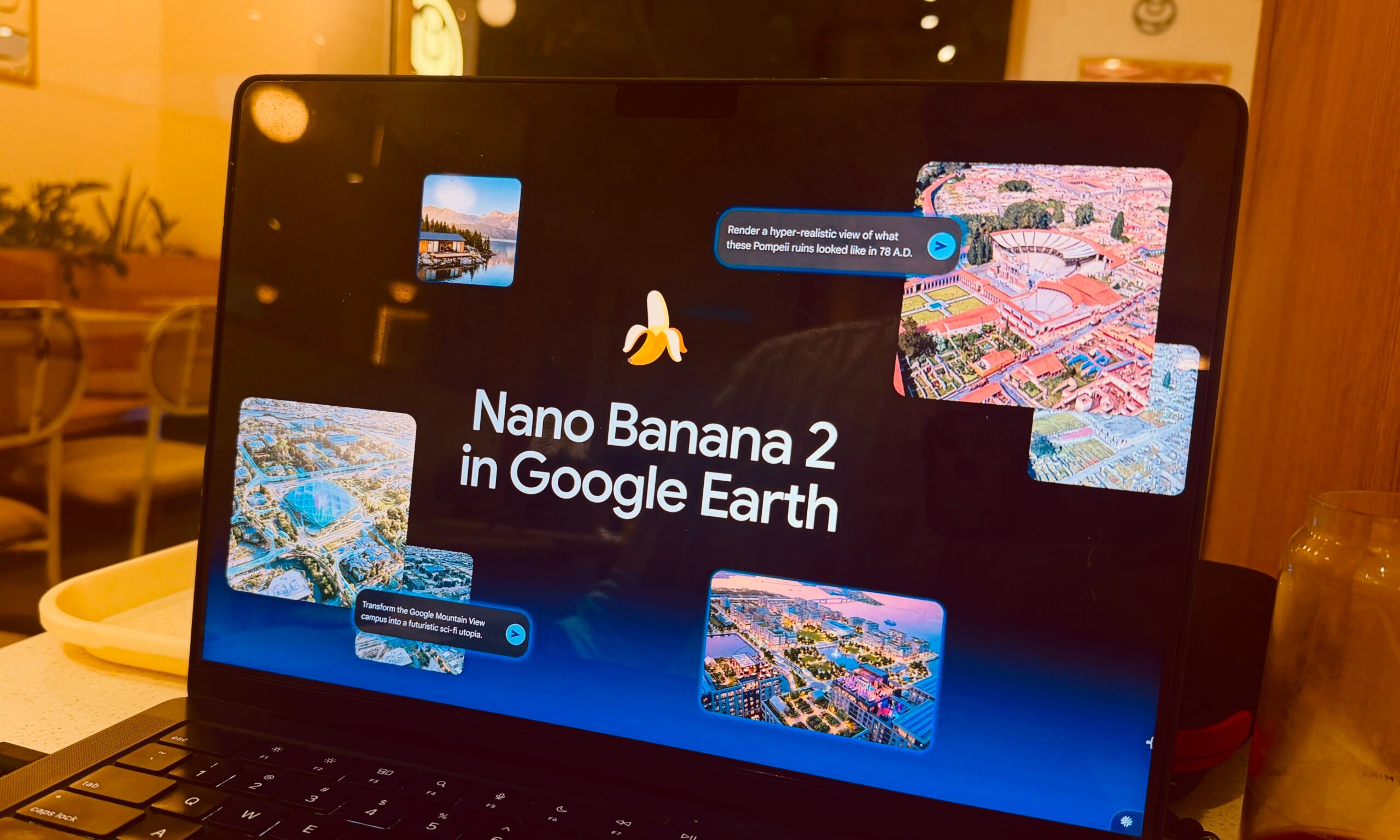
In its latest AI-fication experiment, the company targeted Google Earth. The idea was to let the audience use its Nano Banana 2 AI image generator and make images that can be placed on the map view. On paper, it's a cool idea. What would the Colosseum of Rome look like in your urban neighborhood? Yeah, fun stuff like that.

Read more
Google’s new AI gives robots better balance, smarter hands, and teamwork capabilities
Google just made robots a lot less clumsy and a lot more helpful.
Gemini robotics 2.0

Google DeepMind just brought sci-fi robots closer to reality, and it is very exciting. Building on its original Gemini Robotics model, the company has introduced Gemini Robotics 2, an AI system designed to help robots think, move, and even work together. Unlike most robots today, which rely on pre-programmed routines or someone controlling them remotely, this new system lets robots figure things out on their own when situations get unpredictable.

Can robots finally handle whole-body tasks?

Read more