1. Home
  2. Emerging Tech
  3. News

The world’s first fully functional 3D-printed pocket watch

Add as a preferred source on Google

Now that people are 3D printing everything from toys to shoes to jet parts, it’s no surprise that someone just invented the world’s first 3D-printed pocket watch. The timepiece is made almost entirely of 3D-printed components, and its design pays homage to classical artisan watchmaking techniques from centuries ago. Creator Christoph Laimer overcame many of the common obstacles to 3D printing a fully functional watch, and even made the design files available as an open source resource for the maker community.

The 3- printed watch is definitely too large to be a wristwatch, and indeed, it’s only going to work as a pocket watch in considerably sized pockets. It measures 98mm across the face, and 93mm in height — that’s about the size of your closed fist. But despite its size, the watch is made almost entirely from intricate 3D-printed components. Other than the metal pins, screws, and washers that keep the gears turning and hold the watch together, every element is 3D printed. It works on manual winding power, yet another tribute to classical watchmaking.

Recommended Videos

One of the most impressive features is a functional tourbillon, a marker of high-end and handcrafted watchmaking developed in 1795. The earth’s gravitational pull affects the regularity and accuracy of a watch’s internal mechanism, and the tourbillon cancels that out. It constantly rotates parts like the balance wheel, balance spring, and escapement while the watch is running, so that the watch can continue to tick in nearly perfect time.

Laimer’s success with this first fully functional 3D-printed watch has a lot to do with his vertical strategy. He layered the many parts on top of each other instead of spreading them out horizontally, and while this made the watch bulky, it also rendered it functional. Laimer made all the 3D design files available to the open source maker community, so while the finished product isn’t for sale quite yet, you can always 3D print one for yourself. And of course, releasing the open source files for collaboration will hopefully encourage makers to continue improving on the design until we can 3D print fully functional wristwatches and beyond.

Chloe Olewitz
Former Digital Trends Contributor
Chloe is a writer from New York with a passion for technology, travel, and playing devil's advocate. You can find out more…
Samsung’s humanoid robot ambitions are real, but factories come first
Samsung’s new robotics division has humanoids in its sights, although its immediate business is far more practical factory automation
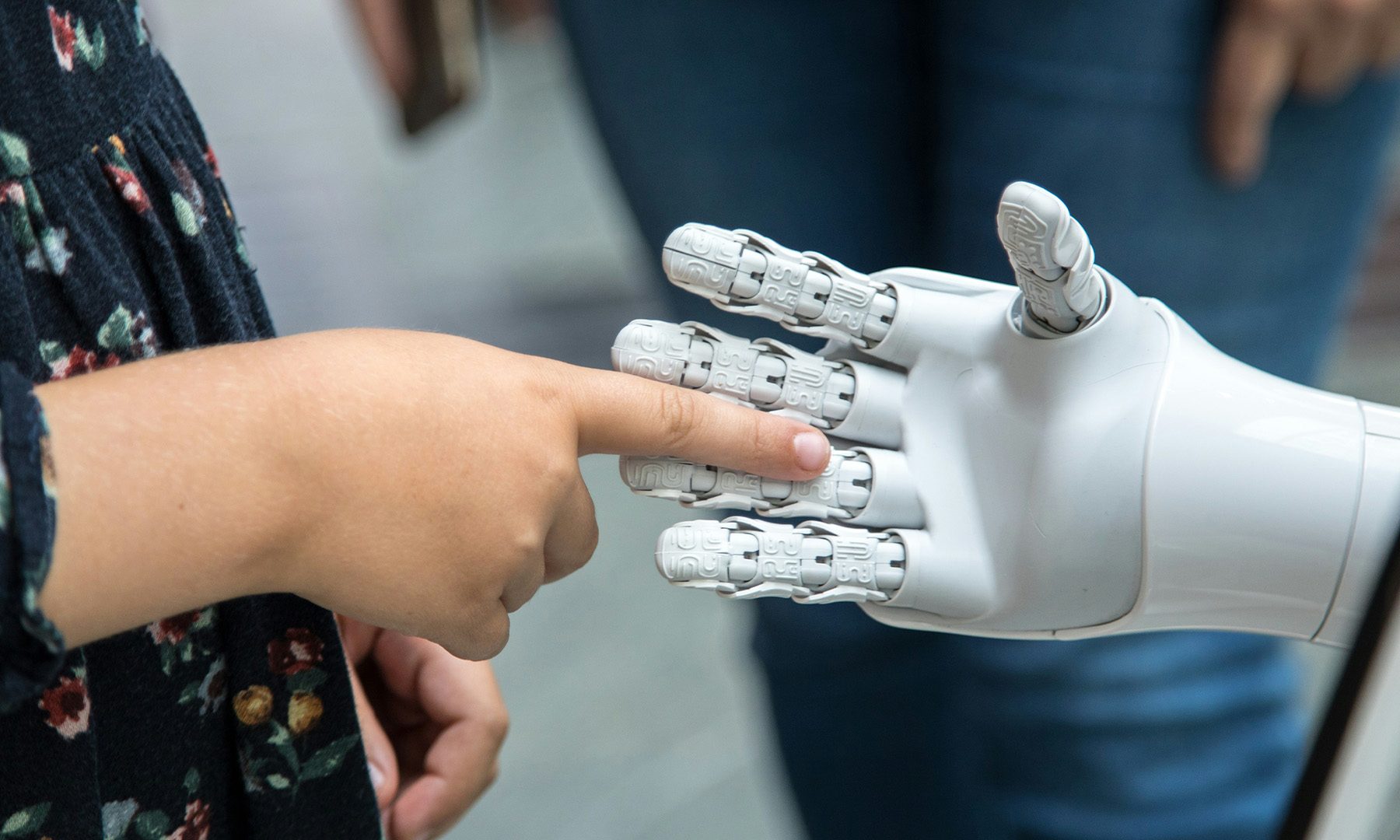
Robot Touch Human Finger

Samsung wants a place in the humanoid race, but its new robotics push begins with machines built for factories rather than homes.

The CEO-led RX robotics division will initially focus on manufacturing robots. Samsung has separately identified humanoids as a priority, although it hasn’t announced a commercial model or explained where one fits into the division’s immediate plans.

Read more
The future of AI may depend on this one behind-the-scenes change
Running Claude on Android.

Whenever a new AI model arrives, it's easy to get caught up in the bells and whistles. We talk about how much smarter it is, how quickly it answers questions, or how realistic its images have become. But here's the thing: none of that matters much if the AI can't reliably work with the apps and services people use every day.

That's why an upcoming update to the Model Context Protocol (MCP) caught my attention. It isn't a new chatbot or a fancy AI model. In fact, most people will never even know it's happening. But it could quietly make the AI ecosystem a lot healthier. If you've never heard of MCP before, don't worry. Think of it as a shared language that lets AI assistants safely talk to apps like Gmail, Slack, calendars, databases, and countless other services. Instead of every company inventing its own way to make those connections, MCP gives everyone a common rulebook.

Read more
The AI game-dev boom has a dark side: fewer jobs for the people starting out
Solo creators are thriving with tools like Claude Code and Copilot, but entry-level game roles are disappearing.
Man playing a video game on a desktop with glowing red and blue lights

AI is making it easier than ever for a single person to build a game. That sounds like a win for creativity, and in many ways, it absolutely is. But there is a catch. As generative AI tools help solo developers and small studios do more with fewer people, the same shift is making life tougher for writers, artists, concept creators, and junior programmers trying to break into the gaming industry.

AI is giving solo developers superpowers

Read more