  1. Home
  2. Computing
  3. Mobile
  4. News

BQ is about to drop an Ubuntu tablet that doubles as a PC

Add as a preferred source on Google
MWC 2026
Read our complete coverage of Mobile World Congress

After partnering with Meizu and Canonical last year to make Ubuntu-powered phones a reality, Spanish hardware company BQ has revealed that it’s working on the world’s first Ubuntu tablet PC and that it’s preparing to show off the device at next month’s Mobile World Congress (MWC).

This report originally came last week from OMG! Ubuntu!, which claimed that “at least one new Ubuntu convergence device” would be exhibited at the major industry expo, and thereafter followed up with official confirmation that the aforementioned device is, in fact, a tablet. Delving even deeper into the origins of this news, BQ confirmed the Ubuntu tablet to Spanish tech site Xataka, which published its related story on Tuesday of this week.

Recommended Videos

Here’s a rough translation of everything that’s been officially announced by BQ (emphasis ours):

The tablet from BQ, based on Ubuntu, will work both in pure tablet and desktop mode and is expected to have many similarities with the BQ Aquaris M10 that’s been used by engineers from Canonical for the development of this operating system.

Unfortunately, very little information has been offered by BQ itself, likely because the company is holding off for a more substantial news drop next month. Luckily, for those of us eager to find out more, OMG! Ubuntu! decided to introduce some essential specifications.

Dubbed the Aquarius M10 Ubuntu Edition, this 10-inch tablet boasts an impressive 64-bit ARM CPU, 2GB of RAM, and a “high-resolution” display. The convergence factor mentioned earlier means that when connected to a mouse, keyboard, or external monitor, the Aquarius M10 will automatically switch into desktop mode. Furthermore, thanks to improvements to Unity 8 and the Mir display server, the tablet will be able to run both desktop PC software and apps intended for the Ubuntu Phone OS.

While there’s no solid release date slated for the Ubuntu-flavored Aquarius M10, Xataka did report that BQ is aiming for an April 2016 release window, with more information expected as we approach MWC.

Gabe Carey
A freelancer for Digital Trends, Gabe Carey has been covering the intersection of video games and technology since he was 16…
The Mac Pro nearly received an M3 Extreme chip twice as powerful as M3 Ultra
High production costs likely killed Apple’s M3 Extreme plans
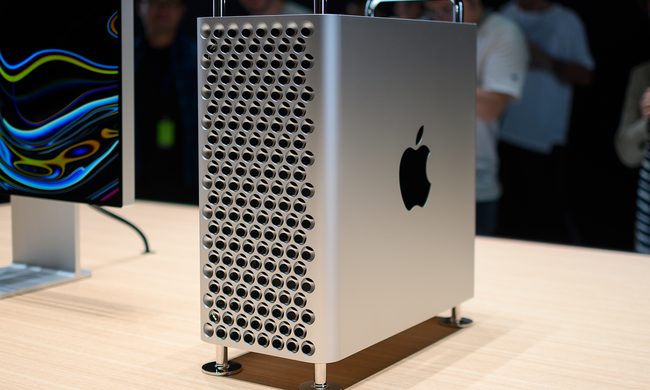
Apple's Mac Pro on a table at a press event.

Apple discontinued the Mac Pro earlier this year, ending a 20-year run for a computer that once represented the very best of the company’s desktop lineup. However, Apple reportedly had much bigger plans for the machine before ultimately replacing it with the Mac Studio.

According to Bloomberg’s Mark Gurman, Apple developed an M3 Extreme chip that could have offered twice as many CPU and GPU cores as the M3 Ultra. The processor was intended to sit above the Ultra tier and could have finally given the Mac Pro the performance advantage it badly needed. Apple eventually abandoned the chip due to concerns over production costs and limited demand for such an expensive machine.

Read more
Hidden prompts can secretly rewrite an AI’s memory, and researchers say that’s a serious problem
Researchers discover AI attack that rewrites an assistant's long-term memory
Chatbot on a smartphone.

Large language models are getting better at remembering us. Whether it's your preferred writing style, recurring tasks, shopping habits or project deadlines, AI assistants are increasingly storing long-term memories to make future conversations feel more personal and useful. But according to new research, that same feature could become one of AI's biggest security vulnerabilities.

Researchers from New Mexico State University have demonstrated a new attack called GhostWriter, capable of secretly planting false memories inside AI agents. Rather than stealing information outright, the attack manipulates what an AI remembers, potentially causing it to make dangerous decisions long after the original attack has taken place.

Read more
This experiment shows how easy it is to poison an open-weight AI model for under $100
This research raises new doubts about trusting open weight AI models.
Computer, Electronics, Laptop

Open-weight AI models have been having a moment lately. Just this month, Moonshot's massive Kimi K3 model landed close behind Claude Fable 5 and GPT 5.6 Sol in several benchmarks, all while remaining fully open-weight and downloadable by anyone.

However, Katie Paxton-Fear, a cybersecurity lecturer at Manchester Metropolitan University and staff security advocate at Semgrep, managed to poison an open-weight model and proved how easily that openness can be turned against you (via The Register).

Read more