  1. Home
  2. Cars
  3. Apple
  4. News

The head of Apple’s electric car project is leaving the company

Add as a preferred source on Google

Apple’s electric car project may have encountered a new roadblock.

According to a report by The Wall Street Journal (subscription required), project leader Steve Zadesky is leaving the company. The report cites people familiar with the matter, who claim that Zadesky’s departure is not related to job performance and stems from “personal reasons.” As the leader of Project Titan, which many assume is Apple’s electric car project, for the last two years, his absence will certainly be a setback for Apple, but it is unclear exactly when his exit will occur.

Recommended Videos

Zadesky left an engineering position at Ford Motor Company in 1999 to work at the Cupertino-based tech firm, where he rose through the ranks to become vice president of iPod and iPhone product design. The Stanford graduate was named on over 90 patents during his tenure.

A man with with a close eye on Project Titan is Tesla CEO Elon Musk, who recently declared Apple’s taciturn endeavors as “an open secret.” Despite all the rumors and speculation, Apple has yet to officially confirm or deny it is building a car at all, divulging nothing other than the occasional cryptic statement. Here’s what Apple CEO Tim Cook said in November of last year:

“I don’t have anything to announce about our plans. But I think there’s some significant changes in the automobile industry over the next several years with electrification and autonomous driving. And there’s a need for a focus on user interface. And so I think there’s a lot of changes that will go on there.”

Musk is clearly not convinced, however.

“It’s pretty hard to hide something if you hire over a thousand engineers to do it,” Musk recently told the BBC.

As of now, our best guess is that Apple will produce an electric vehicle that will debut sometime around 2019, but it is unclear whether the car will be fully self-driving, manually operated, or something in between. For more, check out our rumor roundup.

Andrew Hard
Andrew first started writing in middle school and hasn't put the pen down since. Whether it's technology, music, sports, or…
Volvo is rolling out Apple Music to over 2 million cars with a simple OTA update
Your Volvo may soon get Apple Music without needing CarPlay
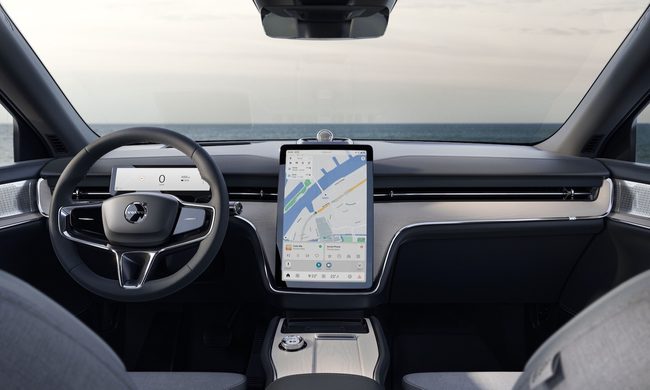
Interior view of the 2024 Volvo EX90.

The line between your smartphone and your car continues to blur. Volvo has announced that it is rolling out an over-the-air software update that brings Apple Music directly to the infotainment systems of more than 2 million vehicles worldwide. Instead of relying on Apple CarPlay or plugging in an iPhone, eligible drivers will be able to stream music natively from their car's built-in system, making Apple Music another integrated feature of Volvo's software experience.

The update is arriving for a wide range of Volvo models, including the EX90, ES90, XC90, S90, V90, XC60, S60, V60, XC40, EX40 and EC40, covering model year 2020 onwards. Availability, however, may vary depending on the vehicle.

Read more
Chery’s latest EV packs flagship tech for the price of a base Tesla, but you can’t buy it
Here's everything packed into Exeed's 2027 Exlantix ES, from its 27-sensor autonomous driving suite to its 860 km range, all starting under $31,000.
Car, Transportation, Vehicle

Chery's premium arm just dropped a sedan that makes you wonder why American EVs cost twice as much for half the tech.

Exeed's 2027 Exlantix ES ships with a driver-assist system called Falcon 700. It is built around an Nvidia Orin-Y chip and a genuinely stacked sensor suite.

Read more
A new AI model wants self-driving cars to think before they swerve
Forget guessing games, this self-driving AI actually shows its work.
Self driving car

Self-driving cars have gotten pretty good at driving. The harder problem is teaching them to drive safely in situations nobody planned for. We have heard horror stories of self-driving cars, behaving erratically in emergency situations, often times delaying first responders from reaching the scene.

A team at Seoul National University, led by professor Jun Won Choi from the Department of Electrical and Computer Engineering, thinks they have cracked part of that puzzle with a new AI model called SafeDrive. The research was recently selected as a highlight paper at CVPR 2026, a distinction that goes only to roughly 3% of all submissions.

Read more