1. Home
  2. Emerging Tech
  3. News

Mind-controlled robotic arm lets users wiggle individual fingers with just a thought

Add as a preferred source on Google

The field of prosthetics has made great progress through collaborations of technology, medicine, science, and design. But until now, most functional prosthetic hands have been limited to a grabbing motion that moves all the fingers together. That might soon change, though. Engineers at Johns Hopkins have completed a successful prototype that lets the user wiggle each prosthetic finger independently, using nothing but the power of his mind.

To make this possible, the physicians and engineers on the Johns Hopkins team first selected an epilepsy patient who was already scheduled for brain mapping surgery. While neurosurgeons looked to identify the origin of the patient’s seizures, operators placed a piece of film the size of a credit card on the part of the brain that typically controls movement of the arms and hands. An array of 128 electrodes on the film allowed scientists to see which parts of the patient’s brain were engaged when they asked him to move each individual finger one by one.

Recommended Videos

Having identified the specific parts of the brain that controlled each finger’s movement, the scientists also worked to understand the electrical brain activity required to experience the sensation of touch. The patient was then asked to wear a glove fitted with a small buzzer in each fingertip, and scientists were able to measure the corresponding electrical activity in the brain when each fingertip buzzer was activated.

All of this data contributed to the computing-based elements of the prosthetic. The team programmed the prosthetic arm to move each finger in response to electrical activity in the corresponding part of the brain. That way, the wearer merely had to think of the specific finger in order to make it move. Each finger was programmed separately, except for the ring finger and pinkie finger (which most people move in tandem anyway). Overall, the mind-controlled prosthetic has already attained 88 percent accuracy.

It’s a big achievement, not doubt — but scientists on the project are aware that a successful application of this prototype for someone who has actually lost a limb is a long way off. The research and testing required will be time-consuming and costly, but once accomplished, could make an enormous difference to people living without hands or arms.

Chloe Olewitz
Former Digital Trends Contributor
Chloe is a writer from New York with a passion for technology, travel, and playing devil's advocate. You can find out more…
Samsung’s humanoid robot ambitions are real, but factories come first
Samsung’s new robotics division has humanoids in its sights, although its immediate business is far more practical factory automation
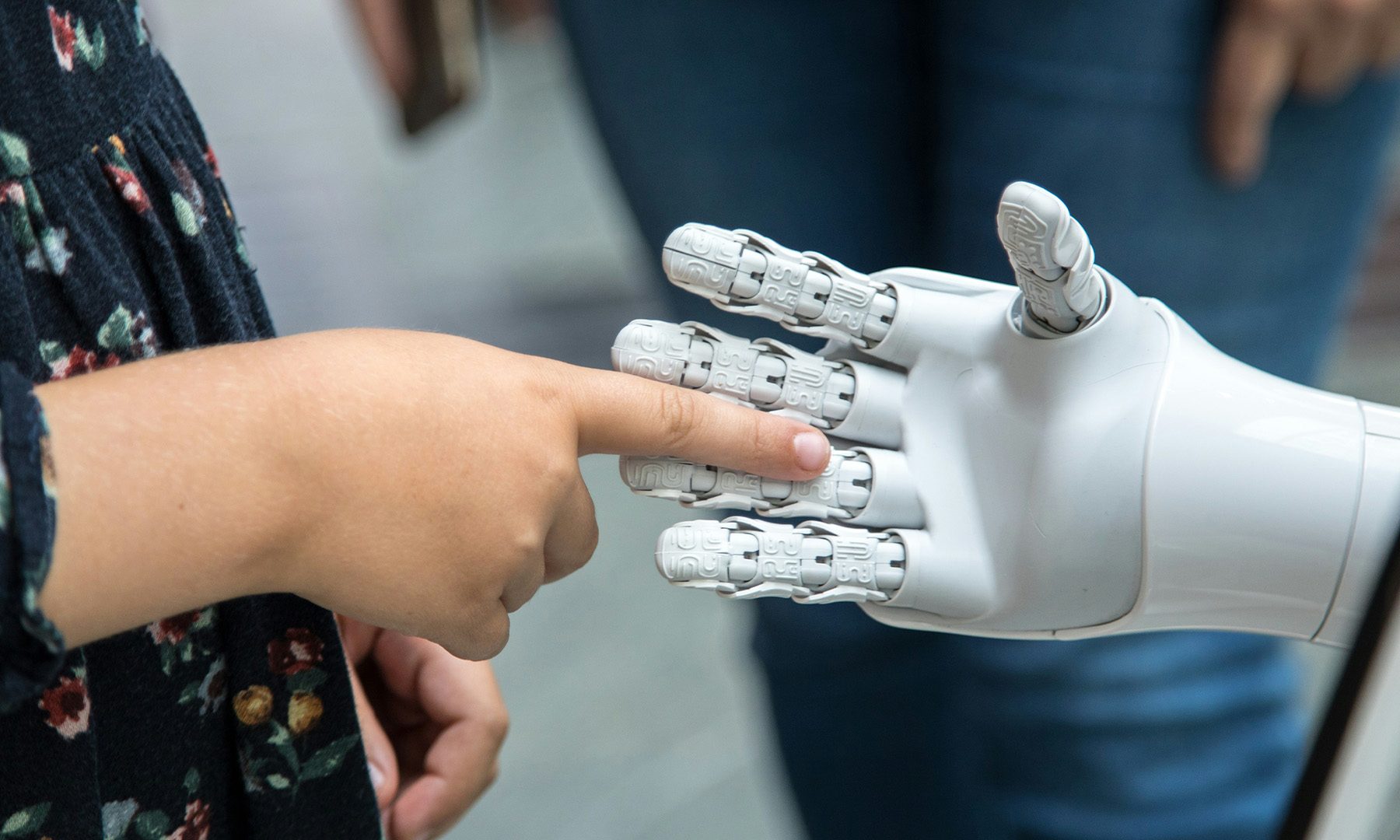
Robot Touch Human Finger

Samsung wants a place in the humanoid race, but its new robotics push begins with machines built for factories rather than homes.

The CEO-led RX robotics division will initially focus on manufacturing robots. Samsung has separately identified humanoids as a priority, although it hasn’t announced a commercial model or explained where one fits into the division’s immediate plans.

Read more
The future of AI may depend on this one behind-the-scenes change
Running Claude on Android.

Whenever a new AI model arrives, it's easy to get caught up in the bells and whistles. We talk about how much smarter it is, how quickly it answers questions, or how realistic its images have become. But here's the thing: none of that matters much if the AI can't reliably work with the apps and services people use every day.

That's why an upcoming update to the Model Context Protocol (MCP) caught my attention. It isn't a new chatbot or a fancy AI model. In fact, most people will never even know it's happening. But it could quietly make the AI ecosystem a lot healthier. If you've never heard of MCP before, don't worry. Think of it as a shared language that lets AI assistants safely talk to apps like Gmail, Slack, calendars, databases, and countless other services. Instead of every company inventing its own way to make those connections, MCP gives everyone a common rulebook.

Read more
The AI game-dev boom has a dark side: fewer jobs for the people starting out
Solo creators are thriving with tools like Claude Code and Copilot, but entry-level game roles are disappearing.
Man playing a video game on a desktop with glowing red and blue lights

AI is making it easier than ever for a single person to build a game. That sounds like a win for creativity, and in many ways, it absolutely is. But there is a catch. As generative AI tools help solo developers and small studios do more with fewer people, the same shift is making life tougher for writers, artists, concept creators, and junior programmers trying to break into the gaming industry.

AI is giving solo developers superpowers

Read more