1. Home
  2. Emerging Tech
  3. News

You won’t believe how far the Zapata hoverboard flies in record run

Add as a preferred source on Google

Zapata Racing is on a roll — the company recently demoed its new Flyboard Air hoverboard, and now it has used the prototype to set a new world record for hoverboard flight. Guinness Book of World Records adjudicator Sofia Grenache was on hand to document the historic flight.

The record-breaking hoverboard flight took place in over the weekend in Southern France, in the coastal community of Sausset-les-Pins. With a fleet of power boats and jet skis in tow, inventor Franky Zapata climbed aboard the Flyboard Air hoverboard and rose 50 feet above the water. He then flew for a record-breaking 2,252 meters (7,388 feet), smashing the previous record of 275.9 meters (905 feet, 2 inches) that was set last year by Canadian inventor Catalin Alexandru Duru.

Recommended Videos

The Flyboard Air was the talk of the internet last month when Zapata released a video showing an early test flight of the device. In the 2-minute clip, Zapata is shown soaring into the air with only the Flyboard Air attached to his feet. The trip was so spectacular that many people questioned whether the device was real.

Related:Thanks to the HoverCart, you can finally put a lawn chair on your hoverboard

Unlike other hoverboards that are tethered to a jet ski, the Flyboard Air has a self-contained propulsion system that allows the unit to operate independent of any other vehicle. Because it is free-flying, the cutting edge hoverboard is capable of flying up to 10,000 feet in the air with a speed of 150 kilometers per hour (93 miles per hour). When fully powered, it can remain airborne for up to 10 minutes.

Zapata is no stranger to jet packs and world records. The former French jet ski champion previously held the world record for the most back flips (26) with a water jet pack, only losing title last year when Liu He of Beijing, China beat Zapata’s record by one with 27 total flips in 60-seconds.

Kelly Hodgkins
Kelly's been writing online for ten years, working at Gizmodo, TUAW, and BGR among others. Living near the White Mountains of…
Google just canceled its AI Studio mobile app, and it’s not all bad news
Logo, Symbol, Disk

Google AI Studio was on track to make its way to Android and iPhone, giving developers and AI enthusiasts a dedicated place to build prompts and experiment with Google's latest models from their phones.

That's no longer happening. In a post shared by the official Google AI Studio account on X, Google confirmed that it's canceling the standalone AI Studio mobile app before launch. The announcement comes despite the company saying nearly 800,000 people had already pre-ordered the app across iOS and Android.

Read more
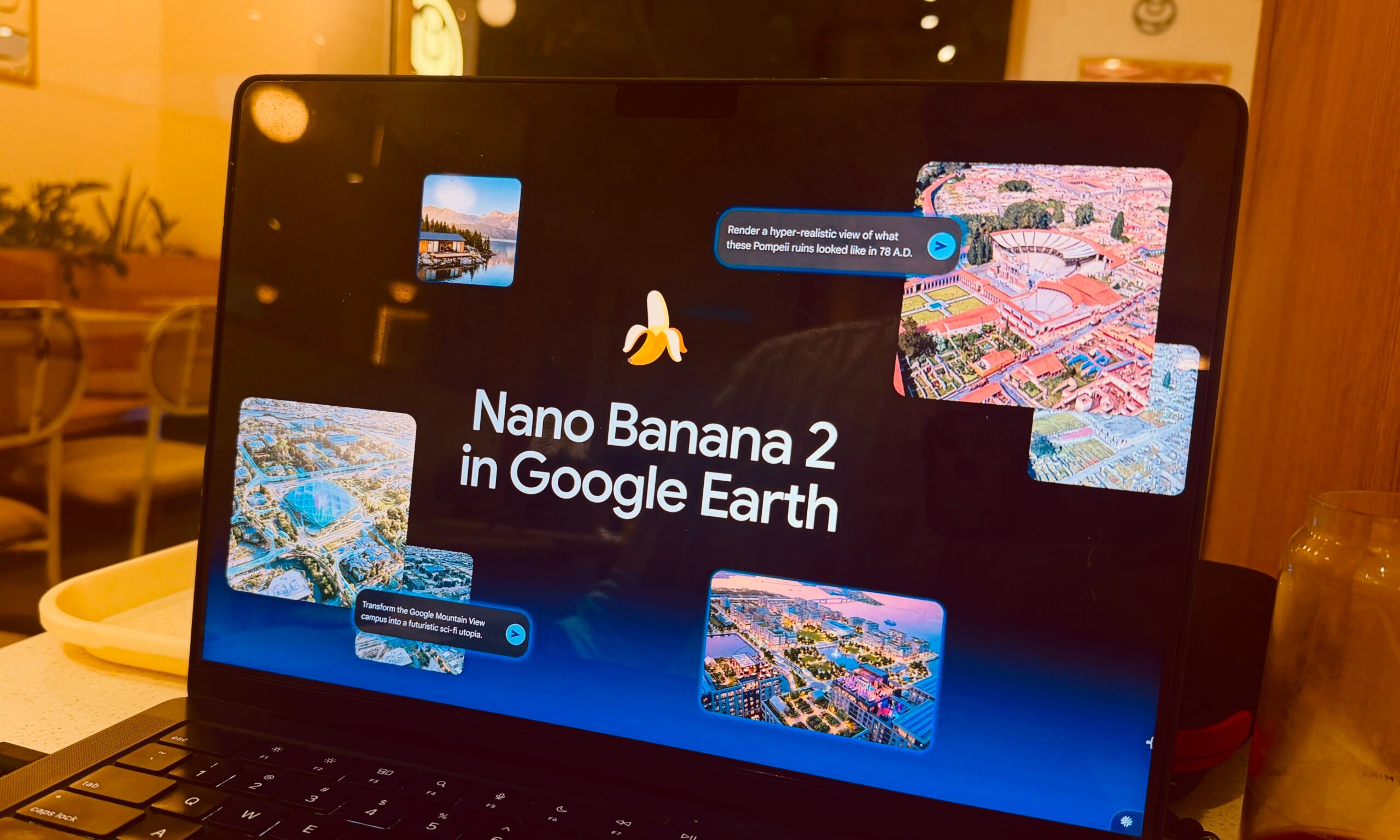
Google Earth’s AI misadventure lasted only a day. It was a tale of dangerous ignorance.
Nuclear reactors, tanks, and historical destruction on a life-like satellite map? Yeah, that's bad.
Nano Banana AI image generator representation.

Technology behemoths are clearly not reading the room, or they are just moving faster than they should when it comes to AI deployment. Google has already stuffed its Gemini AI in every corner of its software stack, from Android to daily productivity tools like Gmail that are used by hundreds of millions of users every day. AI is everywhere. Not all of it is bad, mind you. But in a few places, it just feels forced.

In its latest AI-fication experiment, the company targeted Google Earth. The idea was to let the audience use its Nano Banana 2 AI image generator and make images that can be placed on the map view. On paper, it's a cool idea. What would the Colosseum of Rome look like in your urban neighborhood? Yeah, fun stuff like that.

Read more
Google’s new AI gives robots better balance, smarter hands, and teamwork capabilities
Google just made robots a lot less clumsy and a lot more helpful.
Gemini robotics 2.0

Google DeepMind just brought sci-fi robots closer to reality, and it is very exciting. Building on its original Gemini Robotics model, the company has introduced Gemini Robotics 2, an AI system designed to help robots think, move, and even work together. Unlike most robots today, which rely on pre-programmed routines or someone controlling them remotely, this new system lets robots figure things out on their own when situations get unpredictable.

Can robots finally handle whole-body tasks?

Read more