  1. Home
  2. Phones
  3. Android
  4. Apple
  5. Mobile
  6. Web
  7. News

Google has made it easier to find your phone and see the data it's collecting on you

Add as a preferred source on Google

Google launched My Account, a centralized hub for managing your privacy settings, security safeguards, and advertising preferences across the search giant’s vast catalog of digital services, just about a year ago. Since then, the portal has expanded to expose — and provide greater control over — a broader swath of the personal search and device data Google’s collating, and today sees the addition of tools to help streamline things further. Google has now announced the addition of link-based and voice-activated shortcuts to My Account, plus a “find my device” tool that’s entirely platform agnostic.

My Account may represent a wealth of information, but it’s not exactly useful if you can’t find it easily. That’s why Google is adding two search options, a vanity search in Google and a voice command on devices with Google’s virtual assistant, to highlight My Account prominently. If you’re signed into Chrome or Google on the web, a query for your name will yield a link to the My Accounts page at the very top of the search results. Getting there is even easier within the Google app on Android and iOS: verbalize the command “OK Google, show me my Google account” and My Accounts automatically pops in.
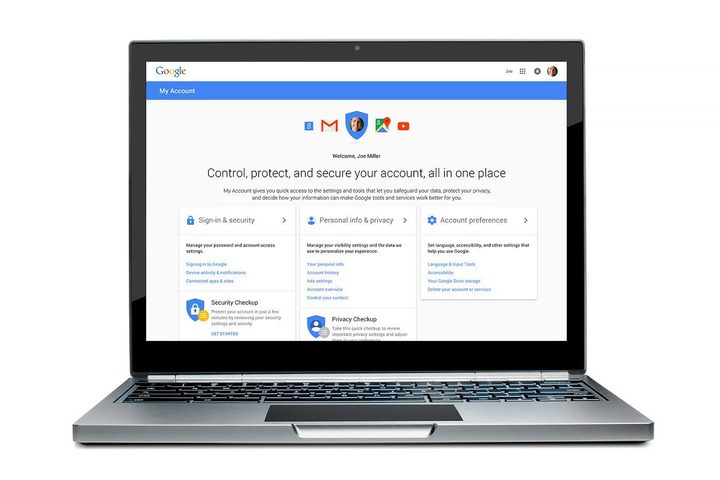
Google My Account
Image used with permission by copyright holder

My Account’s getting a new setting, too: Find My Phone. Much like the Find My iPhone feature on iOS devices like the iPhone, Find My Phone provides a number of self-servicing options such as the ability to call, sign out of, lock, and/or wipe your device. But uniquely, it also includes links outside help if you’re having trouble, including to your phone carrier’s support line and contact information for local law enforcement. There’s even a Google Maps view of the nearest lost and found centers if the situation gets quite desperate, and a nifty voice prompt for activating Find My Phone quickly (just say, “I lost my phone”).

Recommended Videos

“Find my phone” tools are hardly novel, and Google offers many of the same options via its Android Device Manager app for Android smartphones and tablets. But Find My Phone crucially works on iOS devices in addition to Android phones. It can’t wipe iPhones or iPads — protections in iOS prevent that — but it provides handy tips about how to do so via Apple’s iCloud.

The My Account vanity search quick links service is rolling out “in the coming weeks.” The voice prompt, meanwhile, goes live today for English-speaking users, as does Find My Phone.

Kyle Wiggers
Kyle Wiggers is a writer, Web designer, and podcaster with an acute interest in all things tech. When not reviewing gadgets…
The Pixel 11 is almost here, and these are the 3 upgrades I’m begging Google to make
Electronics, Mobile Phone, Phone

We're only a month away from Google's next big hardware event, with the Pixel 11 series officially arriving on August 12. 

After living with the Pixel 10 Pro and the Pixel 10a over the past year, I've come to appreciate what Google's phones do well — and, more importantly, where they still fall short. With the smartphone landscape evolving faster than ever, there are three upgrades I'm hoping Google finally delivers this year. If you're a fellow Pixel user, chances are these are on your wishlist too.

Read more
5 reasons I keep coming back to Apple Reminders despite paying for premium task managers
I rely on OmniFocus for complex projects, but Apple Reminders still handles my everyday tasks better than any paid app.
Apple Reminders open on iPhone

The App Store is filled with premium task managers, and like Things 3, Todoist, and OmniFocus, despite buying and switching between several of them, I keep coming back to Apple Reminders. 

Don’t get me wrong, I still use OmniFocus to manage my projects. But when it comes to daily tasks and quick capture, Apple Reminders still remains my go-to app. In this guide, I'll walk you through the five biggest reasons why.

Read more
Google may finally ditch Samsung’s modem in the Pixel 11, and Tensor G6 could be better for it
FCC paperwork for Google’s next foldable points to MediaTek, raising hopes for lower power use and a cleaner break from Tensor’s Exynos roots
AI recreation of Pixel 11's Pixel Glow feature.

Google may be preparing its biggest Tensor hardware split yet. As spotted by Android Authority, FCC testing for an unreleased foldable Google phone includes a reference to MediaTek radio-frequency software, adding weight to reports that the Pixel 11’s Tensor G6 could leave Samsung’s Exynos modem behind.

Every previous Tensor chip has used Samsung modem hardware. Changing suppliers won’t guarantee better battery life or reception, but it gives Google a fresh path after years of leaning on the same underlying technology.

Read more