1. Home
  2. Emerging Tech
  3. News

Juno just entered Jupiter’s magnetosphere, and the sounds it captured are amazing

Add as a preferred source on Google

NASA’s Juno spacecraft has just left the realm of the solar wind and entered the domain of Jupiter’s magnetosphere, within which all particles are manipulated by the planet’s immense magnetic field. When in the solar wind, Juno encountered around 16 particles per cubic inch. In the spacecraft’s current location within Jupiter’s magnetosphere, it encounters about a hundred times less. The sound in the video is the audio depiction of electromagnetic waves in the low-density space just within the magnetosphere.

Simply put, the stronger the magnetic field, the bigger the magnetosphere. Jupiter’s magnetic field is some 20,000 times more powerful than Earth’s. Its magnetosphere is so large, it clashes with the solar wind millions of miles before the wind even reaches the gas giant.

Recommended Videos

At the point where the supersonic solar wind collides with Jupiter’s magnetic field, the wind is rapidly heated and slowed, creating something called a bow shock, which astrophysicist William Kurth compares to a sonic boom. Kurth co-leads Juno’s Waves investigation, which just released a short video and eerie audio of the event.

Data Recorded as Juno Crossed Jovian Bow Shock

“The solar wind blows past all the planets at a speed of about a million miles per hour, and where it hits an obstacle, there’s all this turbulence,” Kurth said in a press release. The obstacle — Jupiter’s magnetosphere — is the biggest single structure in our solar system. If we could see the structure with the naked eye, it would be twice the size of the moon, despite being hundreds of millions of miles further away.

The Waves chart and audio begins with the subtle plasma oscillations that Juno detected in the hour before encountering the bow shock. The drastic and dramatic change in frequency depicts the collision of two tremendous forces.


Dyllan Furness
Former Contributor
Dyllan Furness is a freelance writer from Florida. He covers strange science and emerging tech for Digital Trends, focusing…
Yet another study says AI is bad for elections, and the rabbit hole gets worse
AI may be an election bomb waiting for someone to light the fuse
Voters cast their ballots on Election Day

Another election, another study has concluded that asking an AI chatbot for political guidance is a spectacularly bad idea. Research conducted during Hungary’s 2026 parliamentary election found that ChatGPT and Google Gemini offered not just inaccurate but also inconsistent and unreliable voting advice. The chatbots misclassified voter profiles, overlooked relevant parties, recommended parties absent from the ballot, and sometimes produced materially different answers when given the same information repeatedly.

AI keeps failing the voter test

Read more
Samsung’s humanoid robot ambitions are real, but factories come first
Samsung’s new robotics division has humanoids in its sights, although its immediate business is far more practical factory automation
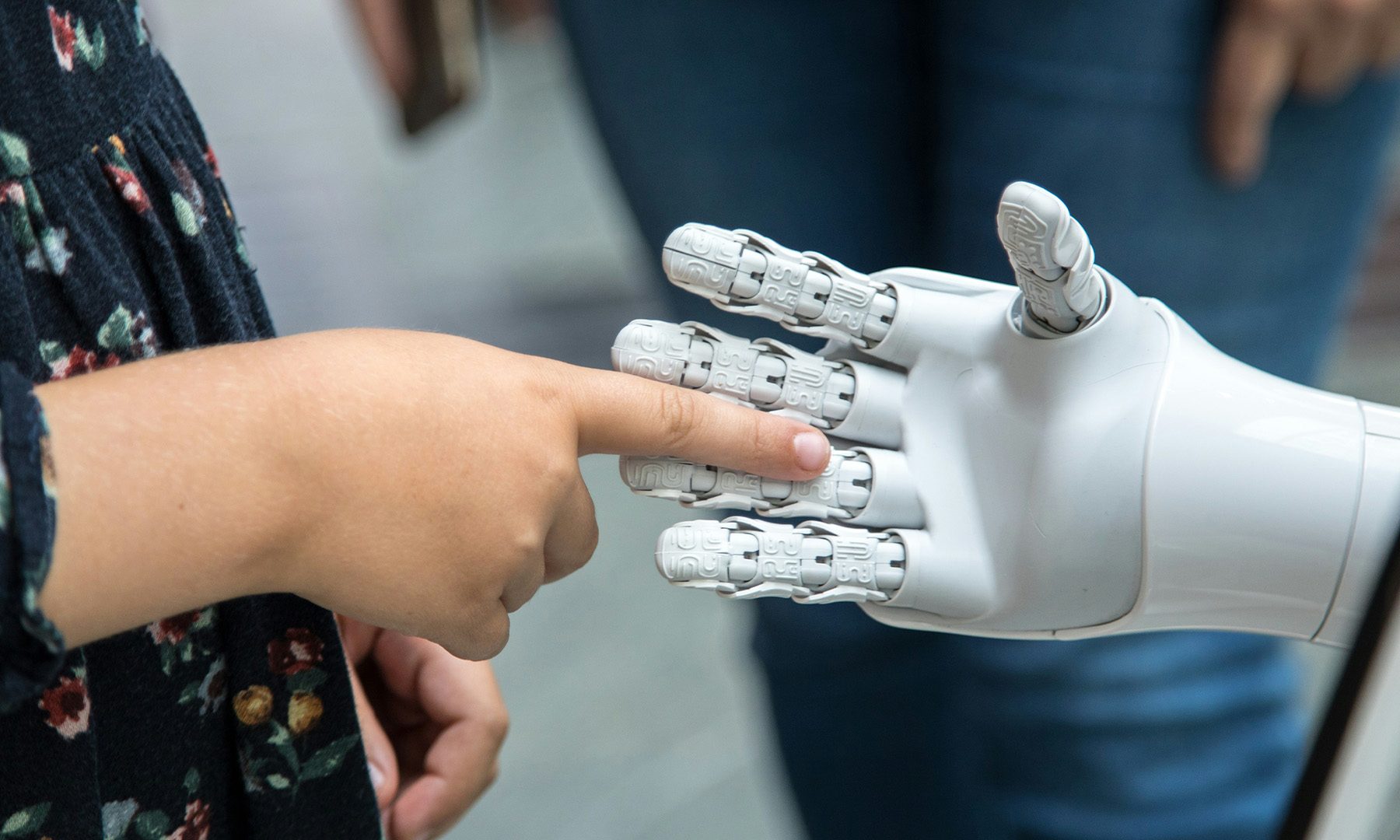
Robot Touch Human Finger

Samsung wants a place in the humanoid race, but its new robotics push begins with machines built for factories rather than homes.

The CEO-led RX robotics division will initially focus on manufacturing robots. Samsung has separately identified humanoids as a priority, although it hasn’t announced a commercial model or explained where one fits into the division’s immediate plans.

Read more
The future of AI may depend on this one behind-the-scenes change
Running Claude on Android.

Whenever a new AI model arrives, it's easy to get caught up in the bells and whistles. We talk about how much smarter it is, how quickly it answers questions, or how realistic its images have become. But here's the thing: none of that matters much if the AI can't reliably work with the apps and services people use every day.

That's why an upcoming update to the Model Context Protocol (MCP) caught my attention. It isn't a new chatbot or a fancy AI model. In fact, most people will never even know it's happening. But it could quietly make the AI ecosystem a lot healthier. If you've never heard of MCP before, don't worry. Think of it as a shared language that lets AI assistants safely talk to apps like Gmail, Slack, calendars, databases, and countless other services. Instead of every company inventing its own way to make those connections, MCP gives everyone a common rulebook.

Read more