1. Home
  2. Cars
  3. Legacy Archives

‘The Beast of Turin’ awakens: 28.5-liter Fiat roars to life after 100-year dormancy

Add as a preferred source on Google

Hear it? That, my friends, is the sound of history.

That guttural, metallic, explosive hymn comes courtesy of ‘The Beast of Turin,’ a massive, 28.5-liter Fiat four-cylinder that’s over 100 years old. That’s right, each individual piston on this thing sweeps more volume than the Dodge Challenger Hellcat’s entire 707-horsepower V8.

Recommended Videos

The Beast was originally built in 1910 under the Fiat S76 moniker. It was designed to topple the world land speed record at the time: 202.68 mph held by a 21.5-liter, 200-hp Blizen-Benz.

But the impressive displacement is just the beginning. Using highly advanced technology for its era, the Fiat motor was given four valves per cylinder, overhead cams, and multi-spark technology, producing somewhere around 300 horsepower and an undoubtedly terrifying torque figure.

Over the years, after failing to capture the official record, the Fiat was ravaged and scattered by the sands of time, lying in wait for some noble savior to bring this fire-breathing warhorse back to life.

British man Duncan Pittaway turned out to be the man for the job, recovering the remains from the two S76’s made and meshing them together, creating the working example you see above.

A film documenting the process, entitled The Beast of Turin, is due out in February 2015.

Pittaway is expected to show off the car at next year’s Goodwood Festival of Speed in England. If the Beast’s mechanics are willing, he may attempt the event’s revered hill climb, where it will undoubtedly set sonic records and irreversibly frighten some villagers.

Keep your ears open.

(Original video by Stefan Marjoram on Vimeo)

Andrew Hard
Andrew first started writing in middle school and hasn't put the pen down since. Whether it's technology, music, sports, or…
Volvo is rolling out Apple Music to over 2 million cars with a simple OTA update
Your Volvo may soon get Apple Music without needing CarPlay
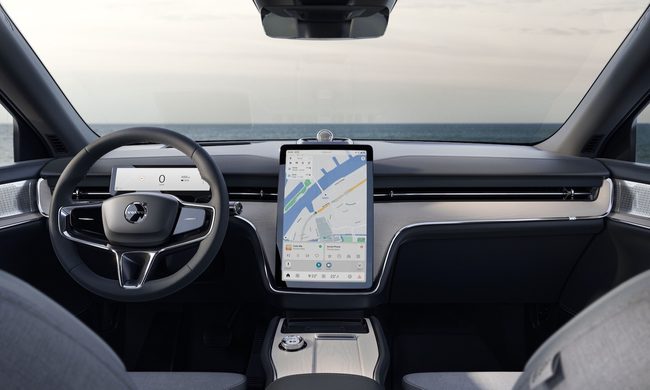
Interior view of the 2024 Volvo EX90.

The line between your smartphone and your car continues to blur. Volvo has announced that it is rolling out an over-the-air software update that brings Apple Music directly to the infotainment systems of more than 2 million vehicles worldwide. Instead of relying on Apple CarPlay or plugging in an iPhone, eligible drivers will be able to stream music natively from their car's built-in system, making Apple Music another integrated feature of Volvo's software experience.

The update is arriving for a wide range of Volvo models, including the EX90, ES90, XC90, S90, V90, XC60, S60, V60, XC40, EX40 and EC40, covering model year 2020 onwards. Availability, however, may vary depending on the vehicle.

Read more
Chery’s latest EV packs flagship tech for the price of a base Tesla, but you can’t buy it
Here's everything packed into Exeed's 2027 Exlantix ES, from its 27-sensor autonomous driving suite to its 860 km range, all starting under $31,000.
Car, Transportation, Vehicle

Chery's premium arm just dropped a sedan that makes you wonder why American EVs cost twice as much for half the tech.

Exeed's 2027 Exlantix ES ships with a driver-assist system called Falcon 700. It is built around an Nvidia Orin-Y chip and a genuinely stacked sensor suite.

Read more
A new AI model wants self-driving cars to think before they swerve
Forget guessing games, this self-driving AI actually shows its work.
Self driving car

Self-driving cars have gotten pretty good at driving. The harder problem is teaching them to drive safely in situations nobody planned for. We have heard horror stories of self-driving cars, behaving erratically in emergency situations, often times delaying first responders from reaching the scene.

A team at Seoul National University, led by professor Jun Won Choi from the Department of Electrical and Computer Engineering, thinks they have cracked part of that puzzle with a new AI model called SafeDrive. The research was recently selected as a highlight paper at CVPR 2026, a distinction that goes only to roughly 3% of all submissions.

Read more