1. Home
  2. Cars
  3. Emerging Tech
  4. Legacy Archives

Intelligent Laserlight and OLED technology? BMW is bringing the future to CES 2015

Add as a preferred source on Google

At the 2015 Consumer Electronics Show (CES), BMW is hoping to illuminate the path to the future.

The German brand will introduce its Organic Light concept at the event, which will display organic light-emitting diode (OLED) technology. The company also plans to unveil an intelligent version of its Laserlight system as well.

Recommended Videos

In case you didn’t know, OLEDs are an offshoot of LEDs where the light source is a thin organic film of hydrocarbon chains rather than a pointed array of bulbs. The design allows for a more uniform spread of light than LEDs, while still being electrically efficient.

Most existing OLEDs aren’t bright enough to replace LEDs in the headlights and brake lights, so they are generally relegated to taillight sections for now. They can be used to create exotic, progressive designs though, with individual modules activating separately in exciting new shapes and contours. Because they don’t need reflectors and other optics, they also take up less space in the boot.

You may already associate BMW with OLEDs because of the automaker’s 2014 Vision Future Luxury concept, but you can expect an improved version at the year’s CES.

In combination with the brand’s laser systems (they aren’t just for the Navy, you know), OLEDs could potentially be the next wave in automotive lighting.

Laserlight made its production debut with the i8 hybrid sports car, and it allows for an illumination range of up to 600 meters (1,968.5 feet). At this year’s CES, BMW will flaunt the technology’s integration with cameras, sensors, and driver assistance options, creating an ‘intelligent Laserlight system.’

The manufacturer didn’t go into great detail as to what specific products will be showcased at the electronics show, but we hear that BMW has a ton more planned. Stay tuned to our 2015 CES page for more updates.

Andrew Hard
Andrew first started writing in middle school and hasn't put the pen down since. Whether it's technology, music, sports, or…
Volvo is rolling out Apple Music to over 2 million cars with a simple OTA update
Your Volvo may soon get Apple Music without needing CarPlay
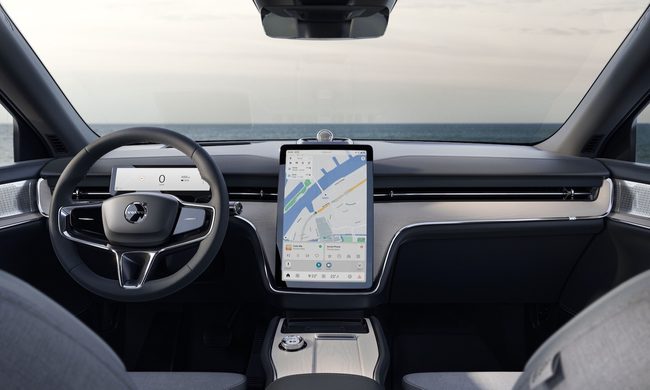
Interior view of the 2024 Volvo EX90.

The line between your smartphone and your car continues to blur. Volvo has announced that it is rolling out an over-the-air software update that brings Apple Music directly to the infotainment systems of more than 2 million vehicles worldwide. Instead of relying on Apple CarPlay or plugging in an iPhone, eligible drivers will be able to stream music natively from their car's built-in system, making Apple Music another integrated feature of Volvo's software experience.

The update is arriving for a wide range of Volvo models, including the EX90, ES90, XC90, S90, V90, XC60, S60, V60, XC40, EX40 and EC40, covering model year 2020 onwards. Availability, however, may vary depending on the vehicle.

Read more
Chery’s latest EV packs flagship tech for the price of a base Tesla, but you can’t buy it
Here's everything packed into Exeed's 2027 Exlantix ES, from its 27-sensor autonomous driving suite to its 860 km range, all starting under $31,000.
Car, Transportation, Vehicle

Chery's premium arm just dropped a sedan that makes you wonder why American EVs cost twice as much for half the tech.

Exeed's 2027 Exlantix ES ships with a driver-assist system called Falcon 700. It is built around an Nvidia Orin-Y chip and a genuinely stacked sensor suite.

Read more
A new AI model wants self-driving cars to think before they swerve
Forget guessing games, this self-driving AI actually shows its work.
Self driving car

Self-driving cars have gotten pretty good at driving. The harder problem is teaching them to drive safely in situations nobody planned for. We have heard horror stories of self-driving cars, behaving erratically in emergency situations, often times delaying first responders from reaching the scene.

A team at Seoul National University, led by professor Jun Won Choi from the Department of Electrical and Computer Engineering, thinks they have cracked part of that puzzle with a new AI model called SafeDrive. The research was recently selected as a highlight paper at CVPR 2026, a distinction that goes only to roughly 3% of all submissions.

Read more