  1. Home
  2. Cars
  3. News

GM’s Cruise Automation autonomous-driving subsidiary is about to grow

Add as a preferred source on Google

Like many established automakers, General Motors is getting more serious about self-driving cars. The largest United States automaker bought startup Cruise Automation last year to help it develop autonomous vehicles, and now it’s expanding the company’s operations.

GM plans to add more than 1,100 jobs and invest $14 million in a new research facility in San Francisco for Cruise Automation. The autonomous-driving tech company plans to move into the new facility by the end of this year, and hire the 1,100 new employees within five years, according to a GM statement.

Recommended Videos

Cruise will repurpose an existing facility in San Francisco, which GM says will more than double its research and development space. The California Office of Business and Economic Development, known as Go-Biz is giving GM and Cruise an $8 million tax credit for the new facility.

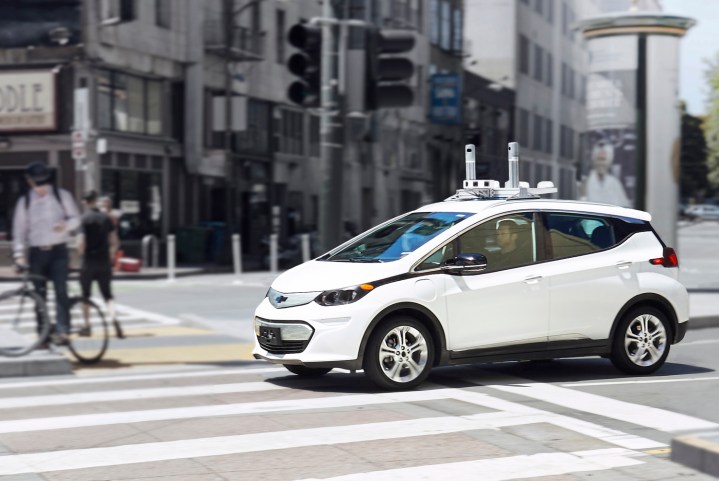
GM and Cruise personnel are currently testing a fleet of automated Chevrolet Bolt EV electric cars on public streets in San Francisco, as well as Scottsdale, Arizona, and the Detroit metropolitan area. GM announced a major expansion of autonomous-car testing in its home city last year, after Michigan’s government approved new laws to encourage development of self-driving cars.

Unlike rival Ford, GM has not confirmed a timeline for the launch of a fully autonomous production car. But it may follow a similar strategy to Ford, which plans to use its self-driving car for ridesharing services only. GM already has a relationship with Lyft, and offers carsharing services through its own Maven brand in certain markets.

The use of self-driving cars in sharing services is considered more economically attractive than simply selling them to individual consumers. It also gives companies a greater degree of control over this new technology as it rolls out. But before autonomous ride sharing or car sharing can happen on a large scale, that technology must be perfected.

Stephen Edelstein
Stephen is a freelance automotive journalist covering all things cars. He likes anything with four wheels, from classic cars…
A new sodium battery posts wild four-minute charging numbers, but don’t expect it in an EV yet
The breakthrough could improve fast charging and battery life, but the study hasn’t demonstrated those results in a production-sized pack
EV Charger

A new sodium-metal battery has posted a charging number that makes today’s EVs look painfully slow. In laboratory testing, the cell operated at a 15C rate, equivalent to completing a charge or discharge in roughly four minutes.

That doesn’t mean researchers plugged in an electric car and watched it fill up before the driver finished buying coffee. The result came from a small experimental cell using a new quasi-solid electrolyte, while the larger pouch-cell prototype delivered far less dramatic performance.

Read more
The Apple Car may be dead, but it became the foundation of Apple Intelligence
A decade of work on a canceled car project reportedly laid the groundwork for Apple Intelligence.
Apple Intelligence in Apple Car

The Apple Car may have never left the garage, but it apparently gave birth to Apple's AI ambitions. According to Bloomberg's Mark Gurman, Apple's canceled autonomous vehicle project, one that consumed more than a decade of work and over $10 billion before being scrapped in 2024, ended up laying the technological foundation for Apple Intelligence. In a rather ironic twist, one of Apple's most expensive failures may also become one of its most important long-term investments.

The Apple Car forced Apple to think like an AI company

Read more
Volkswagen’s ID. Unyx 09 just leaked, and it’s the kind of EV I want to see in the US
VW's partnership with Xpeng is producing exactly what we hoped.
Bumper, Transportation, Vehicle

I've been watching Volkswagen's China lineup quietly get cooler for the past two years, but the ID. Unyx 09 might be the moment it finally gets exciting, not just for Chinese buyers, but for the rest of the world as well. 

Regulatory filings from China's Ministry of Industry and Information Technology, Batch 409, have exposed the full specs of the upcoming sedan ahead of its official launch later this year, and it looks nothing like any VW car I've seen before (via CarNewsChina).

Read more