  1. Home
  2. Cars
  3. Photo Galleries
  4. Legacy Archives

A fitting farewell: Mitsuoka’s quirky Orochi retires with styling inspired by anime robots

Add as a preferred source on Google

When a vehicle reaches the end of its production cycle, some fade away, and others go out with a bang.

Japanese manufacturer Mitsuoka once said that its offbeat Orochi “is the car to ride to gather attention from everyone,” so you can probably guess which direction it went.

The Toyota-powered Orochi’s Evangelion Edition will be the final iteration of the Japanese sports car, of which 11 will be made for around 16,000,000 Yen ($137,000).

So what’s an Evangelion? It’s a child-piloted giant cyborg designed to combat world-conquering Angels of course, and the anime characters were the inspiration for the Mitsuoka’s ridiculous paint job.

Put that together with the Orochi’s namesake, which is derived from an eight-headed eight-tailed dragon, and you start to get a handle on how bizarre it actually looks.

The thing has more neon than a Saved By The Bell set, has nostrils on the hood, wears switchblade doors, and we haven’t even gotten to the fish-like face yet. Essentially, it looks like it was created by an eight-year old who’s pretty good with highlighters and spray paint.

And that’s awesome.

With a car like this, reactions could range from wide-eyed intrigue to “that’s literally the ugliest thing I’ve ever seen,” but regardless of your opinion of the car’s aesthetics, it represents a strangeness that the automotive industry will surely miss.

In the words of 1980s glam metal band Cinderella, “You don’t know what you got till it’s gone.”

The rear-wheel drive Orochi is based on the Acura NSX platform, but the engine is a 3.3-liter Toyota V6 that produces 230 horsepower and 242 pound-feet of torque. The powerplant is connected to a five-speed auto.

Andrew Hard
Andrew first started writing in middle school and hasn't put the pen down since. Whether it's technology, music, sports, or…
Volvo is rolling out Apple Music to over 2 million cars with a simple OTA update
Your Volvo may soon get Apple Music without needing CarPlay
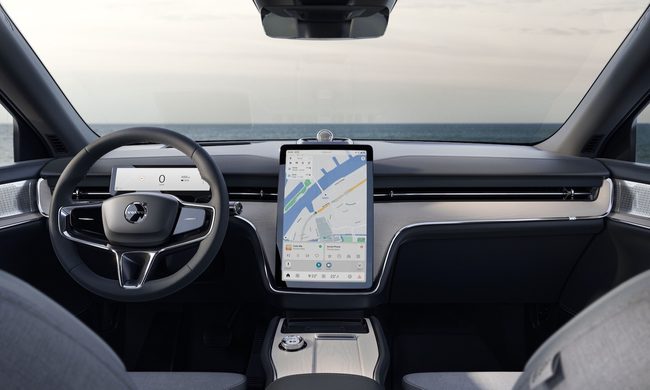
Interior view of the 2024 Volvo EX90.

The line between your smartphone and your car continues to blur. Volvo has announced that it is rolling out an over-the-air software update that brings Apple Music directly to the infotainment systems of more than 2 million vehicles worldwide. Instead of relying on Apple CarPlay or plugging in an iPhone, eligible drivers will be able to stream music natively from their car's built-in system, making Apple Music another integrated feature of Volvo's software experience.

The update is arriving for a wide range of Volvo models, including the EX90, ES90, XC90, S90, V90, XC60, S60, V60, XC40, EX40 and EC40, covering model year 2020 onwards. Availability, however, may vary depending on the vehicle.

Read more
Chery’s latest EV packs flagship tech for the price of a base Tesla, but you can’t buy it
Here's everything packed into Exeed's 2027 Exlantix ES, from its 27-sensor autonomous driving suite to its 860 km range, all starting under $31,000.
Car, Transportation, Vehicle

Chery's premium arm just dropped a sedan that makes you wonder why American EVs cost twice as much for half the tech.

Exeed's 2027 Exlantix ES ships with a driver-assist system called Falcon 700. It is built around an Nvidia Orin-Y chip and a genuinely stacked sensor suite.

Read more
A new AI model wants self-driving cars to think before they swerve
Forget guessing games, this self-driving AI actually shows its work.
Self driving car

Self-driving cars have gotten pretty good at driving. The harder problem is teaching them to drive safely in situations nobody planned for. We have heard horror stories of self-driving cars, behaving erratically in emergency situations, often times delaying first responders from reaching the scene.

A team at Seoul National University, led by professor Jun Won Choi from the Department of Electrical and Computer Engineering, thinks they have cracked part of that puzzle with a new AI model called SafeDrive. The research was recently selected as a highlight paper at CVPR 2026, a distinction that goes only to roughly 3% of all submissions.

Read more