1. Home
  2. Cars
  3. News

Ford’s Info Cycle project equips bicycles with data-gathering sensors

Add as a preferred source on Google

Ford may be one of the world’s largest car companies, but its latest research project involves vehicles with fewer wheels, and human power rather than horsepower.

The Dearborn carmaker doesn’t necessarily think of bicycles as a possible future product line. But it does believe they can be used to collect data that can help analysts better understand the dynamics of urban streets, according to CityLab.

Recommended Videos

To learn more about cycles and how they interact with cars on the street, Ford started the Info Cycle project to gather data from onboard sensors. A kit was developed by the carmaker’s research center in Palo Alto, California that allows Ford to collect information on location, speed, ambient light, temperature, and altitude, among other factors.

A sensor is clipped to a bicycle’s front fork. It’s made from off-the-shelf electronics and uses Ford’s open-source OpenXC platform, which was created to encourage third parties to develop apps for the company’s in-car infotainment systems. The data generated by Info Cycle will then be made available for analysis.

While only a handful of bikes are part of the project right now, Ford expects that number to grow, and sees many potential uses for the data they acquire.

City planners could use it to track traffic movement, bike advocacy groups could use it to make the case for more bike lanes, and Ford itself could combine the data with OpenXC data from its cars to get a clearer picture of how urban streets are used, and how cars and bikes interact, researchers say.

To help scale up the project, Ford is now working on ways to integrate sensors into bicycles more seamlessly. It says many riders are reluctant to add weight simply for the purposes of this experiment, so engineers are looking for ways to incorporate the sensor into existing components like the handlebars, lights, or bell.

Once the design is finalized, researchers plan to build about 1,000 devices and hand them out to a “select group of cyclists in well defined geographic areas.” What those cyclists do with the devices is an open question.

The goal is to attract a community of active users who will do things with this data-harvesting capability that perhaps even Ford itself didn’t anticipate. The carmaker says the system’s open-source nature will allow people to adapt it for their own local projects.

Ford has experimented with bicycles before. It unveiled the MoDe range of electric bike prototypes earlier this year, and attempted to market an e-bike called the Think back in 2001. Maybe “Big Data” will help the Blue Oval finally achieve a beachhead in the bike business.

Stephen Edelstein
Stephen is a freelance automotive journalist covering all things cars. He likes anything with four wheels, from classic cars…
Two Indian automakers just beat Tesla at the one thing you’d expect it to own
Two Indian automakers, Tata Motors and Mahindra, just topped a global EV efficiency ranking ahead of Tesla and BYD.
Car, Suv, Transportation

I'll admit, Tesla topping an efficiency ranking felt like a foregone conclusion until I actually saw the numbers. Turns out two Indian automakers just embarrassed both Tesla and the world's biggest EV maker at their own game. 

The first time I read the report, I couldn’t believe it, and I’ve been following the Indian automobile industry for a couple of years now.  

Read more
BYD’s new Racco is Japan’s first electric kei car with over 300 km range
The Racco also undercuts Nissan's Sakura on price before taxes and incentives, which packing in features rarely seen in the kei car segment.
BYD Racco

BYD has entered the Japanese kei car market with the Racco, an electric car built specifically for the country's compact car segment. Its top trim delivers 320 km of range, making it the first compact electric car in the market to pass 300 km, according to ITHome.

Kei cars are a Japanese vehicle class with strict size and power limits, and the segment has long been dominated by domestic automakers such as Honda, Nissan, Suzuki, and Daihatsu. The Racco is BYD's first attempt to compete in that space.

Read more
Xiaomi’s sleek seven-seater SkyNomad EREV gets a specs reveal. It’s a template US carmakers must desperately follow
Xiaomi made a sedan first. Now it's coming for your family SUV too.
Skynomad

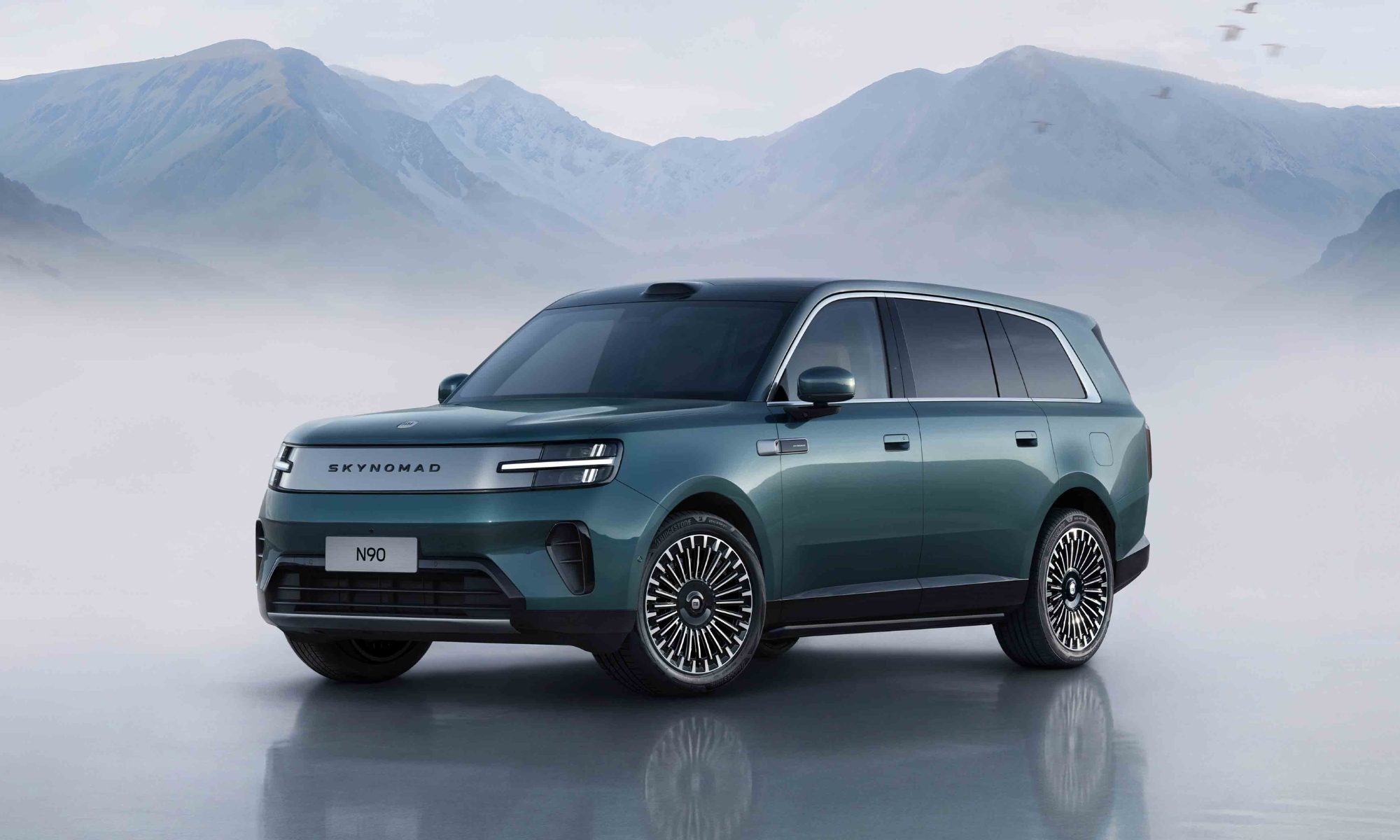
When Xiaomi entered the automotive industry, it did so with the all-electric SU7 sedan, then expanded into SUVs with the YU7. Its next move is taking the company into one of China's fastest-growing vehicle segments: extended-range electric SUVs (EREVs). Ahead of a technical presentation on July 30, Xiaomi has shared fresh details about its upcoming SkyNomad lineup via its Weibo channel, first spotted by CarNewsChina, revealing the new Kunlun range extender, fuel economy figures and testing progress.

At first glance, the SkyNomad N90's upright silhouette, squared-off proportions and premium detailing inevitably draw comparisons with the Range Rover. But mechanically, Xiaomi appears to be targeting a very different group of rivals. The company is entering a market currently dominated by Chinese brands such as Li Auto and Huawei-backed Aito, both of which have built successful businesses around extended-range SUVs that combine electric driving with the convenience of a gasoline-powered range extender.

Read more