  1. Home
  2. Cars
  3. Mobile
  4. News

There is no way to say pickup truck in emoji, and Ford wants to change that

Add as a preferred source on Google
The Pickup Truck Emoji | Built Ford Proud | Ford

Emojis have taken over our online conversations. We use them to tell our friends how we’re feeling, which country we’re traveling to, what we’re eating for dinner, or what we’ve got planned for the weekend. There is no way to announce to the online world that we’re driving a pickup truck, and Ford wants to change that as quickly as possible.

Recommended Videos

The Blue Oval is celebrating World Emoji Day by unveiling a pickup truck emoji shaped like an F-150, which is its most popular model, and one of America’s best-selling vehicles. It’s a blue, extended-cab truck, but Ford hinted it wants to make the emoji customizable. Truck fans will be able to select a different version of the emoji to say that they’re going camping in a red pickup or towing a boat in a green one. It might even be the first emoji fitted with a factory-installed lift kit.

Ford published a humorous video that shows the emoji’s development process. It didn’t need to be crash-tested or to have its fuel economy certified by the Environmental Protection Agency (EPA), but a lot of research went into developing it.

“Our team spent a lot of time digging through message boards, texting influencers, and watching social media feeds to really understand our customers’ needs,” Craig Metros, Ford’s design director in North America, said in a statement.

The problem is that getting a new emoji approved is considerably more difficult than you might imagine. It’s not just a matter of arranging pixels into an image, saving it, and submitting it to Apple or Google. The members of the Unicode Consortium review and approve every emoji before it gets uploaded to the internet’s database. Needless to say, the number of requests the Unicode Consortium receives warrants a shocked, OMG-style emoji, not a smiley face or a big blue thumb.

Ford has already submitted a request, and it optimistically believes the truck emoji will be included in a future version of Unicode. If it’s approved, look for it on your smartphone, tablet, or favorite messaging app in early 2020. While the emoji doesn’t say Ford anywhere, it’s clearly shaped like one of the company’s trucks, and we’re curious to see if rivals Chevrolet, GMC, Ram, and even Toyota will try to get their own truck-shaped emoji approved by the Unicode Consortium.

Ronan Glon
Ronan Glon is an American automotive and tech journalist based in southern France. As a long-time contributor to Digital…
This sleek Chinese EV pairs supercar styling with three AI brains
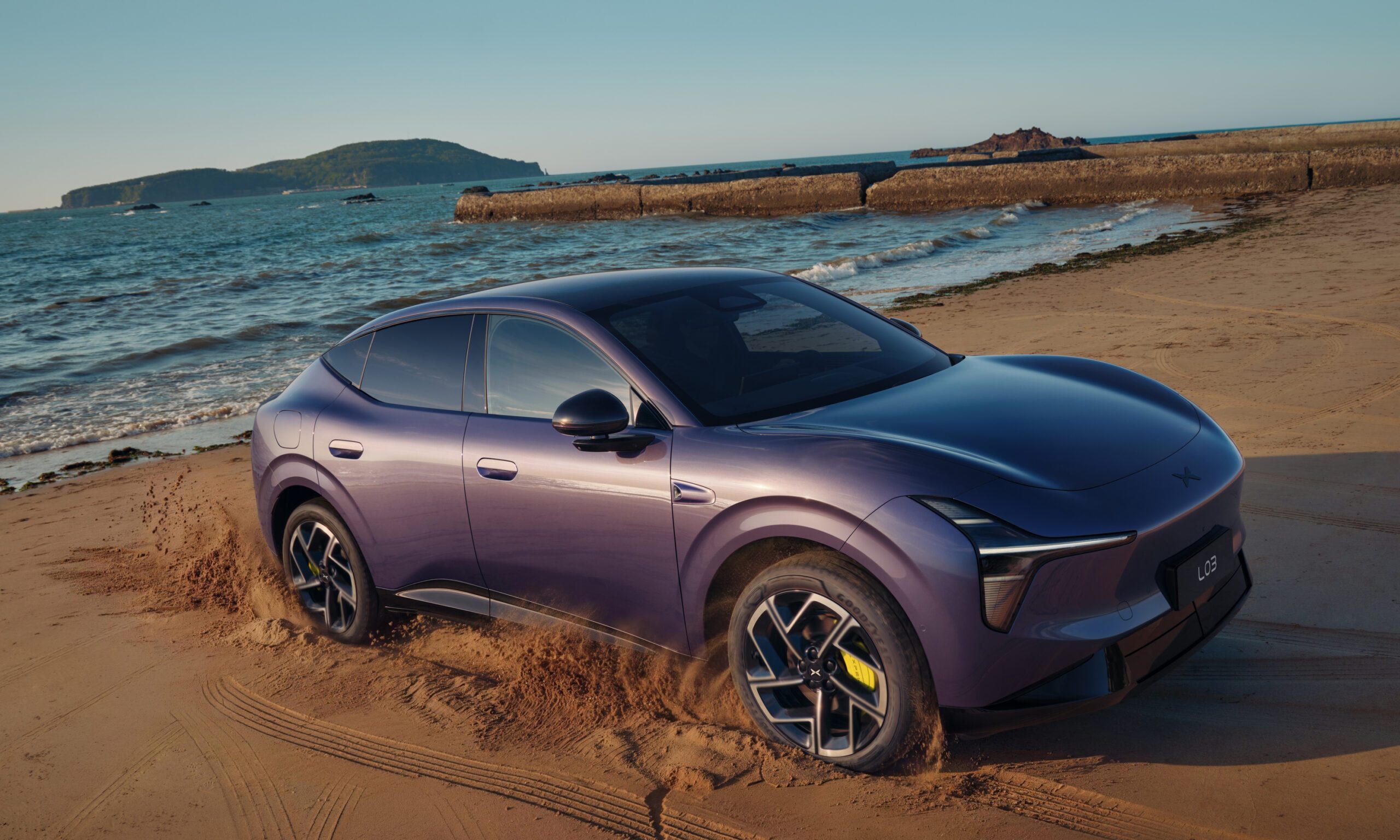
The Xpeng L03 is an AI supercomputer disguised as a stylish family SUV
Xpeng L03

Xpeng’s latest electric vehicle carries enough processing power to make the term "smart car" actually sound more realistic than it actually is. The new Xpeng L03 debuted simultaneously in Europe and China on July 16, with the company presenting it across 65 markets. Available as a fully electric vehicle and an L03 Power X range-extender, the coupe-SUV is Xpeng’s most internationally focused model so far. Market-specific prices and sales dates remain unannounced.

Three AI chips and Google Maps built right in

Read more
A new sodium battery posts wild four-minute charging numbers, but don’t expect it in an EV yet
The breakthrough could improve fast charging and battery life, but the study hasn’t demonstrated those results in a production-sized pack
EV Charger

A new sodium-metal battery has posted a charging number that makes today’s EVs look painfully slow. In laboratory testing, the cell operated at a 15C rate, equivalent to completing a charge or discharge in roughly four minutes.

That doesn’t mean researchers plugged in an electric car and watched it fill up before the driver finished buying coffee. The result came from a small experimental cell using a new quasi-solid electrolyte, while the larger pouch-cell prototype delivered far less dramatic performance.

Read more
The Apple Car may be dead, but it became the foundation of Apple Intelligence
A decade of work on a canceled car project reportedly laid the groundwork for Apple Intelligence.
Apple Intelligence in Apple Car

The Apple Car may have never left the garage, but it apparently gave birth to Apple's AI ambitions. According to Bloomberg's Mark Gurman, Apple's canceled autonomous vehicle project, one that consumed more than a decade of work and over $10 billion before being scrapped in 2024, ended up laying the technological foundation for Apple Intelligence. In a rather ironic twist, one of Apple's most expensive failures may also become one of its most important long-term investments.

The Apple Car forced Apple to think like an AI company

Read more