1. Home
  2. Cars
  3. News

Ford to keep jobs in the U.S. if Trump administration meets certain conditions

Add as a preferred source on Google

During his campaign, President-elect Donald Trump regularly criticized Ford for moving manufacturing jobs out of the United States and over the border to Mexico. Mark Fields, the Blue Oval’s chief executive, has announced he’s ready to work with the incoming Trump administration if the right conditions are met.

Retaining jobs in the U.S. is possible if operating costs are kept in check, Fields said in an interview with Bloomberg. He explained Ford advocates for currency manipulation rules that ensure free and fair trade, tax reform, and safety guidelines for autonomous vehicles. The executive also added he plans on asking Trump to make looming fuel economy and emissions standards more lenient.

Recommended Videos

Notably, Fields blasted the recent regulations that force automakers to sell a certain number of electrified cars. He pointed out that the segment is still small even though massive investments have been made to bring electrified cars to the market, and to build the infrastructure required to keep their battery packs topped up.

“In 2008, there were 12 electrified vehicles offered in the U.S. market and it represented 2.3 percent of the industry. Fast forward to 2016, there’s 55 models, and year to date it’s 2.8 percent,” he affirmed.

Fiat-Chrysler boss Sergio Marchionne famously echoed Fields’ sentiments two years ago when he lamented the group lost $14,000 on every electric 500e it sold. He called it a compliance car built only to satisfy the capricious demands of California regulators, and he flatly urged motorists not to buy it.

Even if Trump’s policies are favorable, Ford will move forward with its plans to shift Focus and C-Max production from Michigan to a new factory in Mexico in 2019, according to Green Car Reports. Ford has pledged the plant will stay open and promised no jobs will be eliminated. And, the company remains on track to introduce an all-electric model tentatively called Model E in 2019.

Trump hasn’t responded to Fields’ comments.

Ronan Glon
Ronan Glon is an American automotive and tech journalist based in southern France. As a long-time contributor to Digital…
Volvo is rolling out Apple Music to over 2 million cars with a simple OTA update
Your Volvo may soon get Apple Music without needing CarPlay
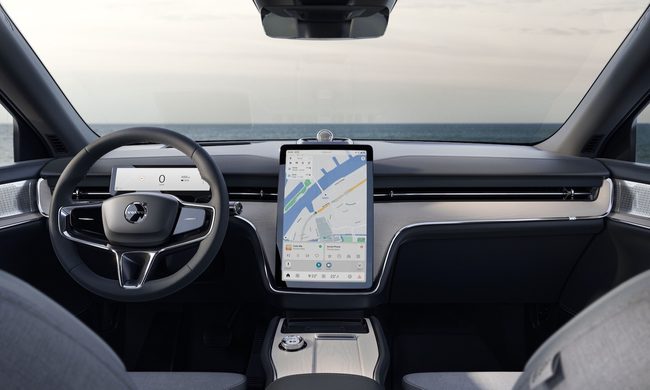
Interior view of the 2024 Volvo EX90.

The line between your smartphone and your car continues to blur. Volvo has announced that it is rolling out an over-the-air software update that brings Apple Music directly to the infotainment systems of more than 2 million vehicles worldwide. Instead of relying on Apple CarPlay or plugging in an iPhone, eligible drivers will be able to stream music natively from their car's built-in system, making Apple Music another integrated feature of Volvo's software experience.

The update is arriving for a wide range of Volvo models, including the EX90, ES90, XC90, S90, V90, XC60, S60, V60, XC40, EX40 and EC40, covering model year 2020 onwards. Availability, however, may vary depending on the vehicle.

Read more
Chery’s latest EV packs flagship tech for the price of a base Tesla, but you can’t buy it
Here's everything packed into Exeed's 2027 Exlantix ES, from its 27-sensor autonomous driving suite to its 860 km range, all starting under $31,000.
Car, Transportation, Vehicle

Chery's premium arm just dropped a sedan that makes you wonder why American EVs cost twice as much for half the tech.

Exeed's 2027 Exlantix ES ships with a driver-assist system called Falcon 700. It is built around an Nvidia Orin-Y chip and a genuinely stacked sensor suite.

Read more
A new AI model wants self-driving cars to think before they swerve
Forget guessing games, this self-driving AI actually shows its work.
Self driving car

Self-driving cars have gotten pretty good at driving. The harder problem is teaching them to drive safely in situations nobody planned for. We have heard horror stories of self-driving cars, behaving erratically in emergency situations, often times delaying first responders from reaching the scene.

A team at Seoul National University, led by professor Jun Won Choi from the Department of Electrical and Computer Engineering, thinks they have cracked part of that puzzle with a new AI model called SafeDrive. The research was recently selected as a highlight paper at CVPR 2026, a distinction that goes only to roughly 3% of all submissions.

Read more