  1. Home
  2. Cars
  3. Emerging Tech
  4. Legacy Archives

Hydrogen fuel cell-powered Audi A7 trials set for August

Add as a preferred source on Google

Audi A7 emerging from the mistAudi is covering all of the bases when it comes to alternative fuels.

In addition to the A3 e-tron plug-in hybrid and A3 g-tron natural gas production cars, not to mention the stillborn R8 e-tron electric supercar, The Ingolstadt gang is reportedly working on a hydrogen-powered version of the A7 as well.

Recommended Videos

According to Autocar, the prototype A7 will be powered by hydrogen fuel cells, as opposed to using straight hydrogen to power an internal combustion engine as Aston Martin did with its recent Hybrid Hydrogen Rapide S.

With fuel cells generating electricity from the reaction of oxygen and ambient air, the A7 will essentially be an electric car. This tech has already made it to the road on prototype and limited-production cars like the Honda FCX Clarity.

Being the most abundant element in the universe, and leaving no emissions other than water when run through a fuel cell, hydrogen seems like the ultimate alternative fuel. However, lack of a refueling infrastructure and a costly and dirty refining process have limited its use so far.

The A7 may try to make up for the lack of convenient hydrogen filling stations by using an onboard battery and regenerative braking to extend its range.

It’s also more than likely that the A7 will remain a prototype. Remember that Audi built the R8 e-tron to see if an electric supercar was technically possible, but shelved it because it didn’t make much sense as a production car.

The A7, which will begin trials in August, will likely serve a similar purpose. It will test the capabilities of fuel cells, giving Audi yet another green tech option for the future. This sleek five-door will also, it has to be said, look damn good doing it.

Stephen Edelstein
Stephen is a freelance automotive journalist covering all things cars. He likes anything with four wheels, from classic cars…
Volvo is rolling out Apple Music to over 2 million cars with a simple OTA update
Your Volvo may soon get Apple Music without needing CarPlay
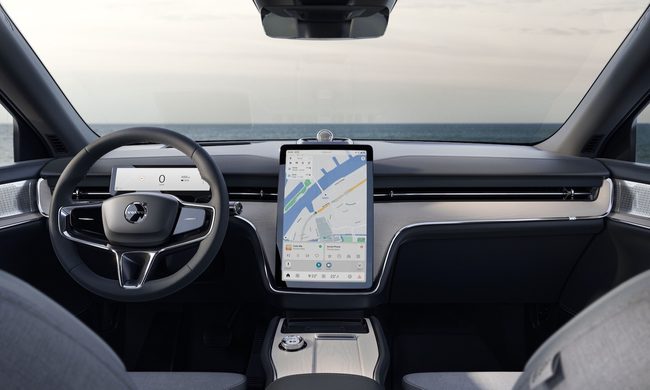
Interior view of the 2024 Volvo EX90.

The line between your smartphone and your car continues to blur. Volvo has announced that it is rolling out an over-the-air software update that brings Apple Music directly to the infotainment systems of more than 2 million vehicles worldwide. Instead of relying on Apple CarPlay or plugging in an iPhone, eligible drivers will be able to stream music natively from their car's built-in system, making Apple Music another integrated feature of Volvo's software experience.

The update is arriving for a wide range of Volvo models, including the EX90, ES90, XC90, S90, V90, XC60, S60, V60, XC40, EX40 and EC40, covering model year 2020 onwards. Availability, however, may vary depending on the vehicle.

Read more
Chery’s latest EV packs flagship tech for the price of a base Tesla, but you can’t buy it
Here's everything packed into Exeed's 2027 Exlantix ES, from its 27-sensor autonomous driving suite to its 860 km range, all starting under $31,000.
Car, Transportation, Vehicle

Chery's premium arm just dropped a sedan that makes you wonder why American EVs cost twice as much for half the tech.

Exeed's 2027 Exlantix ES ships with a driver-assist system called Falcon 700. It is built around an Nvidia Orin-Y chip and a genuinely stacked sensor suite.

Read more
A new AI model wants self-driving cars to think before they swerve
Forget guessing games, this self-driving AI actually shows its work.
Self driving car

Self-driving cars have gotten pretty good at driving. The harder problem is teaching them to drive safely in situations nobody planned for. We have heard horror stories of self-driving cars, behaving erratically in emergency situations, often times delaying first responders from reaching the scene.

A team at Seoul National University, led by professor Jun Won Choi from the Department of Electrical and Computer Engineering, thinks they have cracked part of that puzzle with a new AI model called SafeDrive. The research was recently selected as a highlight paper at CVPR 2026, a distinction that goes only to roughly 3% of all submissions.

Read more