  1. Home
  2. Cars
  3. Emerging Tech
  4. Photo Galleries
  5. News

Hyundai’s heavy-lifting exoskeleton is more ‘Aliens’ than ‘Iron Man’

Add as a preferred source on Google

Hyundai is apparently branching out into a very different kind of transportation. The Korean carmaker is developing a robotic exoskeleton that increases the wearer’s strength significantly.

The company compares its creation to the Iron Man suit in a Korean blog post, but the Hyundai exoskeleton seems more like the Caterpillar P-5000 Powered Work Loader from Aliens than Tony Stark’s tech. It consists of a backpack with leg and arm attachments, including claw-like appendages that help the machine do heavy lifting. Hyundai claims the device allows its wearer to lift objects weighing “hundreds of kilograms.”

Hyundai actually has some previous experience with robot suits. Last year, it unveiled the H-LEX “wearable walking assistant.” This was a much lighter-duty apparatus meant to help senior citizens walk. The company also showed a scaled-down version of its new exoskeleton, with leg pieces only, designed for a similar purpose. The larger version could be used by factory workers, who already use standalone robots to do their jobs.

Read more: Home-brew exoskeleton uses piston power to lift cars

And that’s what Panasonic has in mind for its own exoskeletons. The Japanese electronics company is also interested in the technology because of its potential to make factory workers’ jobs easier, and to give the elderly and the disabled greater mobility. Over the past couple of years, Audi and Daewoo have also experimented with different forms of exoskeletons for factory workers, and in 2014 DARPA began funding development of a “soft exoskeleton” for soldiers.

Some carmakers, including Honda and Toyota, have taken things even further and created complete robots. You may have seen Honda’s Asimo attempting to walk up stairs or perform other simple tasks in one PR video or another. If those robots ever go rogue, it looks like we’ll be calling on Hyundai for the hardware to fight them with.

Stephen Edelstein
Stephen is a freelance automotive journalist covering all things cars. He likes anything with four wheels, from classic cars…
Volvo is rolling out Apple Music to over 2 million cars with a simple OTA update
Your Volvo may soon get Apple Music without needing CarPlay
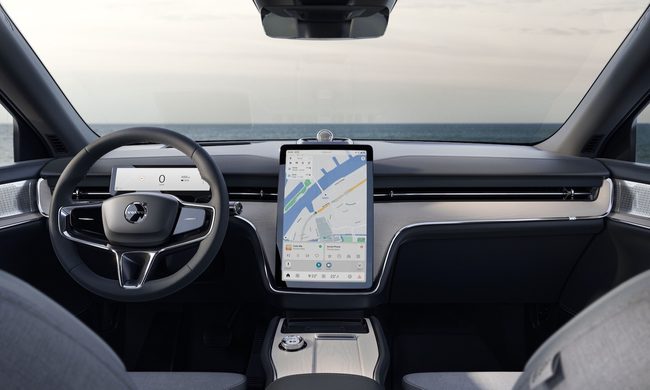
Interior view of the 2024 Volvo EX90.

The line between your smartphone and your car continues to blur. Volvo has announced that it is rolling out an over-the-air software update that brings Apple Music directly to the infotainment systems of more than 2 million vehicles worldwide. Instead of relying on Apple CarPlay or plugging in an iPhone, eligible drivers will be able to stream music natively from their car's built-in system, making Apple Music another integrated feature of Volvo's software experience.

The update is arriving for a wide range of Volvo models, including the EX90, ES90, XC90, S90, V90, XC60, S60, V60, XC40, EX40 and EC40, covering model year 2020 onwards. Availability, however, may vary depending on the vehicle.

Read more
Chery’s latest EV packs flagship tech for the price of a base Tesla, but you can’t buy it
Here's everything packed into Exeed's 2027 Exlantix ES, from its 27-sensor autonomous driving suite to its 860 km range, all starting under $31,000.
Car, Transportation, Vehicle

Chery's premium arm just dropped a sedan that makes you wonder why American EVs cost twice as much for half the tech.

Exeed's 2027 Exlantix ES ships with a driver-assist system called Falcon 700. It is built around an Nvidia Orin-Y chip and a genuinely stacked sensor suite.

Read more
A new AI model wants self-driving cars to think before they swerve
Forget guessing games, this self-driving AI actually shows its work.
Self driving car

Self-driving cars have gotten pretty good at driving. The harder problem is teaching them to drive safely in situations nobody planned for. We have heard horror stories of self-driving cars, behaving erratically in emergency situations, often times delaying first responders from reaching the scene.

A team at Seoul National University, led by professor Jun Won Choi from the Department of Electrical and Computer Engineering, thinks they have cracked part of that puzzle with a new AI model called SafeDrive. The research was recently selected as a highlight paper at CVPR 2026, a distinction that goes only to roughly 3% of all submissions.

Read more