Sometimes it takes a startup riding a tidal wave of social buzz to stir up the automotive industry – but not always. For an established, upscale brand like Land Rover to shake things up, the same old procedures and hierarchies must yield to more nimble, idea-fueled basics. This strategy won’t gel with every organization, but with the right leadership and training, innovation is possible.-
What we’re seeing out of Land Rover these days certainly speaks to a renovation of perspective. At this year’s LA Auto Show, the British luxury manufacturer put its Special Vehicle Operations (SVO) division front and center, introducing its most luxurious (Range Rover SVAutobiography), most powerful (Range Rover Sport SVR), and most capable (Discovery SVX) offerings to date. Such diversity of pinnacle products isn’t seen anywhere else in the luxury automotive sector.
What we’re seeing out of Land Rover these days speaks to a renovation of perspective.
But SVO is only part of Land Rover’s trend-setting push. In October, the company announced it would add some form of electrification to every one of its models, starting with the 2019 Range Rover and Range Rover Sport P400E (which will, coincidentally be the first production plug-in hybrid SUVs). In just over two years, Land Rover will go from zero to 100-percent electric assistance – if that isn’t startup-like agility, we aren’t sure what is.
By the way, there’s a big difference between electric and electrified vehicles, which we have covered in depth.
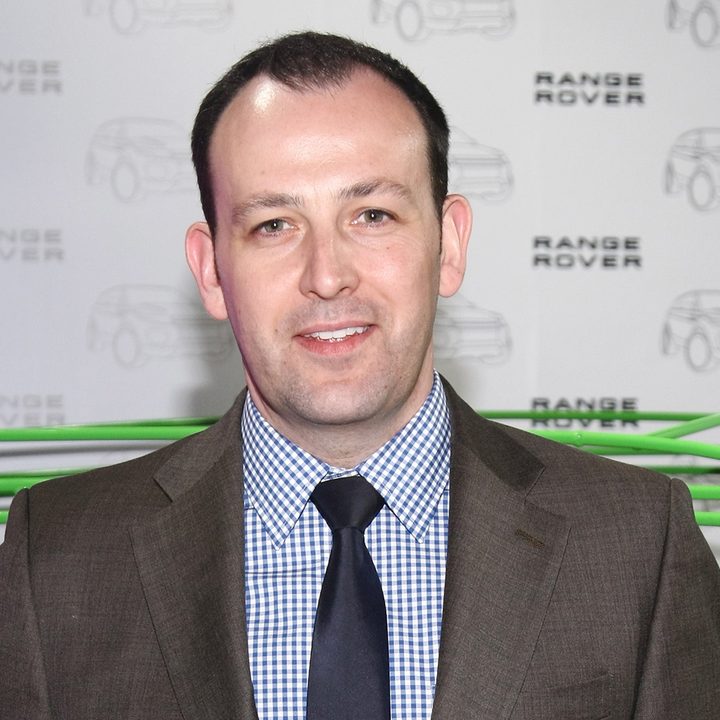
How is Land Rover pivoting and diversifying so successfully, and what will happen to the brand’s products when they’re mated to a battery? Digital Trends sat down with Land Rover’s Global Product Marketing Director, Finbar McFall to find out.
Digital Trends: You’ve given yourself a narrow timeline to make full-lineup electrification possible. How will you make this happen, and do you really think electrification make sense for every model?
We’re genuinely excited about living through this period of change.
Finbar McFall: We’re genuinely excited about this – living through this period of change. If you look around the car industry, you won’t find a comparable endeavor. So part of the push is fueled by our excitement, but we also think it’s possible because of how we’re planning different forms of electrification based on the vehicle. Some will be full EVs, some plug-ins, and some mild hybrids – and we’ll apply them appropriately. Like everyone else, we know that electrification is coming. When the inflection point will hit, we don’t know, but for us, it’s about broadening the offer: petrol, diesel, and electrification. We’ll make petrol and diesel as efficient as possible, and then complement those powertrains with appropriate electrification – done in a way that fits with the brand. The offer doesn’t change, the brand and what it stands for doesn’t change, we’re just expressing it in a new, contemporary way.


Walk us through the new plug-in hybrid Range Rover models and how you used electrification to enhance traditional Land Rover driving dynamics
We aren’t looking to make a better version of someone else’s car; we’re looking to make a better Jaguar or Land Rover.
Most importantly, we haven’t taken anything out of the Range Rover products, only added the compact electric motor and battery. There’s minimal loss of cargo capacity from the battery in the trunk, and in exchange, you get 31 miles of all-electric driving and better fuel economy throughout. We believe this hybrid setup makes for a better Range Rover. Around town, pure EV mode makes the car even more refined and quiet. Off-road, all of that instant torque from the electric motor is very useful on tricky terrain. We’ve also addressed perhaps the only drawback of e-assistance – the audible feedback of the motor – with two channels in the audio system to cancel it out. We’ve been almost obsessive in these areas to retain the Range Rover formula of capability and refinement. For most of our customers, we think the appeal will be — this is a Range Rover that happens to be a plug-in hybrid, not the other way around.
Why start the electrification push on the Land Rover side with the Range Rover/Sport?
Many of our customers asked for this, were excited about the Range Rover and Range Rover Sport with electric assistance. Whether it’s dealer feedback direct from customers, or a product of our vast research into emerging global trends. Sometimes it’s quantity of data and sometimes it’s quality – just sitting down and listening/engaging with customers over dinner.
How does the I-Pace eTrophy Series fit into all this e-development?
We’re definitely in that space for a very specific reason. Yes, the series has a marketing reach, but it’s perhaps more valuable as an innovation lab of sorts – where we can learn and be competitive. What happens to batteries when they’re used as part of a race, the thermal management of those batteries, how the inverters work under those conditions. We can learn more through e-racing than perhaps even other motorsports. The internal combustion is nearly as good as it’s going to get – it’s close to the point of diminishing return. We’re still in the very early stages of electrification, though; there’s so much still to learn.
Is Land Rover advancing its battery technology largely in-house, or is it looking for external resources to have the appropriate solution for each model.
It’s a combination of our internal knowledge and supplier intel, but we certainly are building up our own capability when it comes to electrification. We’re heavily recruiting software, electrical, and battery engineers. We also work a lot with academic institutions. For example, in Portland Oregon, we work with a team of engineers – intentionally set apart from our core business – to be creative in ways that might otherwise be impossible in a large automaker. We have a lot of talented individuals now, and as the business has grown, success breeds success. I can see it in the graduates we recruit. There was a time when, to work in the car industry, you had to be a bit of a car nut, but now, these graduates see us as a technology company.
The LA show seems to be a particular highlight of Special Vehicle Operations. How is Land Rover empowering SVO to achieve its goals?
Indeed, when we showcased each of the SVO products, I felt a true sense of pride and achievement. As John Edwards (Head of SVO) said, they take great cars and amplify them. I love the fact that, within Land Rover, you can have those three expressions: SVA, SVX, and SVR – all authentically Land Rover, but each unique. And, in anything we do, we aren’t looking to make a better version of someone else’s car; we’re looking to make a better Jaguar or Land Rover. It’s an intentional push – to test ourselves – a bit further, a bit further. The same is true of the XE SV Project 8. For many customers, SVO has helped me to fulfill their dreams – personalized to a great degree.