1. Home
  2. Cars
  3. Legacy Archives

Lister Cars comes back with a bang and a $3.2 million, 1000-horsepower supercar in tow

Add as a preferred source on Google

They say the first impression is the most important, but what about the second?

British carmaker Lister Cars is looking to make the most of its second go around, and it’s taking big chances from the get-go .

Recommended Videos

The Cambridge-based company has announced plans to build a $3.2-million hypercar, with a supercharged, 7.8-liter V12 providing a massive 1,000 horsepower. You won’t find any progressive hybrid tech here, just ferocious belt-driven analog power.

Speaking to Auto Express, Lister Cars Managing Director Lawrence Whittaker said the still unnamed thoroughbred will be designed to take on automotive giants like the LaFerrari, McLaren P1, Pagani Huayra, and Koenigsegg Agera. Even better, Lister plans to make the car almost completely from scratch, with the gargantuan engine being designed and built in-house.

The hypercar is still in its infancy, so aspirations and sketches are all Lister has to offer as this point. As Whittaker points out, though, it’s not exactly an easy swim to the top; the high-end supercar world is a vicious, bloody shark tank.

“We are not interested in building the fastest car we can, but one that puts the Lister name in the forefront of people’s minds with a world-beating product,” he said.

Lister Motor Company
Image used with permission by copyright holder

Lister does have a storied history in the racing and bespoke world, so the British brand won’t exactly be starting from scratch.

The company is known for its rounded ‘Knobbly’ racecars of the 1950s, where the Jaguar-powered speedster took home a win at the 1957 British Empire Trophy.

You may also know the Lister name from the striking ‘Storm’ that raced in the 1990s. The road-going version used a 7.0-liter V12, the largest ever fitted to a production car since WWII, and was known as the fastest four-seater in the world until 2006’s Brabus Rocket.

Lister Cars came back from a nearly 25-year absence in 2013.

Andrew Hard
Andrew first started writing in middle school and hasn't put the pen down since. Whether it's technology, music, sports, or…
Volvo is rolling out Apple Music to over 2 million cars with a simple OTA update
Your Volvo may soon get Apple Music without needing CarPlay
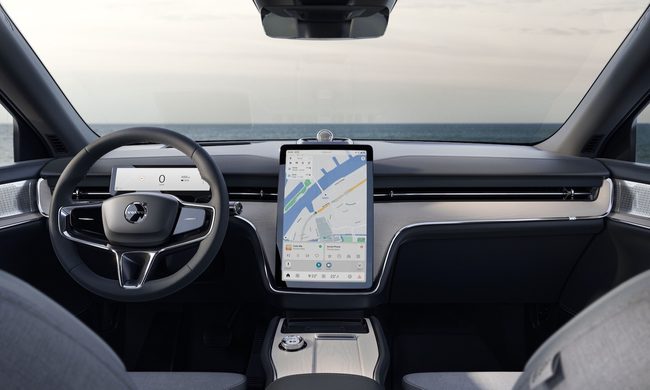
Interior view of the 2024 Volvo EX90.

The line between your smartphone and your car continues to blur. Volvo has announced that it is rolling out an over-the-air software update that brings Apple Music directly to the infotainment systems of more than 2 million vehicles worldwide. Instead of relying on Apple CarPlay or plugging in an iPhone, eligible drivers will be able to stream music natively from their car's built-in system, making Apple Music another integrated feature of Volvo's software experience.

The update is arriving for a wide range of Volvo models, including the EX90, ES90, XC90, S90, V90, XC60, S60, V60, XC40, EX40 and EC40, covering model year 2020 onwards. Availability, however, may vary depending on the vehicle.

Read more
Chery’s latest EV packs flagship tech for the price of a base Tesla, but you can’t buy it
Here's everything packed into Exeed's 2027 Exlantix ES, from its 27-sensor autonomous driving suite to its 860 km range, all starting under $31,000.
Car, Transportation, Vehicle

Chery's premium arm just dropped a sedan that makes you wonder why American EVs cost twice as much for half the tech.

Exeed's 2027 Exlantix ES ships with a driver-assist system called Falcon 700. It is built around an Nvidia Orin-Y chip and a genuinely stacked sensor suite.

Read more
A new AI model wants self-driving cars to think before they swerve
Forget guessing games, this self-driving AI actually shows its work.
Self driving car

Self-driving cars have gotten pretty good at driving. The harder problem is teaching them to drive safely in situations nobody planned for. We have heard horror stories of self-driving cars, behaving erratically in emergency situations, often times delaying first responders from reaching the scene.

A team at Seoul National University, led by professor Jun Won Choi from the Department of Electrical and Computer Engineering, thinks they have cracked part of that puzzle with a new AI model called SafeDrive. The research was recently selected as a highlight paper at CVPR 2026, a distinction that goes only to roughly 3% of all submissions.

Read more