  1. Home
  2. Cars
  3. News

Minneapolis bans drive-through windows in bid to keep pedestrians safe

Add as a preferred source on Google
GettyImages/NeonJellyFish

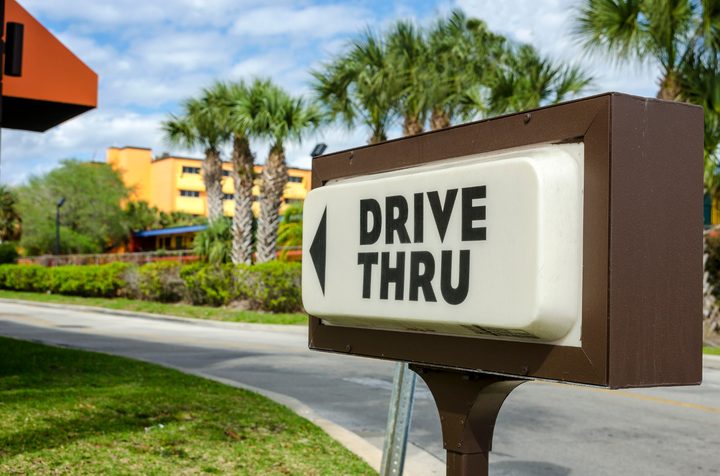
Minneapolis has enacted a ban on drive-throughs. The local authority argued that getting rid of drive-throughs will result in safer roads for drivers and pedestrians and cleaner air, according to StreetsBlog. The blog cited research that shows drivers are distracted before they pull in to order food and again when they pull out after receiving their orders, putting pedestrians in danger.

Minneapolis has a city-wide goal of reducing greenhouse gas emissions by 80% by 2050. Banning drive-throughs should reduce vehicle idling, thereby improving air quality.

Recommended Videos

In order to reach the city’s goal, the Minneapolis 2040 plan includes several measures the city hope will help. Other steps in the 2040 plan include eliminating off-street-parking minimum times and limiting the construction of new surface parking lots. Also, Minneapolis wants to rezone neighborhoods to allow multifamily residences in all areas of the city and to impose strict parking restrictions near mass transit stations. Car repair businesses will also be prohibited close to Minneapolis Metro stations. Another step yet to be enacted is a ban on new gas stations throughout the city.

The bans on drive-throughs and gas stations both apply to new structures only. Existing locations will be grandfathered in.

Drive-throughs aren’t limited to restaurants but also include liquor stores, cleaners, banking, grocery shopping, postal services, pharmacies, photo processing shops, ammo and bait, and much more. Starbucks has drive-through windows at 40% of its current coffee shops and plans to include drive-throughs in 60% of new locations. McDonald’s fast-food restaurants first offered combo meals to accommodate customers using drive-throughs. More recently, the chain began using artificial intelligence with drive-through menu boards to tempt customers to make extra purchases.

Six hundred miles south of Minneapolis via route 35, Sheldon “Red” Chaney created the first drive-through at Red’s Giant Hamburg restaurant in 1947 on U.S. Route 66 in Springfield, Missouri.

Bruce Brown
Bruce Brown Contributing Editor   As a Contributing Editor to the Auto teams at Digital Trends and TheManual.com, Bruce…
A new AI model wants self-driving cars to think before they swerve
Forget guessing games, this self-driving AI actually shows its work.
Self driving car

Self-driving cars have gotten pretty good at driving. The harder problem is teaching them to drive safely in situations nobody planned for. We have heard horror stories of self-driving cars, behaving erratically in emergency situations, often times delaying first responders from reaching the scene.

A team at Seoul National University, led by professor Jun Won Choi from the Department of Electrical and Computer Engineering, thinks they have cracked part of that puzzle with a new AI model called SafeDrive. The research was recently selected as a highlight paper at CVPR 2026, a distinction that goes only to roughly 3% of all submissions.

Read more
Your next car’s software update could become its biggest security risk
Your next car could receive updates like your smartphone. That's also becoming a cybersecurity nightmare.
OTA technology allows manufacturers to remotely deliver software updates.

Modern cars are no longer machines that stay the same after they leave the showroom. Increasingly, they're becoming software-defined vehicles that receive new features, bug fixes, and security patches wirelessly, much like smartphones. But while over-the-air (OTA) updates have made vehicle maintenance easier and cheaper, cybersecurity experts are warning that the same technology could also become one of the automotive industry's biggest security challenges.

Researchers and policymakers are now calling for stronger oversight as connected vehicles become increasingly dependent on remote software updates. Their concern isn't just about hackers stealing personal data. It's about someone potentially interfering with the operation of a moving vehicle.

Read more
This sleek Chinese EV pairs supercar styling with three AI brains
The Xpeng L03 is an AI supercomputer disguised as a stylish family SUV
Xpeng L03

Xpeng’s latest electric vehicle carries enough processing power to make the term "smart car" actually sound more realistic than it actually is. The new Xpeng L03 debuted simultaneously in Europe and China on July 16, with the company presenting it across 65 markets. Available as a fully electric vehicle and an L03 Power X range-extender, the coupe-SUV is Xpeng’s most internationally focused model so far. Market-specific prices and sales dates remain unannounced.

Three AI chips and Google Maps built right in

Read more