  1. Home
  2. Cars
  3. Emerging Tech
  4. Legacy Archives

Porsche underestimates the power of its 918 Spyder: It’ll actually do 0-60 in 2.5 seconds

Add as a preferred source on Google

When you’re talking about an 887-horsepower plug-in hybrid supercar, it’s hard to be modest. Yet Porsche was apparently being a little modest when it came to the 918 Spyder’s performance figures.

Thanks to some final tuning, the 918 Spyder posts even more incredible numbers than before. Porsche says the car will now do 0-60 mph in 2.5 seconds, compared to the previously-quoted time of 2.7 seconds. It will also do 0-124 mph in 7.2 seconds – an improvement of half a second – and reach 186 mph in 19.9 seconds.

Recommended Videos

Both figures are for 918s equipped with the optional Weissach package, which lowers the curb weight from 3,715 pounds to 3,616 pounds, and includes some aerodynamic improvements.

That’s when the 918 is operating as a hybrid. In electric-only mode, the car can still accelerate to 60 mph in 6.2 seconds, which Porsche says is 0.7 second faster than previously estimated. With the Weissach package, the time drops to 6.1 seconds.

Producing this impressive performance is a plug-in hybrid powertrain consisting of a 4.6-liter V8, two electric motors, and a lithium-ion battery pack. Total system output is 887 hp and 590 pound-feet of torque.

Despite its immense power, the 918 has always seemed to be at a disadvantage compared to the Ferrari LaFerrari and McLaren P1, because of its relative lack of power (both the Ferrari and McLaren have over 900 hp) and relatively heavy curb weight.

That may not be the case. Substantial performance figures for the LaFerrari haven’t been released, but the P1 will do 0-60 mph in 2.8 seconds, and 0-124 mph in 6.8 seconds. So the Porsche will at least beat it off the line, not surprising given its all-wheel drive traction.

The Porsche will also probably be a better hybrid than the McLaren. The car from Woking, England gets an estimated 34 mpg, but the 918 is expected to rerun around 85 mpg on the European combined cycle. U.S. EPA fuel economy estimates haven’t been released. Expect them to be lower than the European numbers, but still very impressive.

Porsche will only build 918 918 Spyders, with a base price of $845,000 each. There may still be a few order slots open.

Stephen Edelstein
Stephen is a freelance automotive journalist covering all things cars. He likes anything with four wheels, from classic cars…
Volvo is rolling out Apple Music to over 2 million cars with a simple OTA update
Your Volvo may soon get Apple Music without needing CarPlay
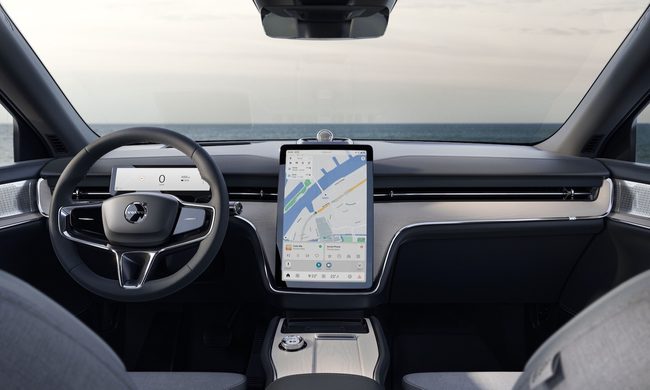
Interior view of the 2024 Volvo EX90.

The line between your smartphone and your car continues to blur. Volvo has announced that it is rolling out an over-the-air software update that brings Apple Music directly to the infotainment systems of more than 2 million vehicles worldwide. Instead of relying on Apple CarPlay or plugging in an iPhone, eligible drivers will be able to stream music natively from their car's built-in system, making Apple Music another integrated feature of Volvo's software experience.

The update is arriving for a wide range of Volvo models, including the EX90, ES90, XC90, S90, V90, XC60, S60, V60, XC40, EX40 and EC40, covering model year 2020 onwards. Availability, however, may vary depending on the vehicle.

Read more
Chery’s latest EV packs flagship tech for the price of a base Tesla, but you can’t buy it
Here's everything packed into Exeed's 2027 Exlantix ES, from its 27-sensor autonomous driving suite to its 860 km range, all starting under $31,000.
Car, Transportation, Vehicle

Chery's premium arm just dropped a sedan that makes you wonder why American EVs cost twice as much for half the tech.

Exeed's 2027 Exlantix ES ships with a driver-assist system called Falcon 700. It is built around an Nvidia Orin-Y chip and a genuinely stacked sensor suite.

Read more
A new AI model wants self-driving cars to think before they swerve
Forget guessing games, this self-driving AI actually shows its work.
Self driving car

Self-driving cars have gotten pretty good at driving. The harder problem is teaching them to drive safely in situations nobody planned for. We have heard horror stories of self-driving cars, behaving erratically in emergency situations, often times delaying first responders from reaching the scene.

A team at Seoul National University, led by professor Jun Won Choi from the Department of Electrical and Computer Engineering, thinks they have cracked part of that puzzle with a new AI model called SafeDrive. The research was recently selected as a highlight paper at CVPR 2026, a distinction that goes only to roughly 3% of all submissions.

Read more