  1. Home
  2. Cars
  3. News

New tech could allow Porsche to turn the Taycan into a high-speed movie theater

Add as a preferred source on Google

The Taycan scheduled to break cover in less than a month is different than any Porsche released before it, and not just because it’s electric. It’s packed with considerably more tech features than the other cars in the company’s range, letting users access a wider selection of features like video streaming. Internet browsing isn’t one of them, though.

Recommended Videos

One box on the sedan’s list of extra-cost options corresponds to a 10.9-inch screen embedded into the passenger-side part of the dashboard. It essentially gives the front passenger his or her own infotainment system. The screen can be used to access navigation information, media settings, and connectivity options, among other functions. Porsche revealed it’s considering adding video streaming to the second screen, but it’s looking for a safe, distraction-free way to integrate the feature.

“We are working on the video use case, but we want to make it safe,” said Oliver Fritz, Porsche’s director of driver experience, in an interview with Automotive News. The publication Porsche is developing a technology that limits the second screen’s viewing angle to help ensure the driver can’t see the program the passenger is looking at. There’s no word yet on when the technology will be available, and whether the company will send it out via an over-the-air software update.

Porsche plans to use the Taycan to lure past, current, and prospective Tesla owners into its showrooms. But while the Model S comes with a web browser that lets the occupants — hopefully not the driver — surf the internet on the go, its German rival won’t allow passengers to read Digital Trends on its touchscreen due to security concerns identified by software engineers. That means the video streaming function would be available via an app, not by logging onto the Netflix site, for example.

“Other OEMs offer web browsers with a lot of security on the back end. We don’t think that’s actually the way we want to go. If someone really wants to browse web pages, doing it on the smartphone is probably a better way,” Fritz told Automotive News in a separate interview.

We’ll learn more about what the Taycan’s Apple Music-enabled infotainment system can and can’t do when the sedan makes its global debut during the 2019 Frankfurt Auto Show. Sales will begin shortly after, likely with a price tag in the vicinity of $75,000, and the first deliveries are tentatively scheduled for early 2020.

Ronan Glon
Ronan Glon is an American automotive and tech journalist based in southern France. As a long-time contributor to Digital…
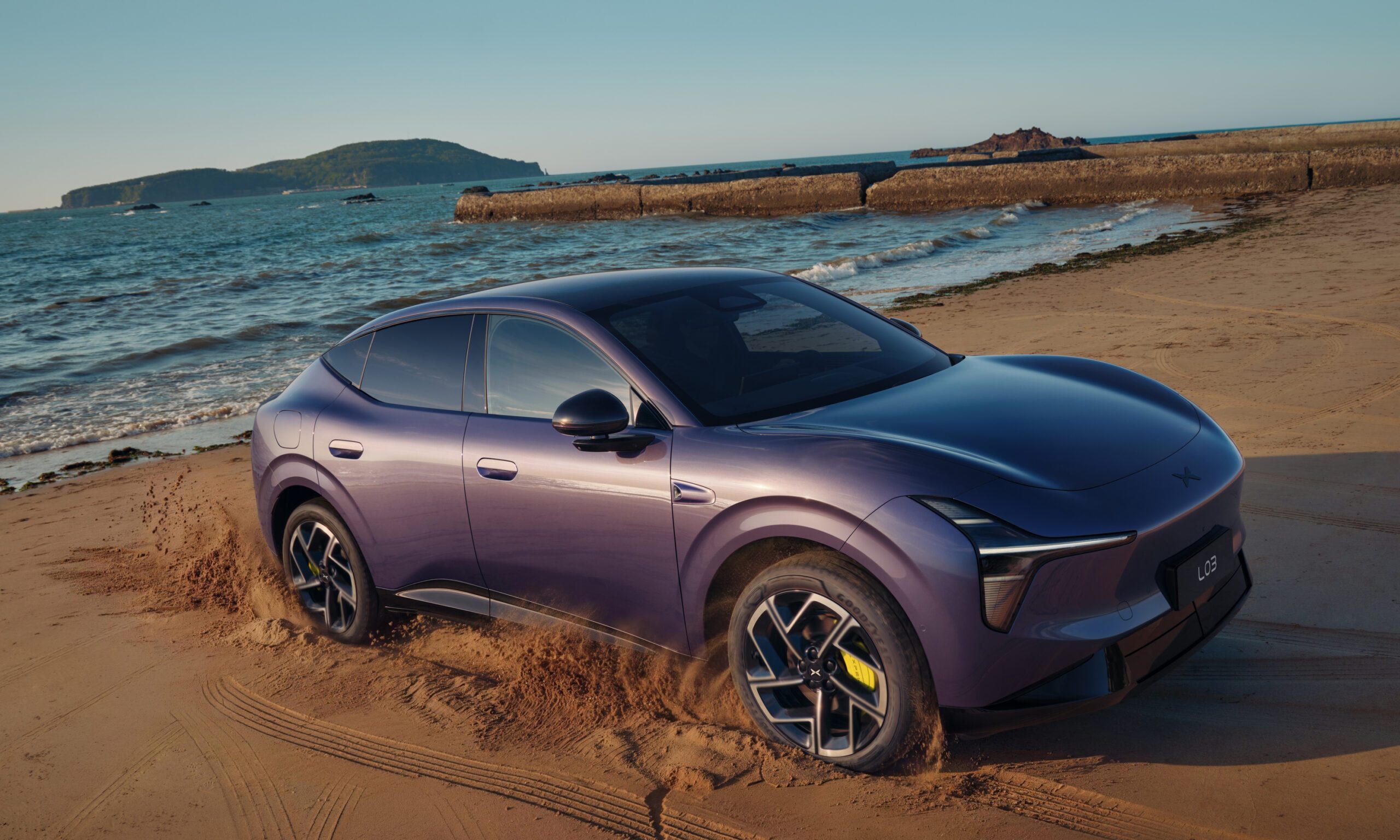
This sleek Chinese EV pairs supercar styling with three AI brains
The Xpeng L03 is an AI supercomputer disguised as a stylish family SUV
Xpeng L03

Xpeng’s latest electric vehicle carries enough processing power to make the term "smart car" actually sound more realistic than it actually is. The new Xpeng L03 debuted simultaneously in Europe and China on July 16, with the company presenting it across 65 markets. Available as a fully electric vehicle and an L03 Power X range-extender, the coupe-SUV is Xpeng’s most internationally focused model so far. Market-specific prices and sales dates remain unannounced.

Three AI chips and Google Maps built right in

Read more
A new sodium battery posts wild four-minute charging numbers, but don’t expect it in an EV yet
The breakthrough could improve fast charging and battery life, but the study hasn’t demonstrated those results in a production-sized pack
EV Charger

A new sodium-metal battery has posted a charging number that makes today’s EVs look painfully slow. In laboratory testing, the cell operated at a 15C rate, equivalent to completing a charge or discharge in roughly four minutes.

That doesn’t mean researchers plugged in an electric car and watched it fill up before the driver finished buying coffee. The result came from a small experimental cell using a new quasi-solid electrolyte, while the larger pouch-cell prototype delivered far less dramatic performance.

Read more
The Apple Car may be dead, but it became the foundation of Apple Intelligence
A decade of work on a canceled car project reportedly laid the groundwork for Apple Intelligence.
Apple Intelligence in Apple Car

The Apple Car may have never left the garage, but it apparently gave birth to Apple's AI ambitions. According to Bloomberg's Mark Gurman, Apple's canceled autonomous vehicle project, one that consumed more than a decade of work and over $10 billion before being scrapped in 2024, ended up laying the technological foundation for Apple Intelligence. In a rather ironic twist, one of Apple's most expensive failures may also become one of its most important long-term investments.

The Apple Car forced Apple to think like an AI company

Read more