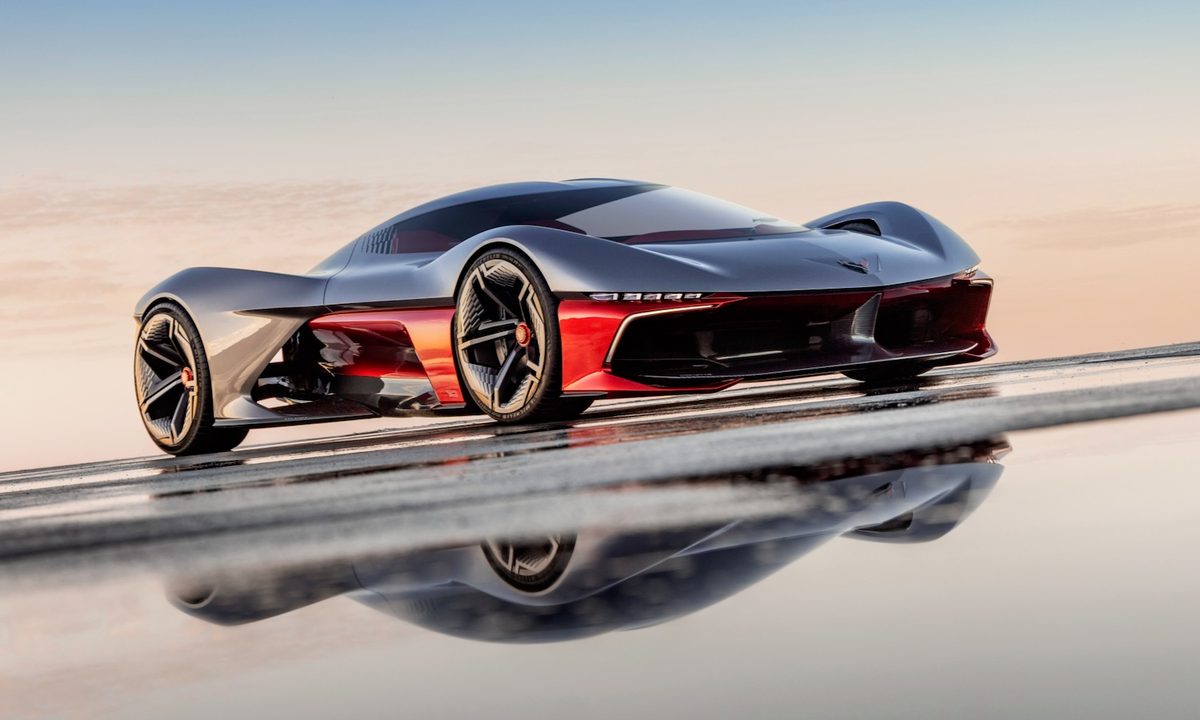

While Chevrolet Corvette hybrids are now a thing, it could still be a while before an all-electric Corvette enters production. But General Motors is tasking its designers to imagine what a future Corvette EV could look like.
Unveiled this week, the California Corvette concept is the second of three ‘Vette design studies debuting this year, each from a GM studio in a different region. The first, revealed in March, came from the automaker’s U.K. studio while this one, as the name implies, is the product of GM’s Advanced Design studios in Pasadena, California.
Borrowing the internal codename of another concept car that eventually morphed into 1992’s Corvette Stingray III concept, the California Corvette of 2025 leverages the packaging flexibility of electric powertrains to improve performance. Its carbon-fiber tub chassis incorporates a T-shaped battery pack with prismatic cells (the same form factor used in current GM EVs), which leaves room for large underbody tunnels that channel air more efficiently around the vehicle.
Tunnels like these have been used in race cars — mostly notably the AAR/Toyota Eagle Mk III — to generate downforce that presses the car into the track surface for better grip without generating the aerodynamic drag associated with more conventional downforce-generating like spoilers that sit on the surface of the bodywork. Minimizing drag is crucial to maximizing EV range, so a design like this could offer the best of both worlds for a future electric sports car.
The California Corvette is just a design exercise, but GM did say in 2022 that an all-electric Corvette, based on the current-generation C8 model, was in development. When we’ll finally see it — and whether it will look anything like the California Corvette or the other two concepts GM is trotting out — remains to be seen.
Faraday Future’s new face
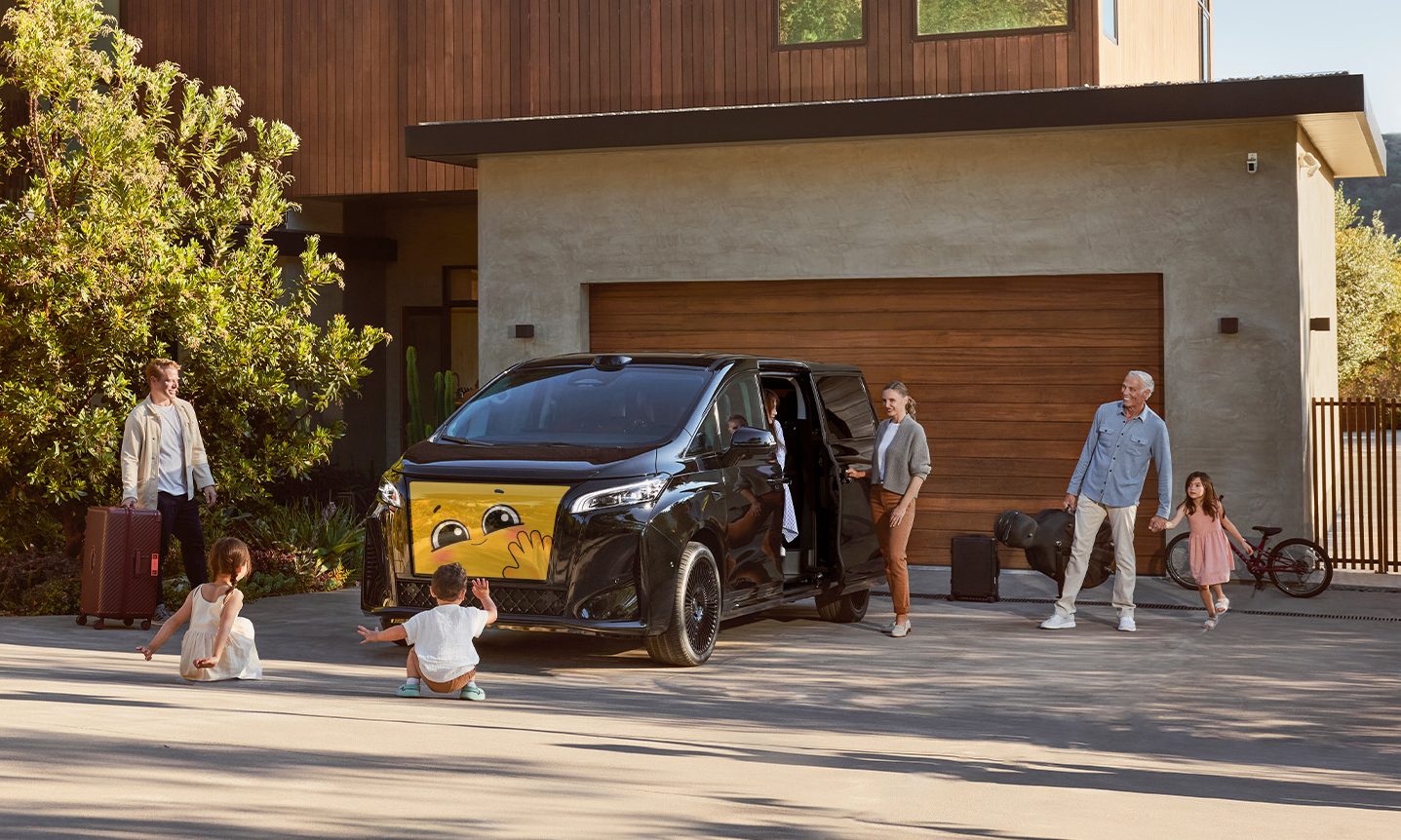
Few EV startups have been embroiled in as much drama as Faraday Future, which spent nearly a decade trying to get its FF91 electric SUV into a production, a process that saw it abandon a planned Nevada factory project for a repurposed tire plant in California while suffering a constant stream of financial calamities. Having finally launched low-volume production of the FF91, Faraday Future this week unveiled a bizarre follow-up.
It’s called the Faraday FX Super One, and it’s an electric minivan pitched as a rival to the Cadillac Escalade, with high-tech AI features. In actuality, it’s a Chinese-market Great Wall Motors Wey Gaoshan with a screen attached to the front. Faraday Future calls that “Super EAI F.A.C.E. (Front AI Communication Ecosystem) System,” and claims it will allow the vehicle to “communicate” with the world as a representative of its driver. How that will work, and what benefit it might have, is unclear.
On the more practical side, Faraday Future said the FX Super One will be available in six-, seven-, or more luxurious four-seat configurations. The latter will feature suspended zero-gravity seats with heating, ventilation, and 10-way massage. Faraday isn’t the only automaker thinking along these lines; earlier this year Mercedes-Benz unveiled its Vision V concept, previewing a luxurious van expected to debut within the next year or so.
Solid-state batteries still in the news
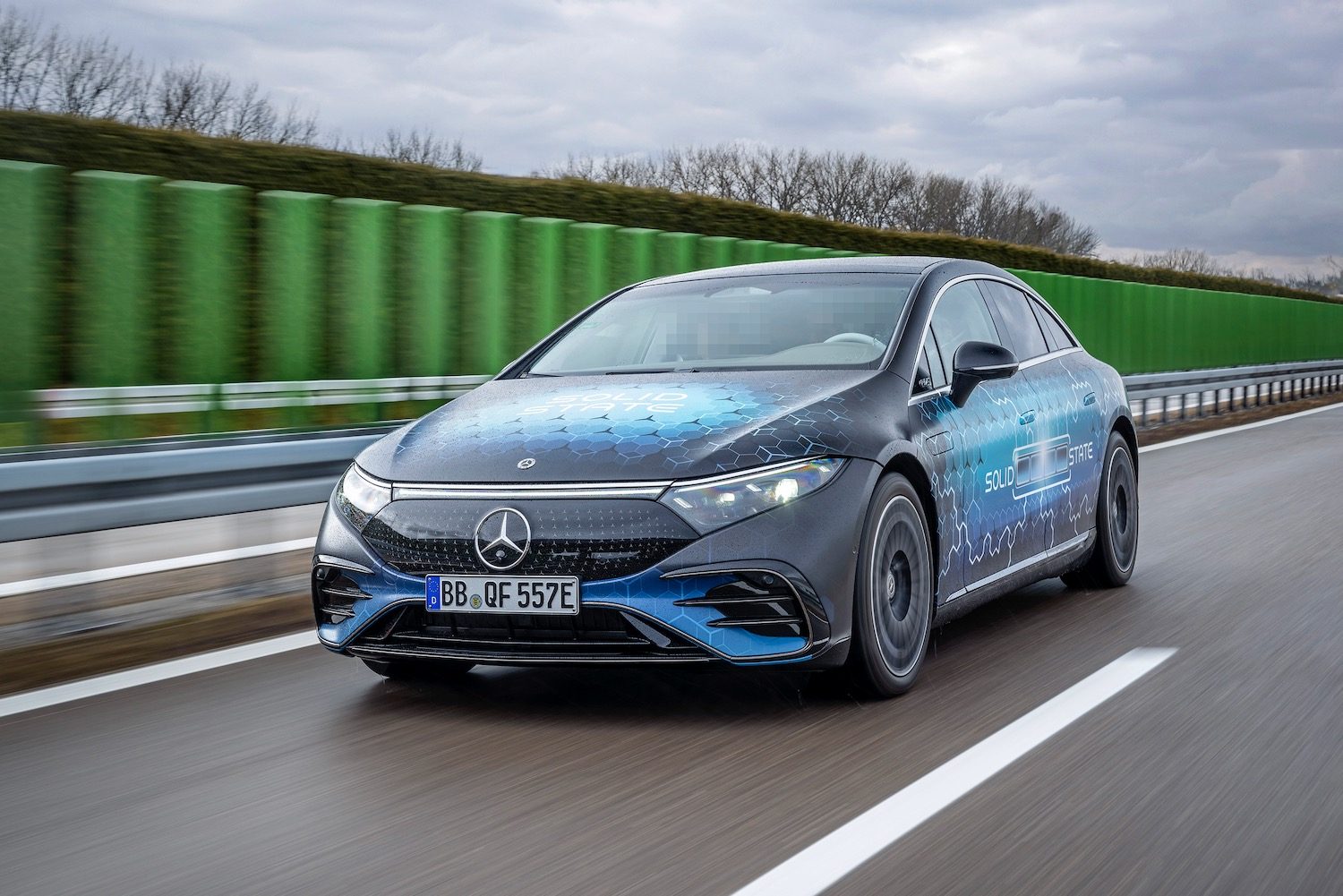
Two announcements this week indicated incremental progress in bringing solid-state batteries to production EVs. Solid-state batteries get their name from their solid electrolyte, which a host of startups and automakers have said will result greater range without increasing battery-pack size. But commercialization has proceeded slowly.
Volkswagen has been collaborating with solid-state battery developer QuantumScape since 2012, and last year its PowerCo battery division inked a deal with QuantumScape for enough batteries to power up to one million EVs annually. This week the two corporate entities announced an expansion of that agreement that will see PowerCo become actively involved in pilot production of solid-state batteries earlier. QuantumScape says this will help it scale manufacturing more quickly.
Meanwhile, fellow German automaker Mercedes-Benz expects to bring an EV powered by solid-state batteries to production “before the end of the decade,” Markus Schafer, the automaker’s head of development, said in an interview with Automobilwoche. Mercedes has also partnered with a startup — Factorial — but has also begun public testing of an EQS sedan with prototype solid-state batteries.