“Why you can trust Digital Trends – We have a 20-year history of testing, reviewing, and rating products, services and apps to help you make a sound buying decision. Find out more about how we test and score products.“

AMD’s launch of the original Ryzen was a big deal. After years of so-so chips, AMD was finally a good alternative to Intel. The company was pushing core counts higher and higher while working on the efficiency and per-clock performance issues that always held AMD back.
Now we have Ryzen 3000 and Zen 2, the true architectural sequel to the original Ryzen. With this new series of chips, AMD wants to not just match, but surpass, Intel. The Ryzen 9 3900X sits atop the pile of Ryzen 2 chips, and it’s an insanely powerful 12-core, 24-thread processor. Is it really a better buy than Intel’s Core i9-9900K?
More cores than you have fingers
High core counts have been the name of the game at AMD for years now, and it’s not relenting. The Ryzen 9 3900X is the first Ryzen processor from AMD to include 12 cores, up from the eight cores of the Ryzen 7 2700X from 2018. The core count of this new Ryzen 9 chip is reminiscent of AMD’s Threadripper.
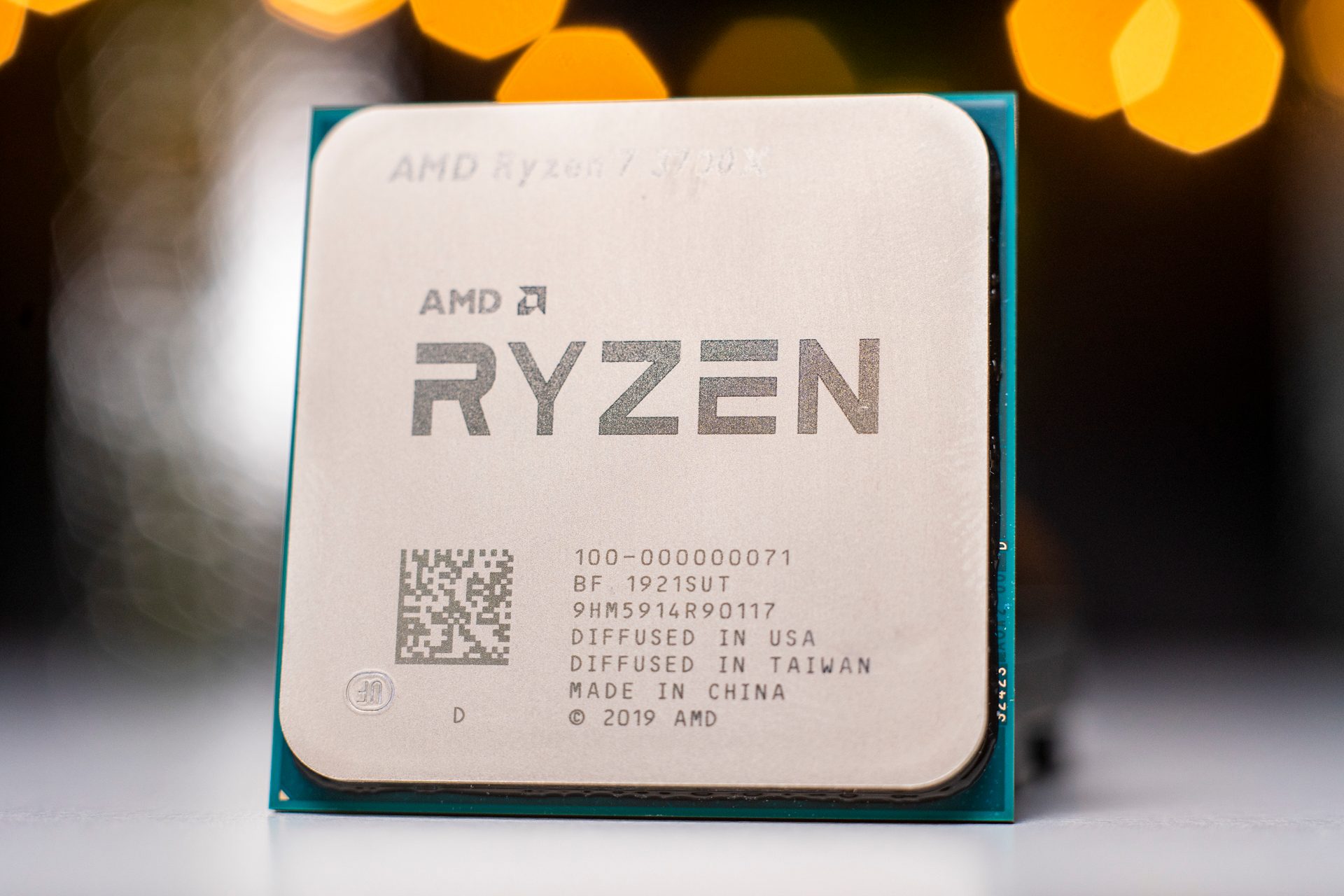
The Ryzen 9 3900X’s $499 price tag isn’t inexpensive. Value is traditionally AMD’s strength, but the Ryzen 9 3900X is not an affordable processor for a mid-range PC. Intel’s Core i9-9900K currently sells for $485 on Amazon, with its listed selling price on Intel’s website at $449. That means the 3900X can’t be slightly slower alternative to Intel’s flagship. AMD needs to bring the heat.
Alongside the 3900X, AMD also announced the Ryzen 7 3700X and Ryzen 5 3600X. There’s even an insane 16-core Ryzen 9 3950X on the near horizon. We’ll be tackling those in the future. For now, here’s how the specs stack up.
| Intel Core i9-9900K | AMD Ryzen 9 3900X | AMD Ryzen 7 3700X | AMD Ryzen 5 3600X | |
| Process node | 14nm | 7nm | 7nm | 7nm |
| Cores | 8 | 12 | 8 | 6 |
| Threads | 16 | 24 | 16 | 12 |
| L2/L3 cache | 2MB / 16MB | 6MB / 64MB | 5MB / 32MB | 3MB/32MB |
| Base clock speed | 3.6GHz | 3.8GHz | 3.6GHz | 3.8GHz |
| Boost clock speed | 4.7GHz (all cores) 5GHz (one core) | 4.6GHz | 4.4GHz | 4.4GHz |
| Graphics | Intel UHD Graphics 630 | No | No | No |
| TDP | 95w | 105w | 105w | 95w |
The 3900X’s advantage in memory caching is thanks to the 7nm Zen 2 architecture, as are the improvements in clock speed. All these processors are compatible with AMD’s AM4 socket platform, meaning you can happily upgrade your processor without having to toss out your entire motherboard.
Comparing clocks speeds and TDP ratings are great for marketing and spec sheets, but they don’t spell a complete picture of how a component actually performs.
Work those cores
In the past, we’ve had to choose between the raw, single-core power of Intel’s chips and the exponentially higher core counts of Ryzen. Until now, I thought the best compromise was the eight-core Intel Core i9-9900K. Who knew it could get so much better with four extra cores?
All our tests were performed on similar systems: 16GB of RAM, a fast NVMe M.2 SSD, and the monster RTX 2080 Ti for graphics. Of course, the processors and motherboards were different.
Now, on to the results.
I wasn’t surprised to see the 3900X dominate the 9900K in multi-core performance in benchmarks like Geekbench 4 and Cinebench R20. It’s ahead by leaps and bounds here, which is exactly what four extra cores will get you. You might not notice as drastic a difference as when jumping from four cores up to eight, but the Ryzen 9 3900X’s 50% core bump over the Core i9-9900K produces a nearly 50% increase in multi-core performance.
I wanted to see just how this would work outside of benchmarks, so I did some H.265 media encoding in Handbrake. The result was 23% better 4K encoding speeds compared to Intel. That’s not the 50% improvement we saw in the benchmarks, but for an increase in a real-world application, that’s huge. Imagine encoding a 4K HDR movie. If the file needed an hour to encode on the Intel Core i9-9900K, it’d only take 46 minutes on the Ryzen 9 3900X.

The multi-core gains are to be expected. More cores, more performance. AMD’s weakness has always been per-core performance. The Ryzen 3900X doesn’t keep up with the Core i9-9900K, but it comes dangerously close. It’s within 4% in Cinebench and within 10% in Geekbench.
AMD has closed the gap on the 9900K more than I thought possible, and nowhere is that more clear than in game performance.
World’s best gaming processor?
Intel has declared its Core i9-9900K the best gaming processor in the world. Critics scoffed at the high price at launch, but Intel’s claim was undeniably true. Though most games are only made with four cores in mind, its powerful single-core performance made it the default choice for high-end gaming.
The Ryzen 9 3900X challenges that claim, and from my tests, it may have stolen the crown from the 9900K’s head.
When comparing processors for gaming, I’m not looking for a huge swing one way or the other. The majority of processing in modern 3D games happens in graphics cards. So, to avoid GPU bottlenecks, I stocked our test systems with the RTX 2080 Ti, the most powerful GPU you can buy. Across the board, the Ryzen 9 3900X produces better framerates.
I started in 3DMark Time Spy, where the 3900X takes a small, 3% lead on the Core i9-9900K. It’s not substantial, but it’s not what I expected. That trend continued across the three games tested: Fortnite, Civilization VI, and Assassin’s Creed Odyssey. Out of the six gameplay scenarios tested (1080p in medium and low graphics setting), the 3900X was ahead in all but one. On average, the 3900X was around 5% faster. That’s a huge win for AMD and the Zen 2 architecture.
Look out, Intel
Ryzen 3000 and this first batch of new processors felt like a big moment when it was announced at Computex. Now that I have seen the numbers myself, I know it’s a big moment. The Ryzen 9 3900X not only emphasizes AMD’s strengths, it challenges the areas Intel has always reigned.
But this isn’t a closed case. Intel is quick to note that it’s still by far the first choice of gamers. Just look at recent Steam surveys and see Intel’s commanding lead. That lead has only continued to rise despite the release of Ryzen. A $499 12-core processor that beats out Intel’s best probably won’t effect the majority of gamers out there, but the impact this will have on mind share is what counts. The rest will trickle down.
For now, if you want the absolute best, there’s a new king in town. Its name is the Ryzen 9 3900X.