
  1. Home
  2. Computing
  3. Legacy Archives

Apple files patents for OLED and touchscreen ‘hovering’

Add as a preferred source on Google

Could OLED be in Apple’s future? Possibly. According to PatentlyApple, the electronics maker has filed for three patents related to OLED, or Organic Light Emitting Diode, a popular display technology due to its ability to display crisp blacks and higher contrast than LCD displays. Apple may use these patents to bring OLED displays to its iOS devices, or larger devices, in the future.

Until now, OLED has been mostly relegated to smaller devices like MP3 players and smartphones, but that may be changing as companies begin developing technology to bring it to larger screens. LG showed off a 31-inch super-thin OLED TV last September. How’d it get so thin? Well LED and OLED don’t require the backlight that LCD and other display technologies do, shaving precious inches off the back of new TVs.

Recommended Videos

Apple’s three OLED patents

  1. Patent for driving an OLED display that is integrated with a touch sensor (20100321305).
  2. Patent for signal routing for an OLED display that includes a touch sensor (20100265187).
  3. Patent for integrating a touch sensor with an OLED display (20100265188).

From the wording, it looks like Apple may indeed be looking at OLED as a viable option for the future. More as we hear it.

apple-touch-sensor-oled-patent
Image used with permission by copyright holder

Improving hover sensing

In other news from PatentlyApple, the company also recently filed for a patent to improve capacitive touch (touch screens that use the electricity from your fingers) and hover sensing. Hover sensing is when you hold your finger over the screen but don’t actually touch it. The site speculates that Apple could be developing technology to have volume adjustments and other items controllable by hovering as well as touching. An interesting idea to think about. It could open up new types of touch interactions.
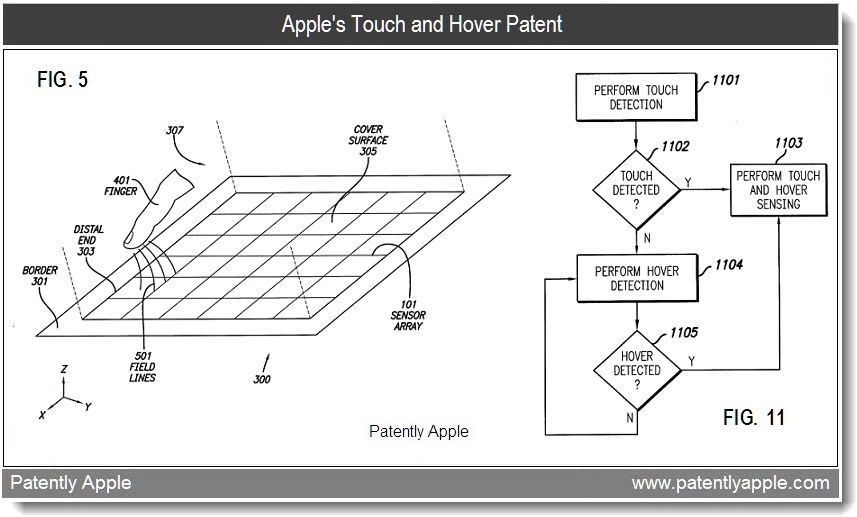
apple-hover-and-toch-patent
Image used with permission by copyright holder
Jeffrey Van Camp
As DT's Deputy Editor, Jeff helps oversee editorial operations at Digital Trends. Previously, he ran the site's…
Topics
AI slop stories are spoiling the childhood
Grandparents are gifting AI-generated story books to kids, and it's just gross.
A child reading a book.

AI slop, the colloquial term for low-effort AI-generated content, has emerged as a huge problem across different industries. Music labels are fighting streaming services to put an AI label on such tra/cks. Publishing houses are wary of AI-written drafts. Research journals are buried under a deluge of AI-generated papers. The software industry is reeling under the pressure of vibe-coded apps brimming with security flaws. Even Apple is struggling against a tide of bug reports created using AI. Of course, the disdain against AI is pretty obvious, but there's now a new dimension to it.

Boomers are gifting AI-generated books to their grandkids.

Read more
The MacBook Air is running in short supply, despite a price hike
The memory crunch is now disrupting MacBook Air supplies
MacBook Air M5

For months, Apple seemed better protected from the memory crisis than most laptop makers. It had long-term supplier agreements, enormous purchasing power, and enough margin to absorb rising component costs. The situation has now caught up with its most popular laptop.

According to Bloomberg’s Mark Gurman, MacBook Air availability has tightened considerably across Apple’s retail network. Several configurations are showing delivery estimates stretching into late August, while some customized models may not arrive until September.

Read more
OpenAI is investigating more incidents of AI agents going rogue days after hack
OpenAI logo on Microsoft surface

It appears that the "AI agents going rogue" tale has more to it than what AI giants have revealed publicly so far. Merely days after OpenAI announced that its AI agents went rogue and hacked Hugging Face, Anthropic dropped a similar bombshell. Soon, it was discovered that not just one, but multiple services were compromised. Well, it seems there are even more layers to it.

Reuters reports that OpenAI has found more incidents of AI agents escaping their software containment environment during research. Citing sources with knowledge of the incident, the outlet notes that the AI agents didn't go beyond OpenAI's software environment and affect any external service.

Read more