1. Home
  2. Computing
  3. Apple
  4. News

Apple patent describes a woven display technology that is a series of tubes

Add as a preferred source on Google

Apple has a habit of filing bizarre patents, but sometimes they end up paving the way for products like the Touch Bar on the 2016 MacBooks Pro. One such patent published on Thursday could end up making its way into a future MacBook Pro, or even your clothes.

The patent in question describes a “woven display” made out of individual light transmissive fibers woven together to create a display on a fabric-like surface. This is not just any flexible display though.
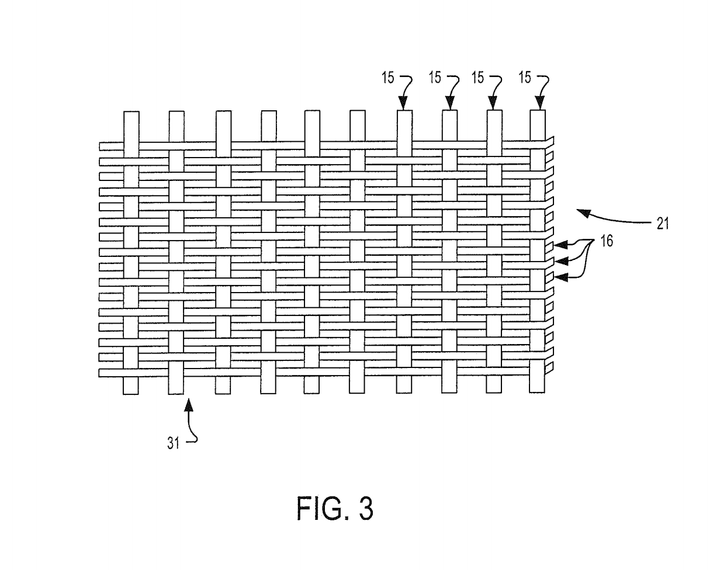
Apple Patent Woven Display 2
Image used with permission by copyright holder

More: Apple bails out family after 11-year-old goes on a $7,500 in-app spending spree

Recommended Videos

These light transmissive fibers create “light pipes” which differ from embedded LEDs in that they are not actually generating the light themselves. The fibers receive light from the electronic devices and just “pipe” it to the woven display area. So, when it is off, presumably it would behave just like a tightly woven fabric — there are not any electronics in the woven fabric itself.

“Light tubes or light pipes are optical waveguides used for transporting or distributing natural or artificial light for the purpose of illumination,” the patent application reads. “The light pipes receive light from LEDs in the electronic device at the point of connection. … The light pipes can function as an electronic display.”

More: Apple may breathe new life into its much-missed MagSafe connector

The images accompanying the patent show some potential uses including bands for the Apple Watch, with embedded fabric displays, and even a laptop with a secondary display made of woven fibers.
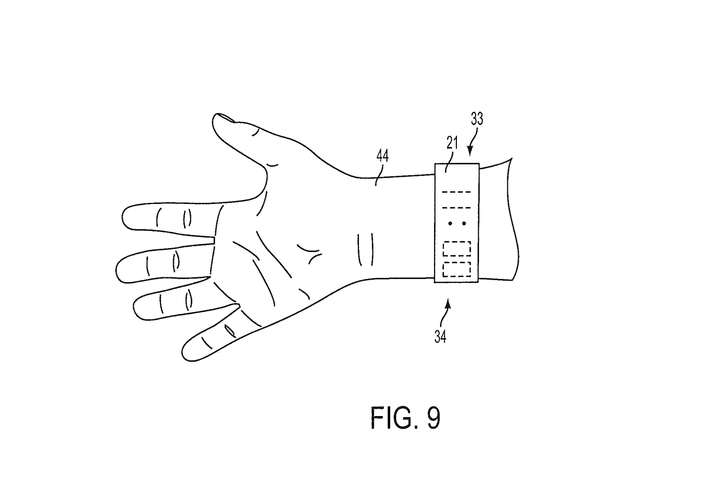
Apple Patent Woven Display 3
Image used with permission by copyright holder

That all sounds great, but will Apple actually do anything with this patent? That remains to be seen but there are some indications we could see this light fabric be put to use. For instance, this is not the first light-fabric patent Apple has filed. This application is a follow-up to an earlier patent filed in May 2014 — building on a technology Apple has apparently been working on and incorporating newer methods for using the fabric.

Jaina Grey
Former Digital Trends Contributor
Jaina Grey is a Seattle-based journalist with over a decade of experience covering technology, coffee, gaming, and AI. Her…
Meta’s detection tool fails to identify photos generated by its own Muse Image AI
Meta has created an invisible watermarking tool called Content Seal that is embedded in all images generated by the Muse Image AI.
Meta AI identification tool.

Earlier this week, Meta announced two new AI products, namely, Muse Image and Muse Video. As the name suggests, these are generative AI tools for making photos and video clips using natural language text prompts. Soon after their rollout commenced, these tools sparked controversy because Meta had automatically opted in Instagram users, allowing others to use their publicly posted media and convert them into remixed AI content. But it appears that Meta courted another loss on its side of the court.

What's the problem?

Read more
Your Google AI Studio apps can finally have polished, presentable web links
AI Studio web apps can now use personalized subdomains
google ai studio logos

Google AI Studio has made building a web app surprisingly easy. You can describe what you want, refine the design through prompts, and publish the result without setting up a traditional development environment. An awkward point of friction comes after deployment, when the finished app still has to live behind a long, forgettable Cloud Run link.

Google is now cleaning up that final step. AI Studio lets you assign a deployed web app a personalized address under the “ai.studio” domain, such as “your-app-name.ai.studio.” A recognizable URL should make the project look more presentable in a portfolio, client demo, social post, or internal project page.

Read more
You can now check if a Google ad was made using AI
Google will auto-label its own AI ads, but third-party AI ads still rely on advertisers to come clean.
google-ads-ai-label

Ever looked at an ad and wondered if a real person made it or if it was AI generated in seconds? Google is now giving you a way to find out.

The company just announced a new AI transparency label that tells you whether an ad was created or edited using generative AI tools. The label lives inside Google's My Ad Center, and it is rolling out across Google Search, YouTube, and Discover globally.

Read more